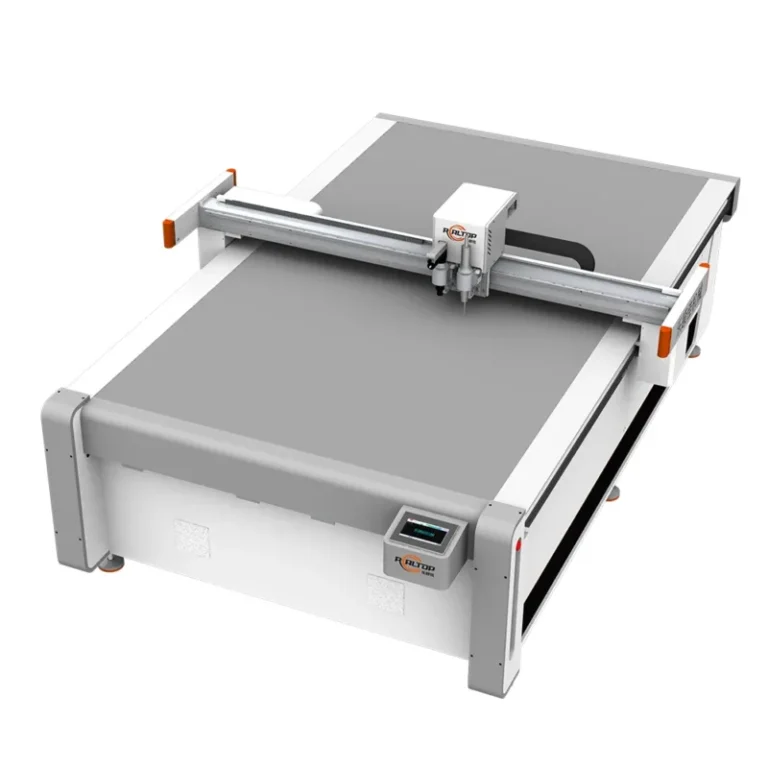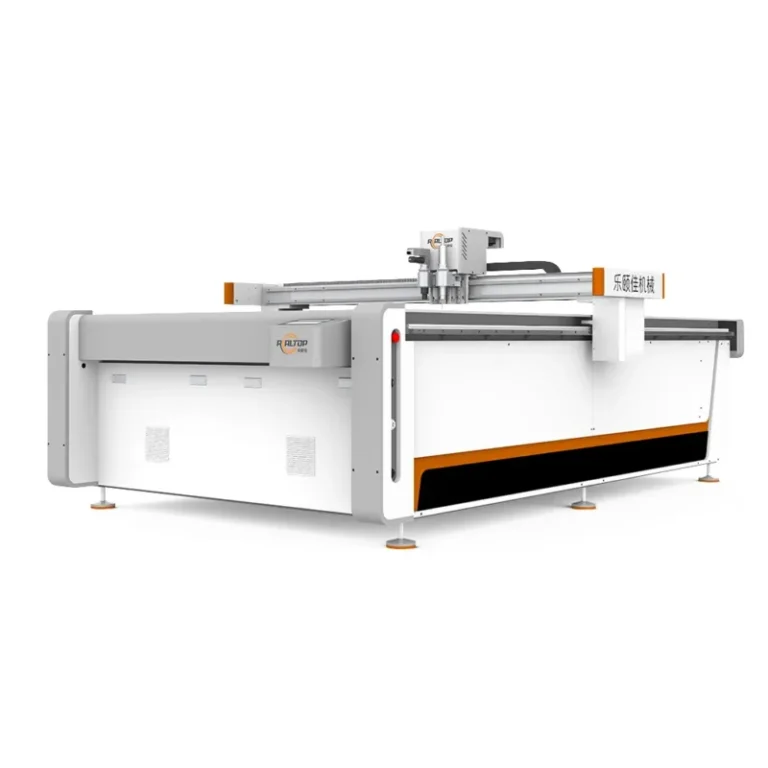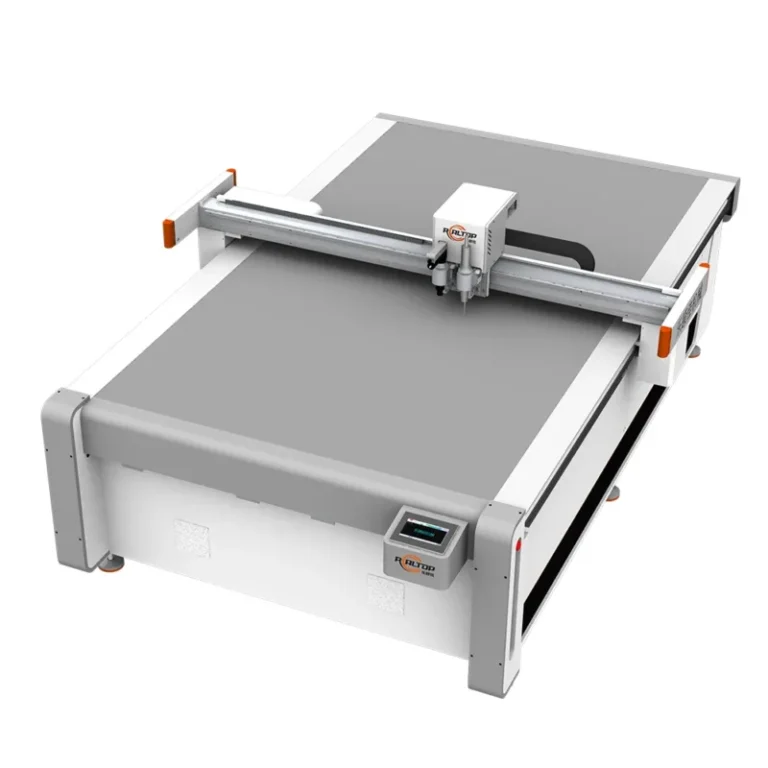
Remote Diagnosis & Online Support for Overseas Cutter Owners Supplier

Most machine stoppages are not hardware failures.
Remote diagnosis and online support enable overseas cutter owners to minimize downtime, eliminate waiting for on-site visits, and ensure continuous production through real-time log reading and parameter calibration.
I still remember the humidity in a São Paulo auto parts factory. The oscillating knife cutter had just been installed, and within two days, the cutting head drifted. Precision slipped beyond acceptable limits. Without remote diagnostic capabilities, we were blind. Was it voltage fluctuation? A mechanical slip? A software glitch? We could not tell. The only option was to wait for a technician to fly from China. The production line sat idle for a week. That silence cost more than the machine itself. Since then, I have shifted my focus entirely to online troubleshooting. Now, whether a machine is in Mexico or Chile, I can connect from Jinan, read the logs, and calibrate parameters. The downtime shrinks from days to minutes. This shift is not just about convenience; it is about survival in global manufacturing.

The core of this capability lies in understanding that modern digital cutters are data-rich environments. Every movement, every voltage spike, and every servo adjustment is recorded. For a Remote diagnosis for CNC cutting machines provider, accessing this data is the first step toward resolution.
How to Prepare Your CNC Cutter for Remote Diagnostics?
A stable network and accessible log files are the prerequisites for any successful remote session.
Before a technician can help, the machine must be ready to talk. Many operators assume that plugging in an Ethernet cable is enough. It is not. The industrial environment is noisy, both electrically and digitally. A robust connection ensures that data packets containing critical error codes do not get lost in transmission.
First, verify the network status. The control system should have a static IP address to prevent connection drops during router renewals. If the factory uses a firewall, ensure that the specific ports required for remote desktop protocols are open. This is often overlooked by local IT departments who prioritize general office security over machine connectivity.
Second, prepare the log files. Modern CNC controllers store operation history in internal memory. These logs contain timestamped records of servo loads, axis positions, and error triggers. Extracting these files before the call saves valuable time. In many cases, the error code displayed on the screen is generic, but the log reveals the sequence of events leading up to the fault. For example, a "servo alarm" might actually be caused by a gradual increase in friction due to mechanical wear, which shows up as a rising current trend in the logs hours before the alarm trips.
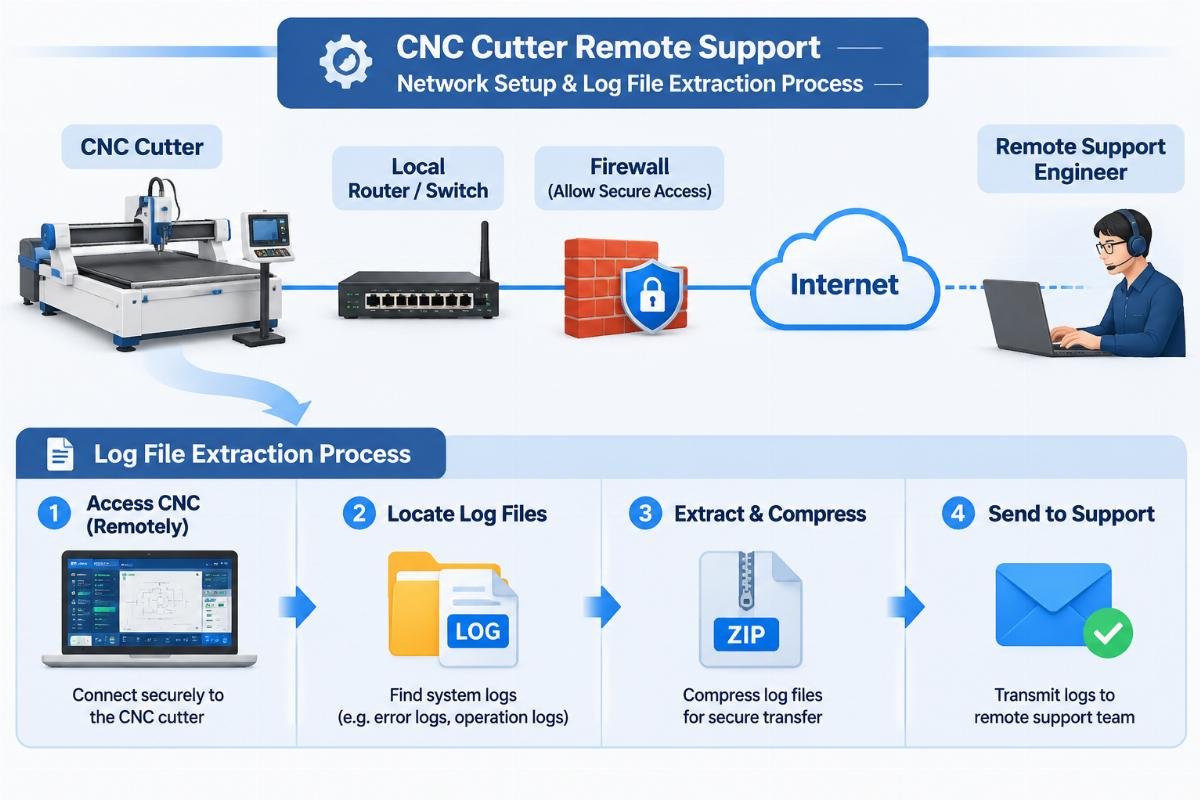
Operators should also have the machine’s serial number and firmware version ready. These details allow the support team to pull up the specific configuration profile for that unit. Without this, the technician is working blind, guessing at parameter sets that may have been customized for specific materials like carbon fiber or multi-layer textiles. Preparing these elements turns a chaotic troubleshooting session into a structured diagnostic procedure. This preparation is vital for effective remote troubleshooting CNC cutter sessions.
What Are the Step-by-Step Remote Troubleshooting Methods?
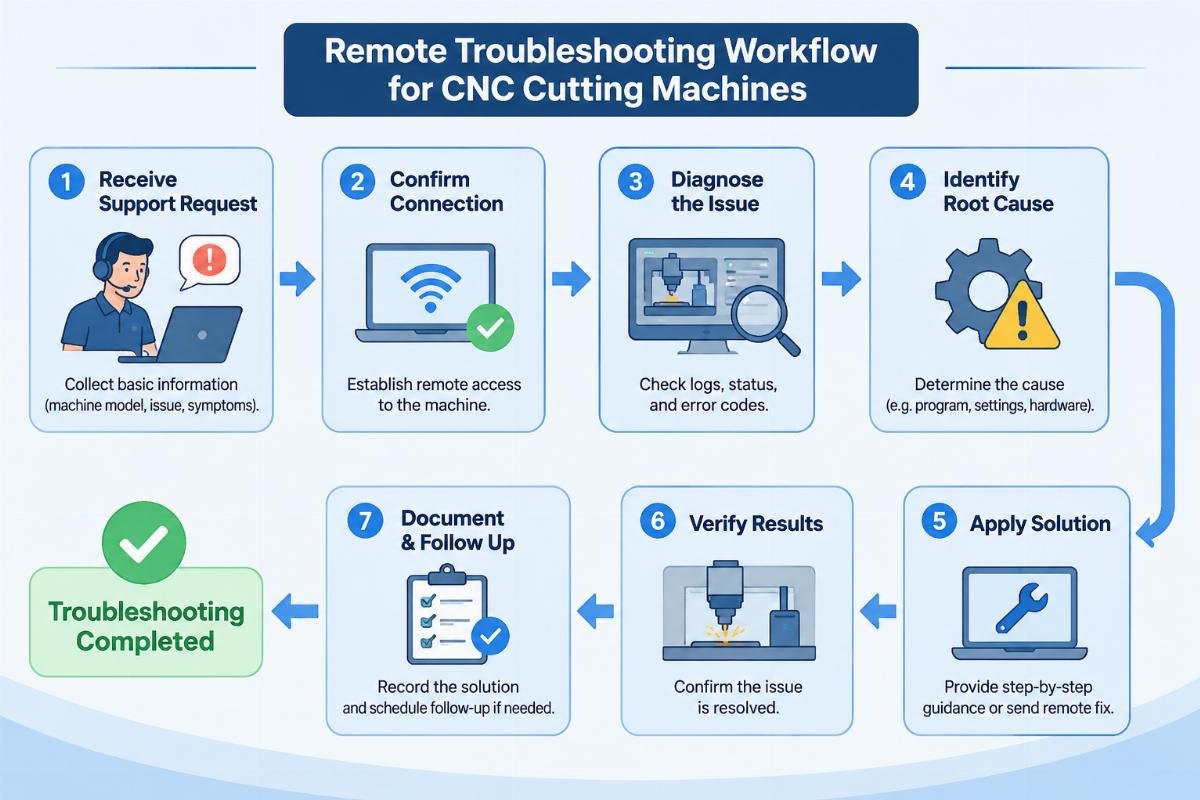
Structured workflows isolate errors faster than random checks.
When a machine stops, panic leads to random button pressing. This often worsens the problem. A methodical approach, guided by online technical support for oscillating knife cutters, ensures that the root cause is identified without unnecessary part replacements.
- Symptom Verification: The operator describes the issue precisely. "It does not cut" is vague. "The knife vibrates but does not penetrate the foam after the third layer" is actionable. The technician replicates the condition remotely if possible, or guides the operator through a test cut.
- Log Analysis: The technician reviews the extracted logs. They look for anomalies in servo current, voltage stability, and axis synchronization. A sudden spike in current on the Y-axis might indicate a mechanical binding, while a gradual drift in position suggests a parameter mismatch.
- Error Isolation: Based on the logs, the technician isolates the subsystem. Is it the motion control? The tool head? The material handling? For instance, if the vacuum pump pressure is stable but the sheet slips, the issue is likely with the suction zone configuration, not the pump itself.
- Parameter Adjustment: Once the cause is identified, the technician adjusts the relevant parameters. This could involve tweaking the PID gains for smoother motion or adjusting the knife lift height for thicker materials. These changes are made in small increments, with test cuts after each adjustment.
- Validation: The machine runs a full job cycle under supervision. The technician monitors the performance in real-time to ensure the fix holds.
This process eliminates the guesswork. In one case, a European packaging manufacturer reported inconsistent cuts on corrugated board. On-site visits had failed to find the issue. Through remote log analysis, we noticed that the acceleration rate was too high for the specific board grade, causing slight slippage. Adjusting the acceleration curve remotely resolved the issue in under an hour. This efficiency is why overseas cutter maintenance is increasingly moving online.
How to Calibrate Speed and Precision Remotely?
Precision is restored through parameter tuning, not just mechanical adjustment.
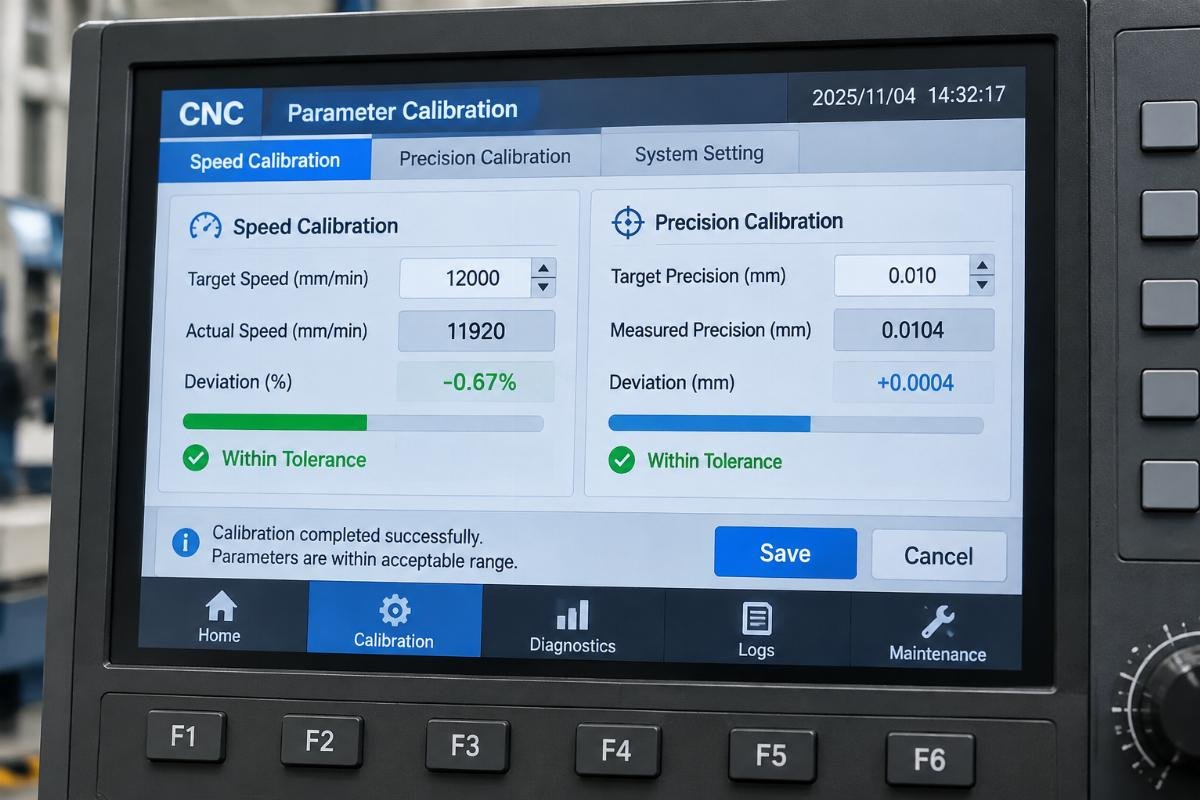
Many operators believe that achieving ±0.1mm accuracy requires physical tools and manual shimming. While mechanical integrity is foundational, much of the precision in digital die-less cutting comes from software calibration. Voltage fluctuations, temperature changes, and material variations can all cause drift. Remote calibration allows technicians to compensate for these factors without being on-site.
The process begins with a baseline test. The machine cuts a standardized geometric pattern. The dimensions are measured and reported back to the technician. If the X-axis is consistently off by a fraction of a millimeter, the step-per-mm value is adjusted. If the corners are rounded, the lookahead buffer and jerk settings are tuned. These parameters control how the machine anticipates direction changes.
For oscillating knife cutters, the frequency and amplitude of the knife vibration are also critical. If the knife does not penetrate cleanly, leaving frayed edges on fabric or leather, the oscillation frequency may need adjustment. This is done through the control interface. The technician guides the operator to change the frequency in small steps, testing on scrap material until the cut quality is optimal.
In a recent case, a textile factory in South America faced issues with multi-layer cutting. The bottom layers were not cut cleanly. Remote diagnostics revealed that the feed rate was too high for the stacked thickness. By reducing the speed and increasing the oscillation amplitude via remote access, the cut quality was restored. The entire calibration took less than thirty minutes. This level of responsiveness is a key advantage of choosing a supplier that offers comprehensive Remote diagnosis for CNC cutting machines.
Why Choose 24/7 Online Support Over Traditional Maintenance?
Downtime costs far exceed the price of proactive remote support.
Traditional maintenance models rely on scheduled visits or break-fix responses. Both are inefficient for global operations. A scheduled visit may miss emerging issues, while a break-fix response involves long delays for travel and visa processing. In contrast, 24/7 online support provides immediate access to expertise.
Consider the cost of downtime. For a high-volume packaging plant, an hour of stopped production can mean missed delivery deadlines and penalty clauses. Waiting days for a technician is financially unsustainable. Remote support minimizes this risk. Issues are often resolved before they cause a full stop. Predictive maintenance, driven by log analysis, can identify worn components before they fail.
Furthermore, remote support empowers local operators. Through guided sessions, they learn to handle minor issues themselves. This builds internal capability and reduces dependency on external help for routine tasks. The knowledge transfer is immediate and practical.
A Middle Eastern automotive interior manufacturer once faced a critical deadline. A parameter mismatch after a firmware update halted their production. With traditional support, they would have waited weeks. With remote diagnostics, the issue was identified and corrected in a single session. The production line resumed immediately, saving them from a significant financial loss. This experience highlights the value of remote troubleshooting CNC cutter capabilities.

For global manufacturers, the choice is clear. The ability to diagnose and resolve issues instantly, regardless of location, is no longer a luxury. It is a necessity. Suppliers who offer robust online technical support for oscillating knife cutters provide more than just machines; they provide continuity. As industries demand faster turnaround and higher precision, the role of remote expertise becomes central to operational success. This is why overseas cutter maintenance strategies must evolve to include real-time digital support.
Conclusion
Remote diagnosis transforms downtime from a crisis into a manageable event.
By leveraging real-time data and expert guidance, manufacturers can maintain high productivity without the delays of traditional service models. The shift to online support is not just technological; it is strategic. It ensures that machines keep running, profits stay protected, and global operations remain resilient. Choosing a partner with strong Remote diagnosis for CNC cutting machines capabilities is an investment in uninterrupted production.