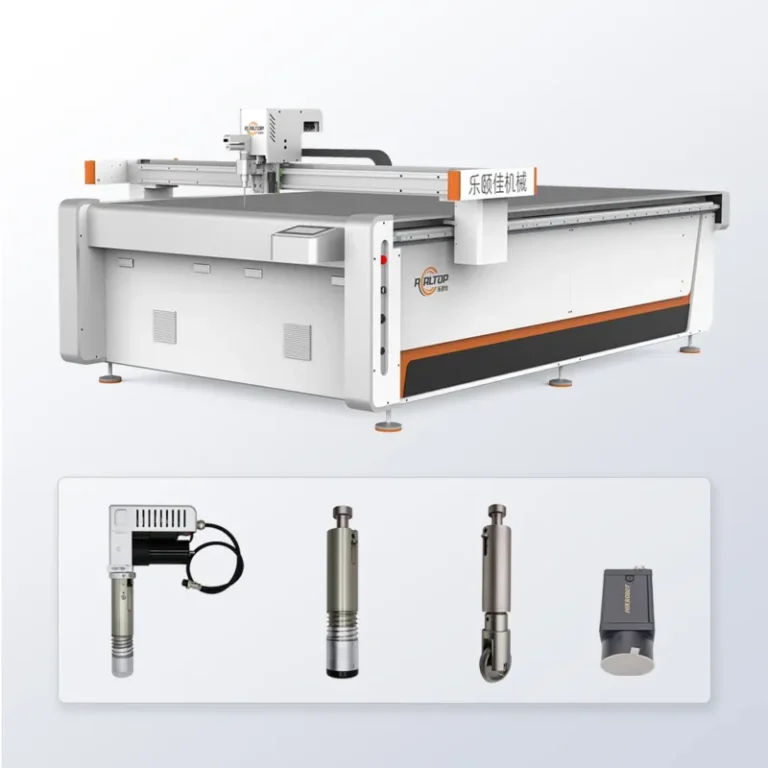
CNC Oscillating Knife for Porous Filter Cloth Cutting Manufacturer
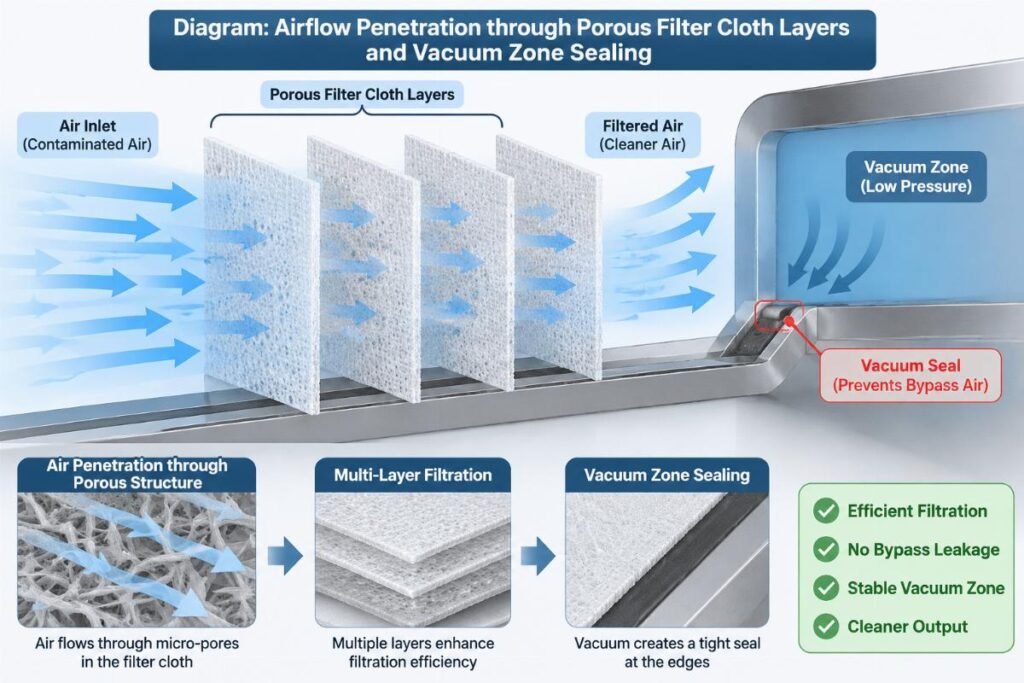
Higher vacuum power is not the solution to material shifting.
To reduce vacuum leaks when cutting porous filter cloth, you must seal the leakage path through optimized suction zoning and strict dust management, rather than increasing pump capacity. The core issue is air permeability and particulate infiltration, not insufficient suction force.
The smell of burnt fibers and the sound of a vibrating knife stuttering against a guide rail are distinct memories from my early days in quality control. I recall standing in a filter plant in Riyadh, watching a high-end CNC machine fail to hold down multi-layered PTFE coated glass fiber cloth. The operator kept cranking up the vacuum pressure, believing more power would solve the slippage. Instead, the increased airflow pulled fine dust deeper into the linear guides, causing the head to jam and the material to shift by several millimeters. This was not a pump failure; it was a fundamental misunderstanding of how air moves through porous media.
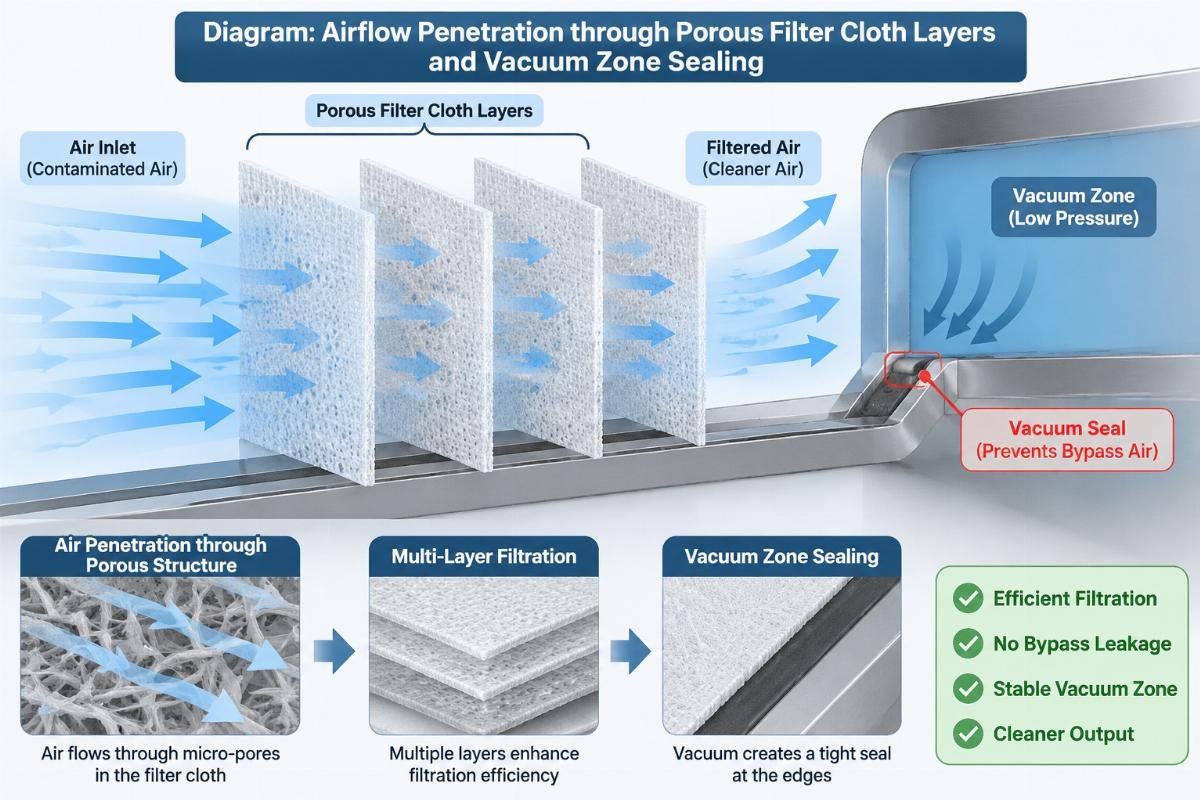
Understanding why standard suction fails on these materials is the first step toward precision. When you cut non-porous materials like leather or cardboard, the vacuum creates a sealed chamber under the sheet. With porous filter cloth, the air passes directly through the fabric, bypassing the hold-down effect entirely if the underlying table surface is not properly managed. This is where a specialized CNC oscillating knife for porous filter cloth cutting manufacturer must engineer solutions that go beyond basic suction tables.
Why Does Vacuum Fail on Porous Filter Cloth?
Dust accumulation and inherent porosity are the primary culprits, not mechanical pump failure.
The structure of industrial filter cloth, often made from polyester, polypropylene, or PTFE membranes, is designed to allow air and liquid to pass while trapping particles. This very function makes it a nightmare for vacuum hold-down systems. When the oscillating knife cuts through these layers, it generates micro-particles that do not just fall away; they are sucked into the vacuum channels. Over time, this dust clogs the perforations in the cutting bed and infiltrates the guide rails of the knife head.
In many cases, operators mistake the resulting loss of holding power for a weak vacuum pump. They replace filters or upgrade motors, but the problem persists because the leakage path remains open. The air follows the path of least resistance, which is through the fabric and the clogged gaps in the table, rather than creating a pressure differential that holds the material flat.
A common misconception is that thicker fabrics require more suction. In reality, thicker porous materials often have higher air permeability, meaning they leak more vacuum unless the surface area of the suction zone is perfectly matched to the material footprint. If the vacuum zone is wider than the material, air rushes in from the sides, further reducing the effective hold-down pressure on the cloth itself. This is why generic cutting tables often struggle with technical textiles, while a dedicated CNC oscillating knife for porous filter cloth cutting manufacturer designs tables with segmented, adjustable vacuum zones.

How to Seal the Cutting Area Effectively?
Use sacrificial boards and optimize vacuum zoning to create a temporary seal.
Sealing the cutting area is less about blocking air completely and more about managing its flow. One effective method is the use of sacrificial boards or bristle tables. These surfaces provide a slight cushion that allows the knife to cut through without damaging the underlying belt, while also helping to close the gap between the fabric and the table surface. However, for highly porous materials, even bristles may not be enough.
Advanced systems utilize smart vacuum zoning. Instead of one large vacuum chamber, the table is divided into multiple small, independently controlled zones. Sensors detect the presence of material and activate only the zones covered by the cloth. This prevents air from* areas of the table, significantly increasing the effective pressure on the material.
During a recent installation for a composite processor in Europe, we encountered issues with multi-layer cutting of glass fiber filters. The standard vacuum setup caused the top layers to shift while the bottom layers remained stationary. By adjusting the vacuum zone width to match the exact dimensions of the nesting layout, we eliminated the lateral air influx. The result was a noticeable improvement in layer alignment and cut accuracy. This level of customization is typical when working with a reputable CNC oscillating knife for porous filter cloth cutting manufacturer who understands the nuances of technical textiles.
It is also critical to consider the condition of the conveyor belt or cutting surface. Worn belts develop micro-gaps that allow air to escape. Regular inspection and replacement of these surfaces are essential maintenance tasks that are often overlooked. A tight, well-maintained surface ensures that the vacuum pressure is directed upward through the material, rather than leaking sideways into the machine structure.

What Maintenance Prevents Dust Infiltration?
Implement strict guide cleaning and filter replacement routines to maintain suction integrity.
Dust is the silent killer of precision cutting machines. In the case of porous filter cloth, the dust is fine, abrasive, and pervasive. It does not just clog filters; it enters the linear guides and ball screws of the oscillating knife head. Once inside, it acts as an abrasive paste, wearing down components and causing the head to vibrate excessively. This vibration leads to uneven cuts and further material shifting.
A rigorous maintenance schedule is non-negotiable. This includes daily cleaning of the vacuum filters and weekly inspection of the guide rails. Compressed air should be used to blow out dust from the vacuum channels in the table, but care must be taken not to force dust deeper into the system. Some advanced machines feature automatic cleaning cycles that reverse the airflow periodically to dislodge trapped particles.
I once visited a facility where the operator had not changed the vacuum filters in months. The suction pressure was barely half of the rated value, not because the pump was failing, but because the airflow was restricted by a thick layer of compacted dust. After replacing the filters and cleaning the ducts, the machine’s performance returned to normal. This simple fix saved the client from purchasing a new pump and highlighted the importance of routine care.
When selecting equipment, look for features that facilitate maintenance. Easy-access filter compartments, self-cleaning guide systems, and dust-proof covers for sensitive components can significantly reduce downtime. A knowledgeable CNC oscillating knife for porous filter cloth cutting manufacturer will design their machines with these practical considerations in mind, ensuring that maintenance is straightforward and effective.
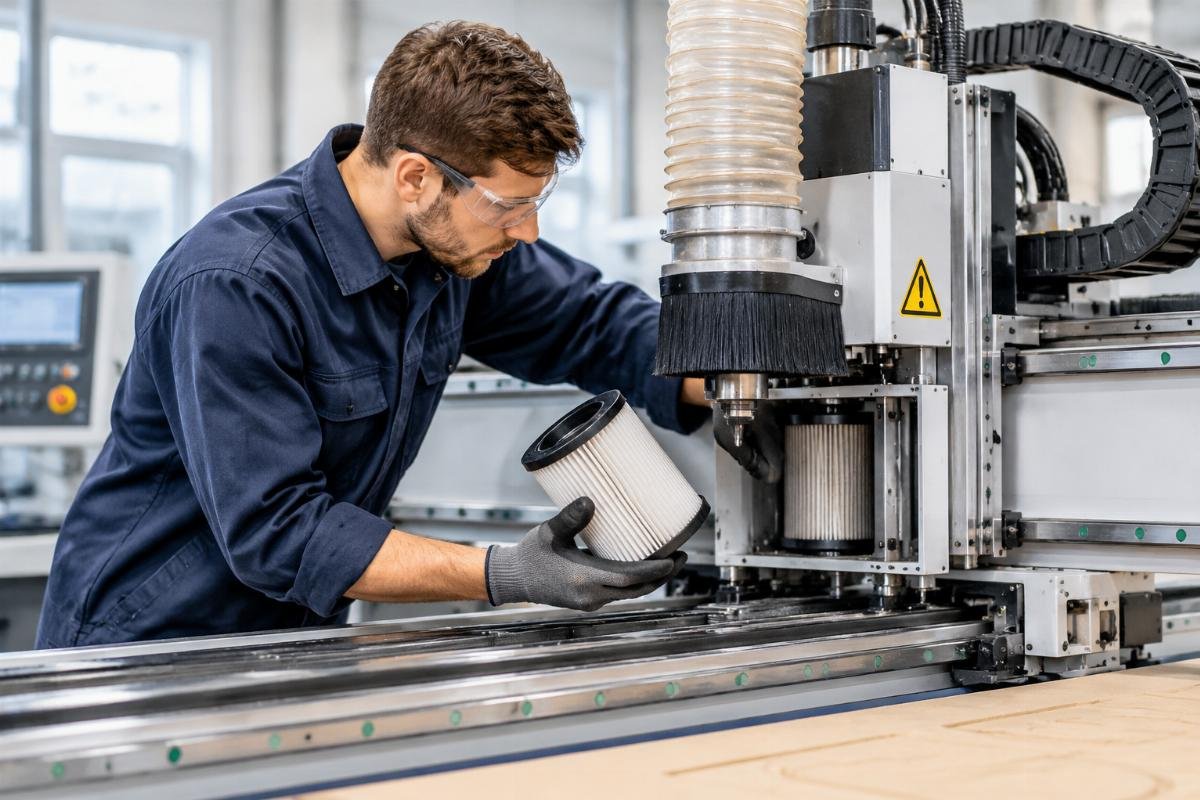
Which Machine Parameters Optimize Hold-Down?
Adjust cutting speed and vacuum pressure for specific porosity levels.
Optimizing machine parameters is a balancing act. High cutting speeds generate more heat and vibration, which can exacerbate material shifting. For porous filter cloth, it is often better to cut at a moderate speed with higher precision than to rush the process. The oscillating frequency of the knife should also be adjusted to match the material thickness and density. A higher frequency may be needed for dense, multi-layer stacks, while a lower frequency might suffice for single layers.
Vacuum pressure should be set based on the porosity of the material. Counter-intuitively, porous materials often require less suction pressure than non-porous ones, provided the leakage path is sealed. Excessive suction can distort the fibers of the cloth, leading to inaccurate cuts and damaged edges. The goal is to use just enough pressure to hold the material flat without deforming it.
Software plays a crucial role in this optimization. Modern CNC systems allow for precise control over vacuum zones, cutting speed, and knife oscillation. Nesting software can also help by arranging patterns to minimize waste and ensure that the vacuum zones are utilized efficiently. Some systems even offer real-time monitoring of vacuum pressure, alerting operators to any drops that might indicate a leak or blockage.
Working with a CNC oscillating knife for porous filter cloth cutting manufacturer that provides comprehensive training and support is essential. They can help you determine the optimal parameters for your specific materials and applications. This expertise can save time and money by preventing trial-and-error adjustments on the shop floor.

Conclusion
Sealing the leakage path is more effective than increasing vacuum power.
Solving vacuum leaks in porous filter cloth cutting requires a holistic approach that combines proper machine design, regular maintenance, and precise parameter adjustment. By focusing on dust management, optimizing vacuum zoning, and understanding the unique properties of porous materials, manufacturers can achieve consistent, high-quality cuts. Partnering with an experienced CNC oscillating knife for porous filter cloth cutting manufacturer ensures that you have the right tools and knowledge to overcome these challenges efficiently.