Preventing Blade Breakage When Cutting Fiberglass Layers OEM
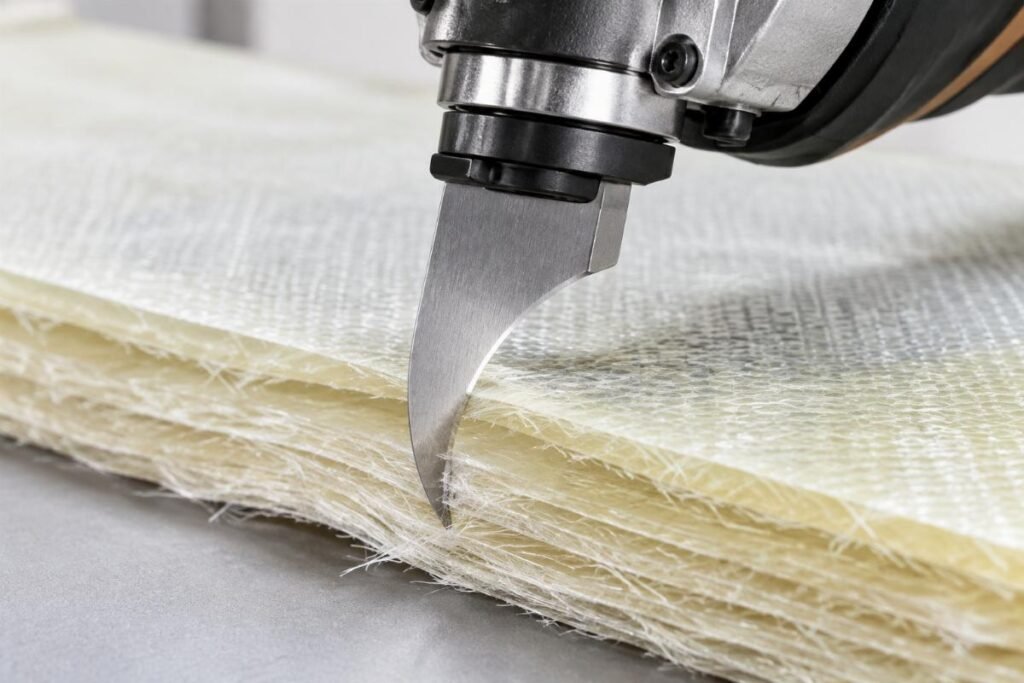
Most operators blame blade quality for breakage, but the real culprit is often excessive downward force from incorrect depth settings.
Preventing blade breakage when cutting fiberglass layers requires precise calibration of blade exposure, optimized vacuum pressure to eliminate inter-layer air, and smooth tool paths that reduce lateral stress on the oscillating knife.
I still remember the panic in a composite factory in Vietnam when a stack of multi-layer fiberglass was ruined because the vibrating knife snapped mid-cut. The operator insisted the blades were defective, swapping brands repeatedly without solving the issue. It was only after I checked the machine parameters that the root cause became clear: the blade exposure* honeycomb backing material, while loose presser wheels allowed the fabric to shift. This experience taught me that Preventing blade breakage when cutting fiberglass layers is less about buying expensive tools and more about mastering the interaction between depth, pressure, and path.
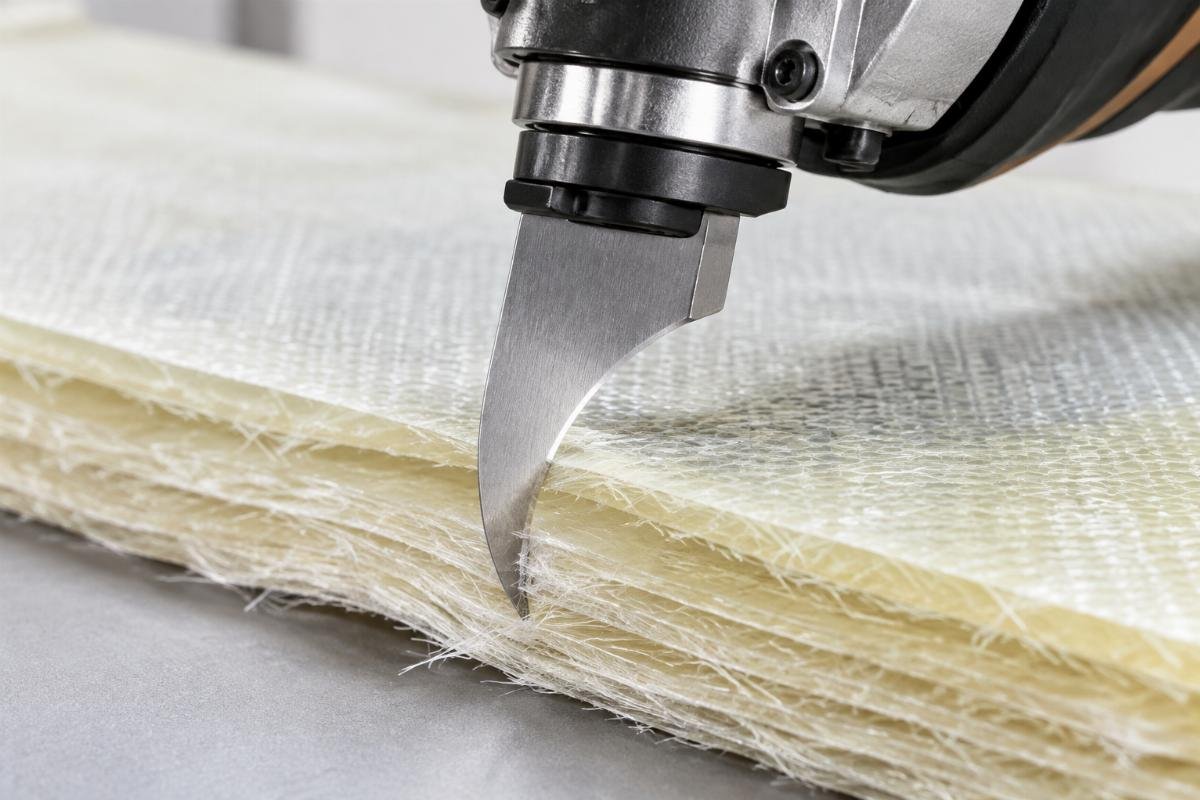
The transition from manual handling to automated CNC solutions revealed that most breakage stems from operational habits rather than material flaws. By adjusting the cutting parameters to match the specific density and weave of the fiberglass, operators can significantly extend tool life. This approach is central to Preventing blade breakage when cutting fiberglass layers in high-volume production environments.
Why Do Blades Break When Cutting Fiberglass?
Blade breakage is rarely a material defect; it is usually a symptom of unoptimized cutting dynamics and unstable material fixation.
Fiberglass is an abrasive and tough material. When cut with an oscillating knife, the blade experiences significant friction and lateral resistance. Many operators assume that a sharper or harder blade will solve breakage issues, but this often leads to faster fatigue if the underlying mechanical stresses are not addressed. The primary causes include excessive downward force, inadequate clamping, and abrupt changes in cutting direction.
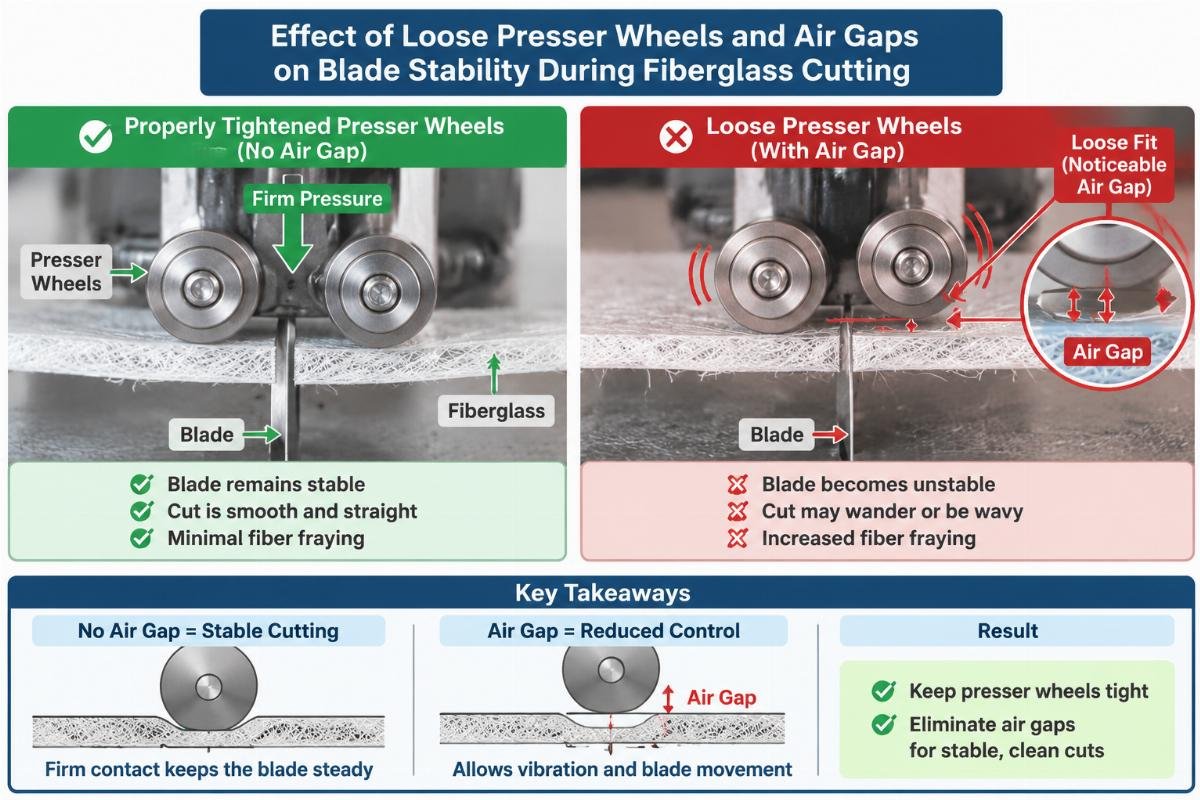
A common mistake is ignoring the role of the presser wheel. If the wheel does not hold the fiberglass layers firmly against the cutting table, the material can lift or shift during the cut. This movement creates uneven resistance, causing the blade to bend and eventually snap. In one case, a European automotive supplier faced frequent downtime due to broken blades. After inspecting their setup, we found that the presser wheel pressure was too low for the thick multi-layer stacks they were processing. Increasing the pressure stabilized the material, and blade life improved noticeably.
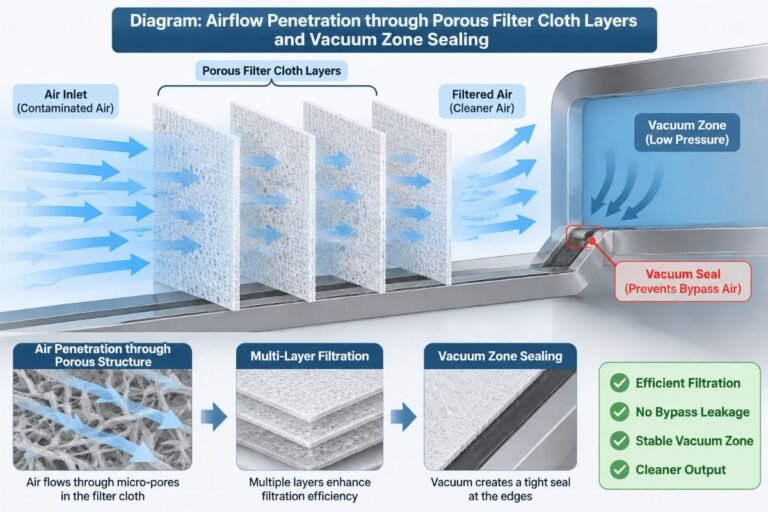
Another critical factor is the presence of air between layers. Fiberglass fabrics often trap air, creating voids that cause the blade to vibrate excessively or catch unexpectedly. Without sufficient vacuum suction to remove this air, the blade encounters inconsistent resistance, leading to sudden breakage. Understanding these dynamics is essential for Preventing blade breakage when cutting fiberglass layers effectively.
How to Calibrate Blade Depth and Exposure?
Proper blade exposure prevents the tip from snapping by ensuring it only cuts through the material thickness without penetrating the backing.
One of the most counter-intuitive insights in composite cutting is that deeper is not better. Setting the blade too deep increases the surface area in contact with the material, generating excessive heat and friction. More importantly, if the blade penetrates the honeycomb or foam backing, the tip can get caught in the cells, leading to immediate breakage. The goal is to set the exposure so that the blade just clears the bottom layer of fiberglass.
To calibrate the depth correctly, start by measuring the total thickness of the fiberglass stack. Add a small margin, typically less than a millimeter, to ensure complete cutting. Most modern CNC oscillating knife machines allow for precise adjustment of the Z-axis. It is crucial to perform a test cut on a scrap piece to verify that the blade does not dig into the table surface. If you see marks on the backing material, the depth is too great.
In my early days troubleshooting machines in Southeast Asia, I observed many operators setting the depth based on guesswork rather than measurement. This led to inconsistent results and frequent blade changes. By adopting a systematic approach to depth calibration, manufacturers can reduce waste and improve cut quality. This precision is a key aspect of Preventing blade breakage when cutting fiberglass layers.
| Parameter | Incorrect Setting | Correct Setting | Impact on Blade Life |
|---|---|---|---|
| Blade Exposure | Excessive, penetrates backing | Minimal, just clears material | Substantially extended |
| Downward Force | High, causes bending | Optimized for material density | Noticeably reduced stress |
| Tip Angle | Too acute for thick layers | Appropriate for fiberglass weave | Improved durability |

How to Optimize Vacuum and Presser Wheel Pressure?
Eliminating air gaps and ensuring consistent clamping are vital for stable cutting and reduced lateral stress on the blade.
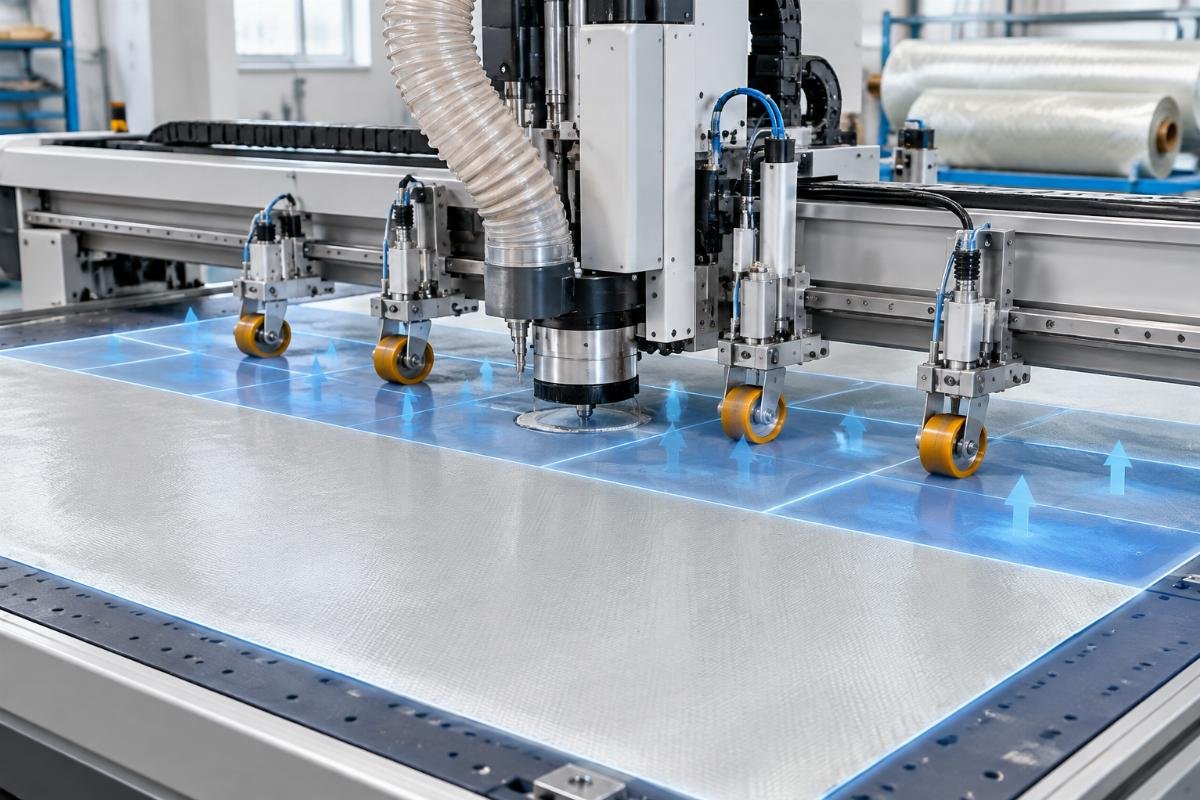
Vacuum suction plays a dual role in fiberglass cutting: it holds the material flat and removes air trapped between layers. Insufficient vacuum allows the fabric to bulge, creating variable resistance that can snap the blade. Conversely, excessive vacuum might distort delicate fabrics, though this is less common with rigid fiberglass. The key is to find the threshold where the material is firmly fixed without deformation.
Presser wheel pressure must be synchronized with the vacuum system. The wheel should apply enough force to keep the layers together as the knife moves through them. If the pressure is too low, the top layers may separate from the bottom ones, causing the blade to wander. If it is too high, it can compress the material excessively, increasing friction. Adjusting these parameters requires observing the cut edge and listening to the sound of the machine. A smooth, consistent hum indicates optimal settings, while jerky noises suggest instability.
A Middle East composite processor once struggled with frayed edges and broken blades. After increasing the vacuum power and adjusting the presser wheel height to match the material thickness, the issues disappeared. The blades lasted significantly longer, and the cut quality improved. This case highlights the importance of holistic parameter tuning in Preventing blade breakage when cutting fiberglass layers.
How to Adjust Cutting Paths and Tool Compensation?
Smooth paths and accurate tool compensation reduce lateral stress, preventing the blade from bending and breaking during complex cuts.
The geometry of the cutting path has a direct impact on blade stress. Sharp corners and abrupt direction changes force the blade to twist, which can lead to fatigue and breakage. Optimizing the tool path involves adding small radii to corners and smoothing out jagged vectors. Additionally, tool compensation accounts for the width of the blade, ensuring that the cut follows the intended line without deviation.
Smart nesting software can help generate efficient paths that minimize sharp turns. By arranging parts to allow for continuous cutting motions, the machine reduces the number of start-stop cycles, which are high-stress events for the blade. Furthermore, adjusting the cutting speed in relation to the oscillation frequency is crucial. Higher speeds may require lower oscillation frequencies to maintain cut quality, while intricate shapes benefit from slower speeds and higher frequencies.
In a recent project, we used a CNC oscillating knife machine with smart nesting capabilities to process a large order of fiberglass gaskets. The software automatically optimized the paths, reducing the number of sharp turns by a significant margin. As a result, the blade life doubled compared to previous manual programming methods. This demonstrates how technology aids in Preventing blade breakage when cutting fiberglass layers by minimizing mechanical stress.
| Path Feature | Effect on Blade | Optimization Strategy |
|---|---|---|
| Sharp Corners | High lateral stress | Add small radii |
| Jagged Vectors | Uneven resistance | Smooth vectors |
| Frequent Starts/Stops | Impact stress | Continuous nesting |

Conclusion
Mastering parameter calibration is the most effective way to extend blade life and ensure consistent cut quality.
Preventing blade breakage when cutting fiberglass layers is not about finding a magic blade, but about understanding the mechanics of the cutting process. By carefully adjusting blade depth, optimizing vacuum and presser wheel pressure, and refining cutting paths, operators can eliminate the root causes of tool failure. These adjustments lead to smoother operations, lower tooling costs, and higher productivity. Implementing these practices ensures that every cut is precise and every blade reaches its full potential.