Used Gerber Cutter vs New Chinese Composite Machine Supplier
The cheapest machine on the market is often the most expensive one you will ever own.
For composite processors, a new Chinese oscillating knife cutter from a reputable supplier typically outperforms a used Gerber cutter by eliminating hidden downtime costs and delivering superior precision for tough materials like carbon fiber and PVC. While the initial price tag of second-hand imported equipment appears lower, the total cost of ownership frequently skyrockets due to obsolete parts, lack of warranty, and precision drift that ruins expensive raw materials.
I still remember the smell of burnt resin in a workshop near Wujiang. The owner stood next to a large, faded blue cutting table, his face flushed with frustration. He had purchased a second-hand imported brand cutter, believing the prestigious name would guarantee quality for his automotive interior projects. But when he tried to cut multi-layer carbon fiber prepregs, the vibration knife struggled. The precision drifted beyond two millimeters. Piles of wasted material accumulated in the corner, each scrap representing a significant financial loss. He wasn’t just paying for the machine; he was paying for every mistake it made. This scene is not unique. Many buyers focus on the residual value of used equipment while ignoring the operational reality. A modern Used Gerber Cutter vs New Chinese Machine comparison must look beyond the purchase price to the daily performance on the shop floor.

The shift in the global manufacturing landscape has changed what "reliable" means. Older machines were built for different eras of material science. Today’s composites are tougher, more abrasive, and require tighter tolerances. Relying on legacy hardware often means fighting against the machine rather than working with it.
What are the hidden costs of used Gerber cutters?
Downtime and maintenance expenses frequently outweigh the initial savings of buying used equipment.
When a factory manager looks at a quote for a pre-owned industrial cutter, they see a capital expenditure number. They rarely see the operational bleeding that follows. The primary issue with aging equipment is the scarcity of support. As technology evolves, manufacturers discontinue parts for older models. Finding a replacement servo motor or a specific circuit board can take weeks, during which the production line stands still.
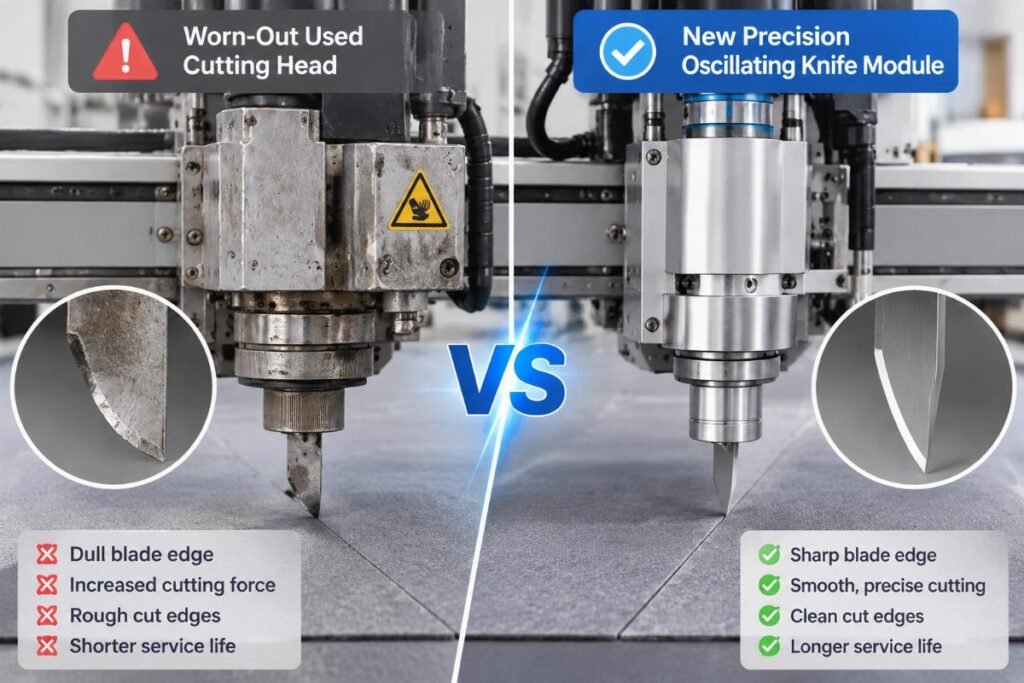
In the case of the Wujiang auto interior shop, the problem wasn’t just the broken part; it was the inability to maintain consistent tension and speed. The used machine lacked the modern feedback loops that adjust for material thickness variations in real-time. Every time the operator loaded a new roll of technical textile, they had to spend hours recalibrating. This is labor cost disguised as machine operation.
Furthermore, the software ecosystem of older machines is often incompatible with modern CAD/CAM workflows. Operators find themselves manually converting files or dealing with glitches that cause misalignment. A new Used Gerber Cutter vs New Chinese Machine analysis must account for the efficiency of the digital workflow. If the machine cannot interpret the nesting algorithm correctly, it leaves gaps between parts. These gaps are wasted material. Over a year, this waste can equal the price difference between a used and a new unit.
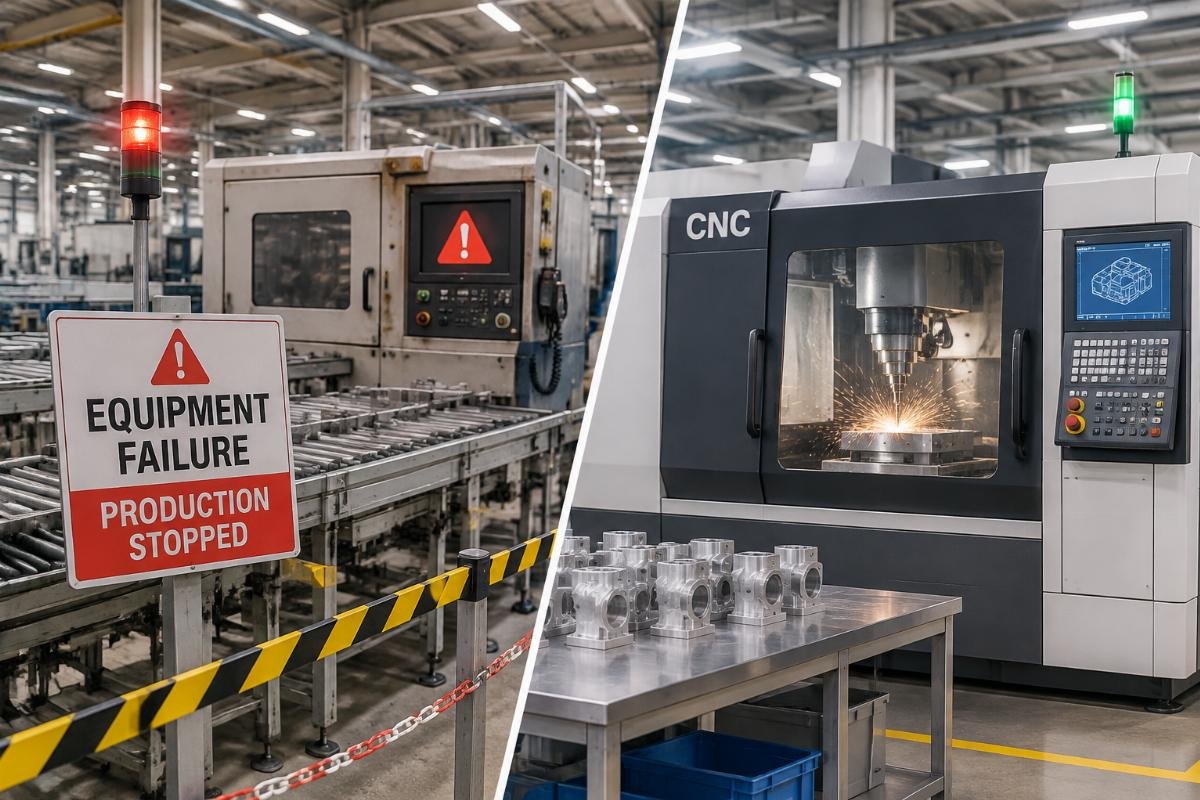
The hidden cost is also psychological. Operators lose confidence in a machine that frequently errors. They begin to double-check every cut, slowing down the entire process. This hesitation is a silent productivity killer. In contrast, modern systems are designed for intuitive operation, reducing the cognitive load on staff and allowing them to focus on quality control rather than machine babysitting.
How do new Chinese machines handle tough composites?
Advanced oscillating knife technology ensures clean, precise cuts for carbon fiber and PVC without delamination.
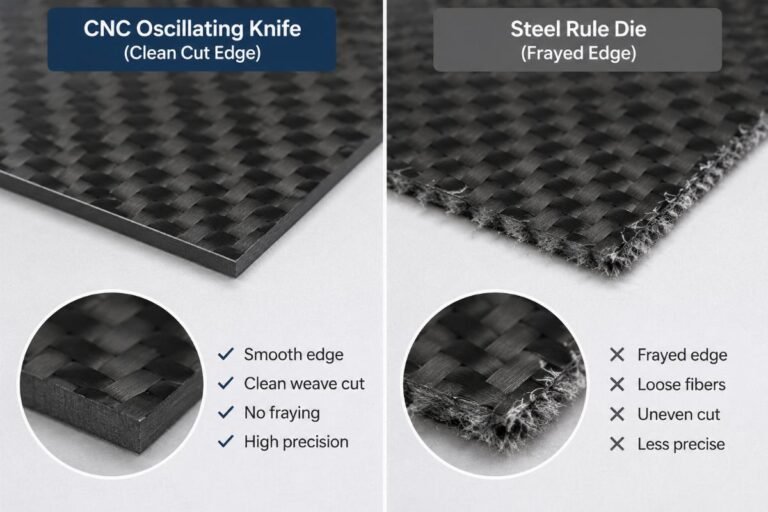
Cutting composite materials is fundamentally different from cutting paper or fabric. Carbon fiber is abrasive and prone to fraying. PVC tarpaulin is elastic and can stretch under pressure. A standard blade drags and tears; an oscillating knife vibrates at high frequency to slice through fibers cleanly. The key metric here is precision stability.
Modern Chinese manufacturers have invested heavily in rigid gantry structures and high-frequency vibration modules. For instance, achieving a cutting precision of ±0.1mm is now standard for high-end domestic suppliers. This level of accuracy ensures that complex patterns for car seat covers or aircraft interior panels fit perfectly without manual trimming.
I recall visiting a PVC tarpaulin manufacturer who switched from a legacy imported system to a new domestic solution. Their previous machine suffered from vibration issues at higher speeds, causing the knife to bounce and create jagged edges. The new machine featured a dampened oscillating head that maintained stability even at top speeds. The result was a cleaner edge that required no post-processing. This eliminated a whole step in their production line.
The ability to handle tough materials also depends on the smart nesting software. Modern systems analyze the shape of the parts and the grain direction of the material to optimize layout. For a carbon fiber processor, this optimization can lead to substantial material savings. By reducing the gap between parts, the machine uses more of the expensive raw roll. This is not just about cutting faster; it is about cutting smarter. A Used Gerber Cutter vs New Chinese Machine debate often misses this software-driven efficiency gain.

Moreover, new machines come with warranties that cover these critical components. If a vibration module fails within the first few years, it is replaced at no cost. With a used machine, the buyer assumes all risk. For a business relying on tight margins, this risk transfer is invaluable.
Specification Comparison: Used Gerber vs. New Chinese Alternatives
A side-by-side evaluation reveals that new alternatives offer superior warranty coverage and consistent precision.
To make an informed decision, buyers need to look at specific parameters. It is not enough to say one is "better." We must compare what matters: precision, speed, support, and material handling. The following table highlights the typical differences between an aging imported unit and a modern Chinese alternative.
| Feature | Used Imported Cutter | New Chinese Oscillating Cutter |
|---|---|---|
| Cutting Precision | Drifts over time, often >1mm | Stable ±0.1mm with calibration |
| Warranty Coverage | None or very limited | Comprehensive multi-year warranty |
| Technical Support | Difficult to source, slow response | 24/7 online support and remote diagnostics |
| Software Compatibility | Legacy formats, limited updates | Modern CAD/CAM integration, smart nesting |
| Material Versatility | Struggles with new tough composites | Optimized for carbon fiber, PVC, and technical textiles |
| Spare Parts Availability | Obsolete, long lead times | Standardized, fast shipping from factory |
Consider the case of a European distributor who supplies cutting solutions to signage companies. He noticed that his clients using older imported machines faced frequent breakdowns when switching to newer, thicker acrylic substrates. The old motors simply lacked the torque. When he introduced a new Chinese model with upgraded servo drives, the machines handled the material effortlessly. The difference was not just in power, but in the intelligent control of that power.
The table above shows that while the used machine might have a historical reputation, its current capability is compromised. The new Chinese cutter offers verifiable performance metrics. For a buyer, this means predictability. You know exactly what the machine will do on day one and on day one thousand. This reliability is crucial for meeting delivery deadlines. When evaluating a Used Gerber Cutter vs New Chinese Machine, the consistency of output is a decisive factor.
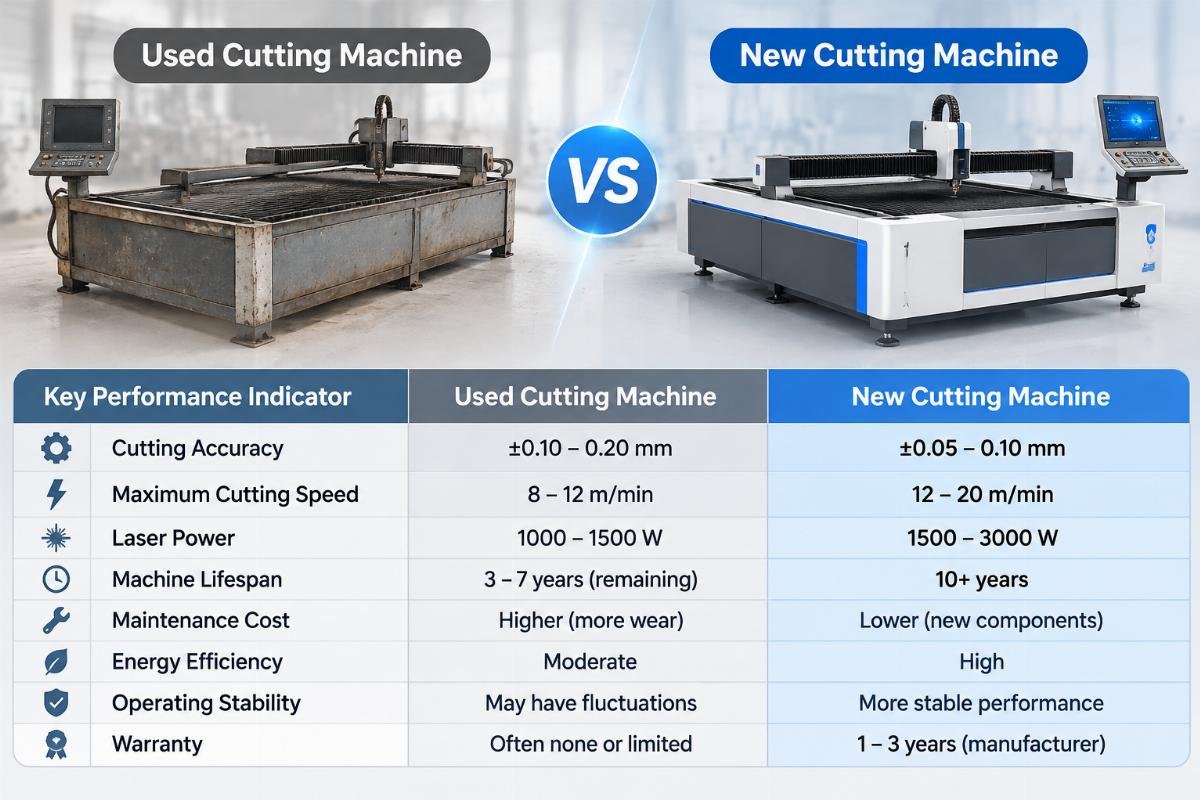
Another critical aspect is the voltage and customization options. New manufacturers often provide flexible voltage configurations to suit different global regions, along with OEM capabilities. This allows distributors to brand the machines or request specific table sizes. Used machines are fixed entities; you get what you get. This lack of flexibility can be a bottleneck for growing businesses.
How to calculate true ROI for composite cutting?
Factoring in material savings and zero downtime reveals the long-term financial advantage of new equipment.
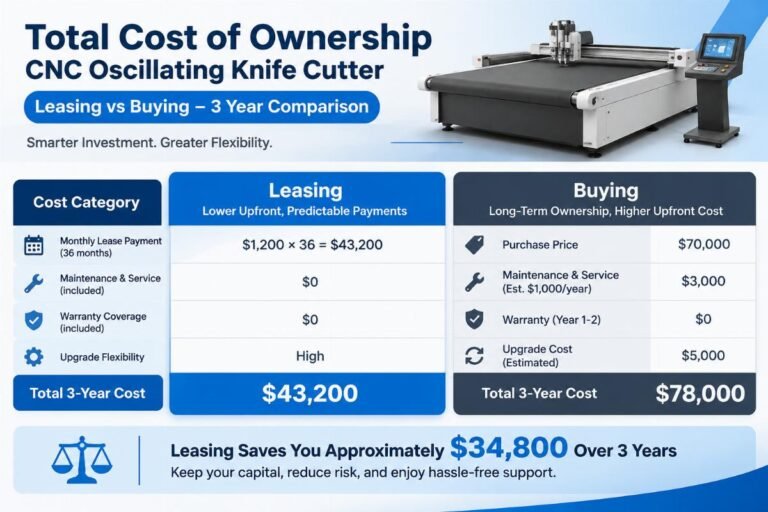
Return on investment is not just about the purchase price. It is about the cash flow generated by the machine over its life. A common mistake is to calculate ROI based solely on the initial cost divided by monthly revenue. This ignores the variable costs that eat into profits.
Material cost is often the largest expense in composite manufacturing. A machine that wastes less material directly improves the bottom line. If a new machine’s smart nesting saves even a small percentage of material, the cumulative savings over a year are significant. For a shop processing high-value carbon fiber, this saving can be substantial.
Downtime is another major factor. Every hour the machine is down is an hour of lost revenue. With a new machine under warranty, repair costs are zero, and response times are fast. With a used machine, the buyer pays for parts, labor, and the opportunity cost of stopped production. In the Wujiang example, the cost of the wasted carbon fiber alone exceeded the price difference between the used and new machine within months.
Let’s look at a hypothetical scenario. A shop processes PVC tarpaulins. The used machine causes a 5% material waste rate due to poor nesting and precision errors. The new machine reduces this to a minimal level. Additionally, the new machine runs at higher speeds without sacrificing quality. The increased throughput means more orders can be fulfilled in the same timeframe. When you add the material savings to the increased revenue from higher throughput, the ROI of the new machine becomes clear.

Furthermore, consider the resale value. A well-maintained new machine with a service history holds value better than an old machine with unknown wear. When it comes time to upgrade again, the new machine will have a higher residual value. This lifecycle perspective is essential for strategic planning. A Used Gerber Cutter vs New Chinese Machine decision should be viewed as a long-term partnership with the technology, not just a transaction.
Conclusion
True cost efficiency comes from reliability, precision, and material optimization, not just a low purchase price.
The allure of a cheap, branded used machine is strong, but the operational realities of modern composite manufacturing demand more. New Chinese oscillating knife cutters offer the precision, support, and efficiency needed to compete in today’s market. By eliminating hidden downtime costs and reducing material waste, they provide a superior return on investment. For any serious processor, the choice is clear: invest in technology that works for you, not against you.