Hand Templates vs Digital Cutting SUP Drop-Stitch Panels OEM
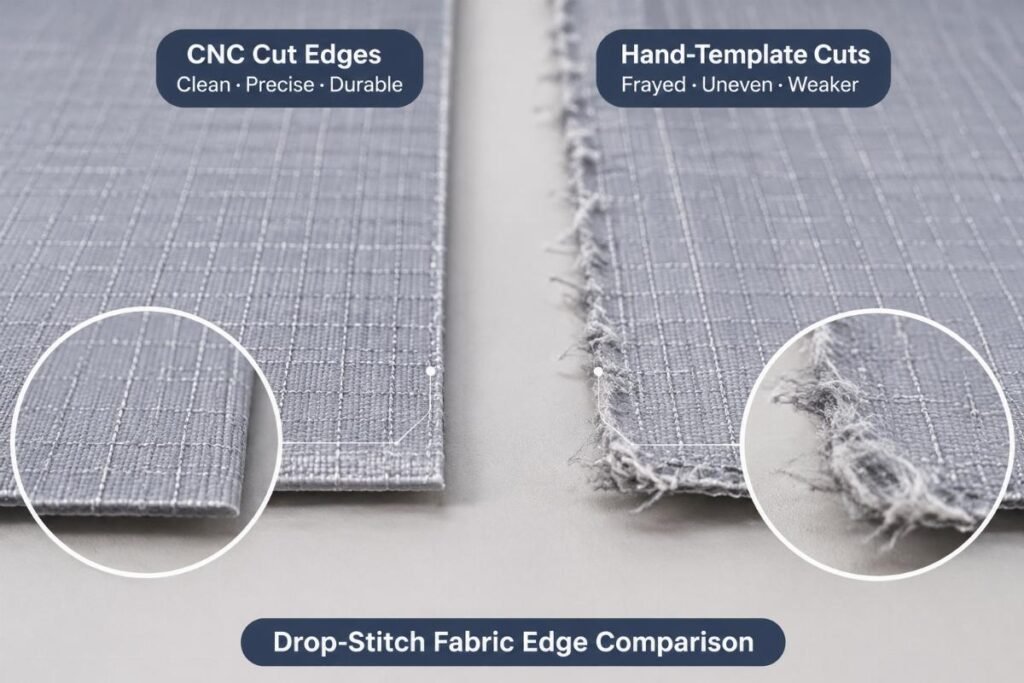
Hand templates are a liability for modern inflatable board manufacturing.
Digital CNC oscillating knife cutting significantly outperforms hand templates for SUP drop-stitch panels by eliminating edge burrs, ensuring sub-millimeter precision, and drastically reducing thermal sealing air leakage rates. This shift from manual die-cutting to automated CNC solutions is not merely an upgrade in speed but a fundamental correction of the structural integrity issues inherent in manual processes. Manufacturers seeking to lower scrap rates and improve production efficiency must recognize that the physical limitations of hand-cut templates directly compromise the airtight seal required for high-performance water sports equipment.
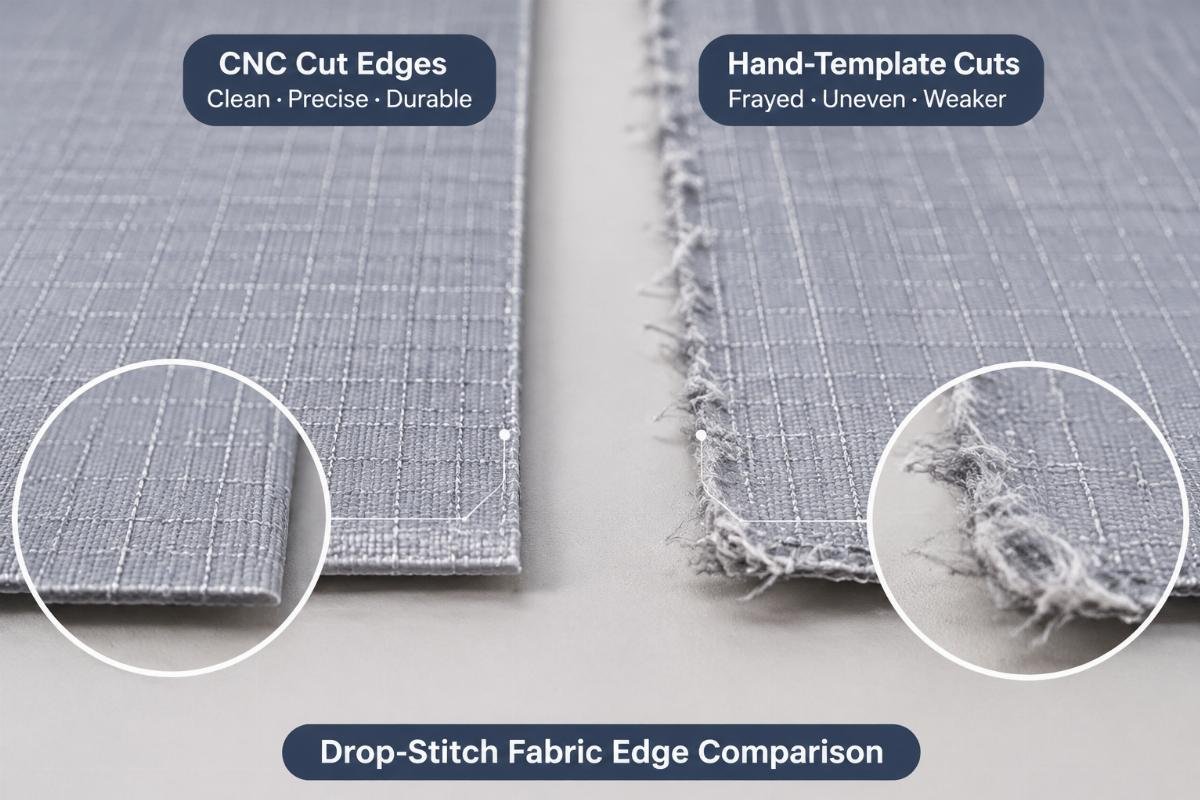
The transition from manual to digital is often driven by the silent cost of rejected batches. In the early days of my career, while overseeing logistics at a busy port, I frequently encountered shipments held back due to quality disputes. One particular case in Ethiopia stands out. A local manufacturer was producing SUP boards using traditional hand templates. The process seemed efficient on paper, but the reality on the factory floor was different. The edges of the drop-stitch panels were uneven, with microscopic fraying that was invisible to the naked eye but catastrophic during thermal sealing. The result was a batch with a high leakage rate, nearly leading to a full return shipment. It was only after introducing a CNC oscillating knife system that the precision improved to ±0.1mm, effectively eliminating the scrap rate caused by poor edge quality. This experience highlighted that the gap between hand templates and digital cutting is measured in the number of defective units that never leave the factory.
Why Do Hand Templates Fail for Drop-Stitch Precision?
Manual cutting cannot maintain consistent tension across multi-layer drop-stitch fabrics.
Drop-stitch material is complex. It consists of two layers of fabric connected by thousands of vertical threads. When cut manually, the blade tends to pull or distort these threads, especially near the edges. This distortion creates gaps that thermal welding machines cannot fully close.
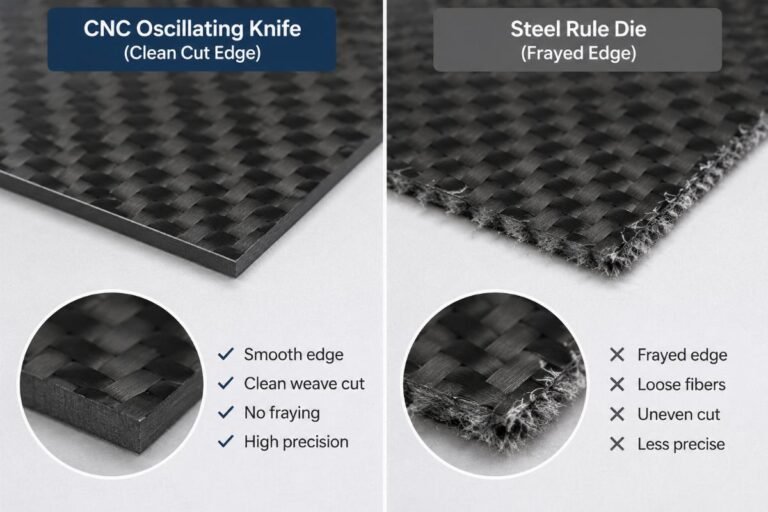
Hand templates rely on the operator’s skill and the sharpness of the blade. However, even the sharpest blade will eventually drag through the dense core of the drop-stitch panel. This dragging causes the edges to fray. In contrast, an oscillating knife moves up and down at high frequency, slicing through the material without lateral drag. This action preserves the integrity of the drop-stitch threads right up to the cut line.
Consider the workflow of a typical manual station. An operator places a template, aligns it visually, and cuts. Over an eight-hour shift, fatigue sets in. Alignment drifts. Blade pressure varies. These small variations accumulate. In a digital setup, the CAD file dictates the cut path with absolute consistency. The machine does not tire. It does not misalign. The result is a panel that fits perfectly into the welding jig every single time.

The difference becomes apparent during the quality control phase. Boards cut with hand templates often require manual trimming or rework before sealing. This adds labor cost and introduces new opportunities for error. Digital cutting removes this step entirely. The panel comes off the table ready for immediate assembly. For manufacturers scaling up production, this elimination of rework is where the real savings lie. It is not just about cutting faster; it is about cutting correctly the first time.
Specification Comparison: Manual vs CNC Oscillating Knife
The choice between methods defines your scrap rate and labor dependency.
When evaluating production methods, it is essential to look beyond the initial equipment cost. The operational differences between hand templates and CNC systems affect every stage of the manufacturing process. The following comparison highlights the key distinctions that impact overall efficiency and product quality.
| Feature | Hand Template Cutting | CNC Oscillating Knife Cutting |
|---|---|---|
| Edge Quality | Prone to fraying and thread pull-out | Clean, sealed edges with no distortion |
| Precision Level | Dependent on operator skill, variable | Consistent ±0.1mm accuracy |
| Material Waste | High due to nesting inefficiencies | Optimized nesting reduces scrap noticeably |
| Setup Time | Slow, requires physical template storage | Instant, digital file loading |
| Labor Dependency | High, skilled operators required | Low, one operator can manage multiple units |
| Repeatability | Low, varies by shift and operator | High, identical cuts every cycle |
| Complex Shapes | Difficult, limited by template rigidity | Easy, handles intricate curves effortlessly |
A US buyer once shared their experience of switching from manual to digital. They reported that while the initial investment was significant, the reduction in material waste paid for the machine within a year. The smart nesting software allowed them to arrange patterns more tightly on the roll of drop-stitch fabric. This optimization saved a substantial amount of raw material. Previously, with hand templates, they had to leave wide margins to account for alignment errors. With digital cutting, those margins were minimized.
The table above illustrates why digital solutions are becoming the standard. Hand templates are suitable for very low-volume prototyping where setup time for a CNC machine might not be justified. However, for any serious production run, the inconsistencies of manual cutting become a bottleneck. The ability to achieve micron-level precision without the need for physical dies is a game-changer. It allows manufacturers to respond quickly to design changes. A new board shape can be cut immediately by uploading a new file, whereas hand templates would require weeks to fabricate and test.

How Oscillating Knives Solve Thermal Sealing Issues
Clean edges are the prerequisite for airtight thermal bonds.
The primary failure mode in inflatable SUP boards is air leakage at the seams. This leakage often originates from poor edge preparation. If the edge of the drop-stitch panel is frayed or uneven, the thermal welding process cannot create a uniform bond. Gaps remain, allowing air to escape over time.
Oscillating knives address this issue directly. By slicing through the material vertically, they leave a clean, flat edge. This edge presents a uniform surface for the welding roller. The heat and pressure are distributed evenly, creating a strong, airtight seal. In contrast, hand-cut edges often have microscopic peaks and valleys. These irregularities prevent full contact during welding, leading to weak spots.
In a factory setting, this difference is visible in the rejection rate. Boards produced with hand-cut panels often fail pressure tests. Technicians spend hours locating and patching leaks. This rework is costly and damages the brand’s reputation. With CNC cutting, the first-pass yield rate increases significantly. The boards come off the line ready for inflation testing, with fewer failures.
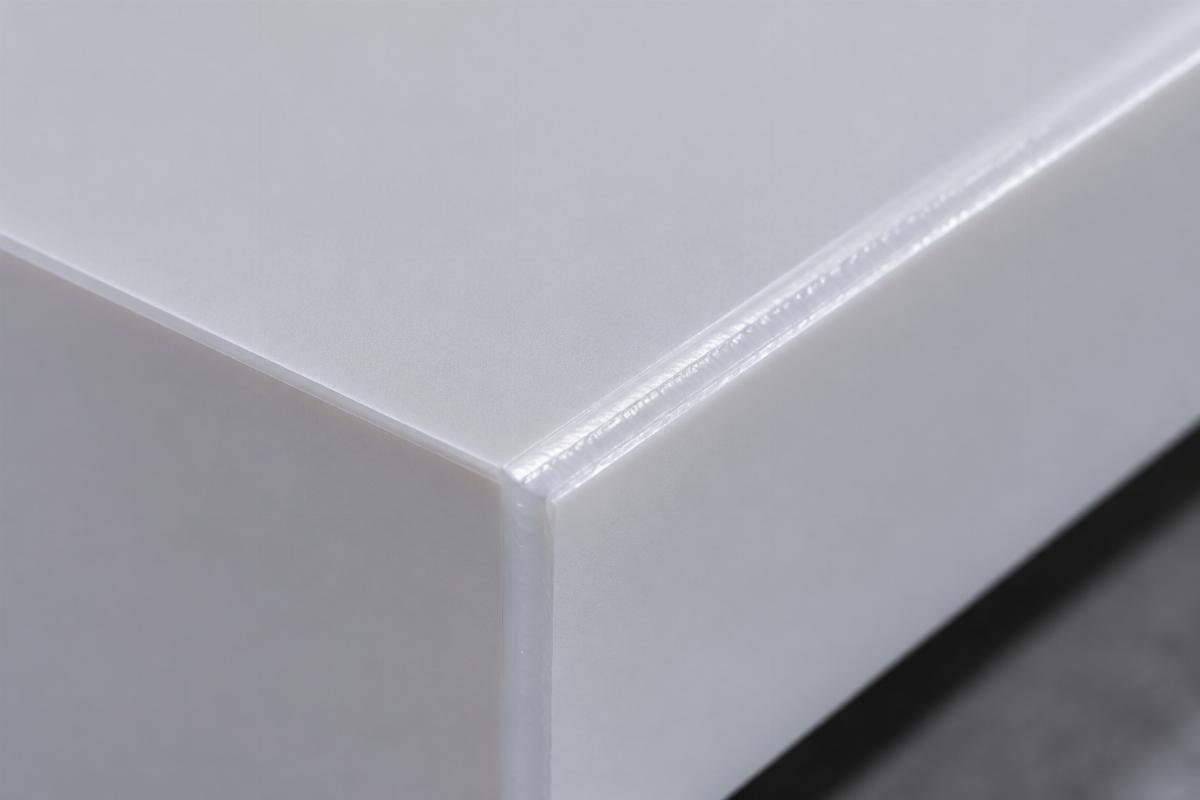
The technology behind the oscillating knife is simple yet effective. The blade vibrates at a high frequency, cutting through the material like a saw but with a much finer tooth. This action minimizes the force required to cut, reducing the risk of distorting the drop-stitch core. For materials like PVC-coated polyester, which are common in SUP boards, this gentle cutting action is crucial. It preserves the coating integrity at the edge, further enhancing the bond strength during sealing.
Manufacturers who have adopted this technology report a noticeable drop in customer complaints related to air loss. The consistency of the cut ensures that every board meets the same high standard. This reliability is essential for building trust in the market. Consumers expect their SUP boards to hold air for extended periods. Digital cutting makes this expectation easier to meet.
Scaling Production with Digital Flexibility
Automated nesting and rapid setup enable agile manufacturing.
As demand for inflatable water sports equipment grows, manufacturers face pressure to increase output without compromising quality. Hand templates are a barrier to scaling. Each new design requires a new set of physical templates. These templates take up space, degrade over time, and are expensive to produce. Changing from one board model to another involves swapping out these heavy, cumbersome tools. This process is slow and prone to error.
Digital cutting eliminates these constraints. Designs are stored as digital files. Switching from one model to another takes seconds. The software automatically calculates the most efficient layout for the material, minimizing waste. This flexibility allows manufacturers to handle small batches and custom orders profitably.
For distributors and large-scale producers, this agility is a competitive advantage. They can respond quickly to market trends. If a new board shape becomes popular, they can start producing it immediately. There is no wait time for tooling. This speed to market is critical in the fast-paced world of consumer goods.

Moreover, digital systems reduce the reliance on highly skilled labor. Operating a hand template station requires experience and precision. Training new operators takes time. CNC machines, on the other hand, are easier to operate. The software guides the process, ensuring consistency regardless of the operator’s experience level. This reduces training costs and lowers the risk of human error.
The integration of CAD/CAM software further enhances this efficiency. Designers can create board shapes on their computers and send them directly to the cutting machine. This seamless flow from design to production reduces errors and speeds up the development cycle. It allows for rapid prototyping and iteration, enabling manufacturers to refine their products continuously.
Conclusion
Precision cutting is the foundation of reliable inflatable board manufacturing.
The shift from hand templates to digital CNC oscillating knife cutting is a necessary evolution for SUP manufacturers. It addresses the core issues of edge quality, precision, and scalability. By eliminating the inconsistencies of manual cutting, manufacturers can reduce scrap rates, improve thermal sealing integrity, and increase production efficiency. The initial investment in digital technology pays off through lower material waste, reduced labor dependency, and higher product quality. For businesses aiming to compete in the global market, adopting automated cutting solutions is not just an option but a requirement for sustainable growth.