Ultrasonic Cutter vs Oscillating Knife for Composite Materials OEM

Ultrasonic vibration causes micro-delamination in multi-layer composites.
For carbon fiber and fiberglass processing, oscillating knife technology outperforms ultrasonic cutters by preventing layer separation, significantly extending tool life, and integrating smart nesting software to reduce material waste. While ultrasonic systems rely on high-frequency friction that generates heat and structural weakness, oscillating knives use vertical mechanical shearing to deliver clean, thermally neutral edges essential for high-value composite manufacturing.

The choice between these technologies often hinges on a misunderstanding of how "clean" cuts are achieved. Many buyers assume that higher frequency equals better precision, but in composite materials, this assumption leads to costly production failures.
How Do Ultrasonic and Oscillating Cutters Actually Work on Composites?
Ultrasonic cutters rely on high-frequency friction, while oscillating knives use vertical vibration for clean shearing.
Understanding the mechanical difference is critical for selecting the right Ultrasonic Cutter vs Oscillating Knife for Composite Materials. Ultrasonic systems operate by transmitting high-frequency vibrations through a blade, generating heat via friction to melt or sever materials. This works well for homogeneous plastics but fails with layered structures. The heat generated at the cutting interface can soften resin matrices, leading to inconsistent edge quality and potential delamination in sensitive laminates.
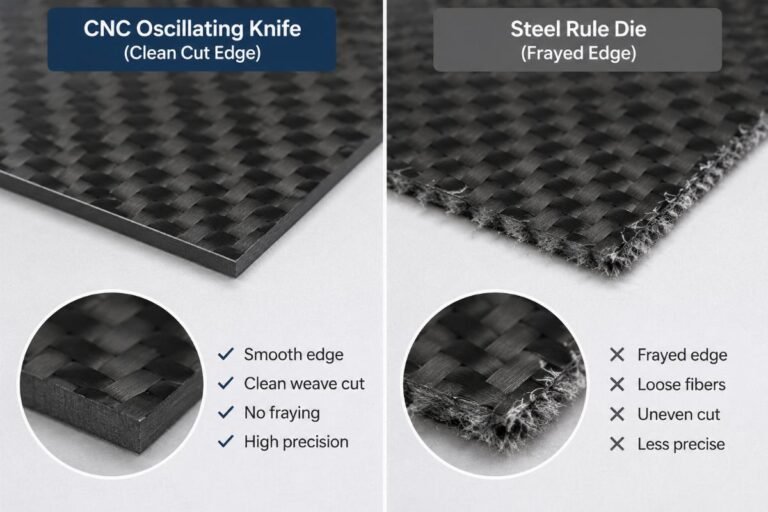
In contrast, oscillating knife cutters utilize a blade that moves vertically at high speeds, slicing through fibers rather than melting them. This mechanical action separates the material without introducing thermal stress. The blade penetrates the composite stack, cutting each layer individually before moving to the next. This method preserves the structural integrity of carbon fiber and fiberglass, ensuring that the resin bond remains intact right up to the cut edge.

The operational principle of the oscillating knife allows for greater control over cutting depth and pressure. This is particularly important when dealing with varying thicknesses in composite panels. The system adjusts the blade extension dynamically, ensuring a consistent cut regardless of minor variations in material density. This adaptability makes it a superior choice for complex composite geometries where precision is non-negotiable.
Which Technology Prevents Delamination in Fiberglass and Carbon Fiber?
Oscillating knives eliminate the micro-cracking and layer separation caused by ultrasonic resonance.
Delamination is the primary failure mode in composite cutting. When evaluating Ultrasonic Cutter vs Oscillating Knife for Composite Materials, the risk of layer separation must be the deciding factor. Ultrasonic vibrations can create resonance within the laminate structure, causing microscopic cracks between layers. These defects are often invisible to the naked eye but compromise the mechanical strength of the final part.
A case from a Middle East OEM factory illustrates this risk clearly. The facility initially adopted ultrasonic cutting for their fiberglass components, attracted by the promise of smooth edges. However, quality control checks revealed widespread micro-delamination, leading to rejected batches and near-default on major orders. The high-frequency vibration was causing the layers to separate internally, even if the surface appeared clean.
Switching to an oscillating knife system resolved the issue immediately. The vertical slicing action of the oscillating blade cut through the fiberglass without inducing lateral stress or resonance. The resulting edges were smooth, free from thermal damage, and structurally sound. This change not only saved the pending orders but also established a new quality standard for their production line.

The prevention of delamination is not just about aesthetics; it is about performance. In automotive and aerospace applications, the structural integrity of composite parts is paramount. Oscillating knife technology ensures that every cut maintains the designed strength of the material, making it the preferred solution for high-stakes manufacturing environments.
What is the Real Cost of Ownership and Tool Wear?
Ultrasonic blades wear out rapidly on abrasive composites, whereas oscillating knife tools offer significantly longer lifespans.
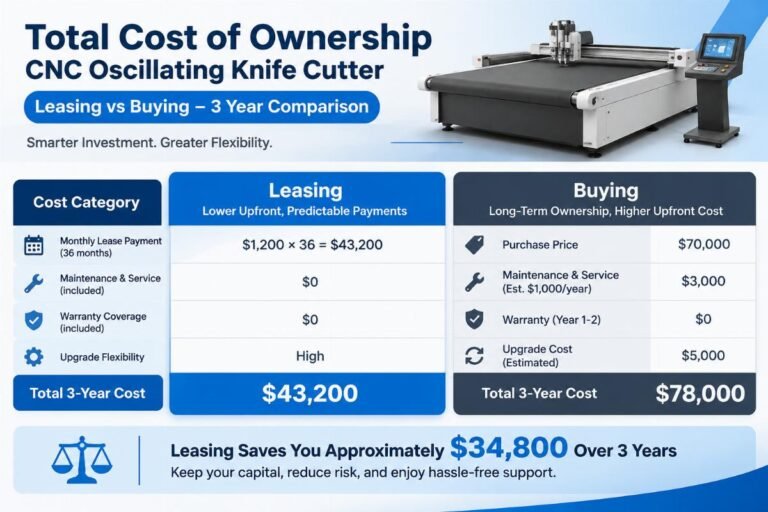
When calculating the total cost of ownership, tool consumption is a major variable. Carbon fiber and fiberglass are highly abrasive materials. Ultrasonic blades, which rely on maintaining a specific resonant frequency, degrade quickly when exposed to these abrasives. The friction-based cutting mechanism accelerates wear, requiring frequent blade replacements to maintain cutting efficiency.
In the same Middle East facility, the ultrasonic system required blade changes multiple times per day. Each replacement involved downtime for calibration and testing, disrupting production flow. The cost of proprietary ultrasonic blades added up quickly, eroding the profit margins on each unit produced.
Oscillating knife tools, made from hardened steel or carbide, are designed to withstand abrasive materials. The vertical slicing motion distributes wear more evenly across the blade edge. In practice, this translates to a dramatic reduction in replacement frequency. The factory reported that after switching to oscillating knives, tool replacement intervals extended from daily to weekly. This improvement in tool life directly reduced operational costs and minimized unplanned downtime.

Beyond blade life, the maintenance requirements differ significantly. Ultrasonic systems require precise tuning of the transducer and horn assembly, which can be sensitive to environmental conditions. Oscillating knife machines are mechanically robust, with fewer sensitive electronic components in the cutting head. This reliability contributes to lower long-term maintenance costs and higher overall equipment effectiveness.
How Does Smart Nesting Impact Overall Material Savings?
Oscillating knife systems integrate CAD/CAM nesting to reduce composite scrap by up to 15%.
Material cost is a significant portion of composite manufacturing expenses. Efficient nesting—the arrangement of parts on a sheet to minimize waste—is crucial for profitability. Ultrasonic cutters often operate as standalone units with limited software integration, forcing operators to nest parts manually or use basic external tools. This approach frequently results in suboptimal material usage.
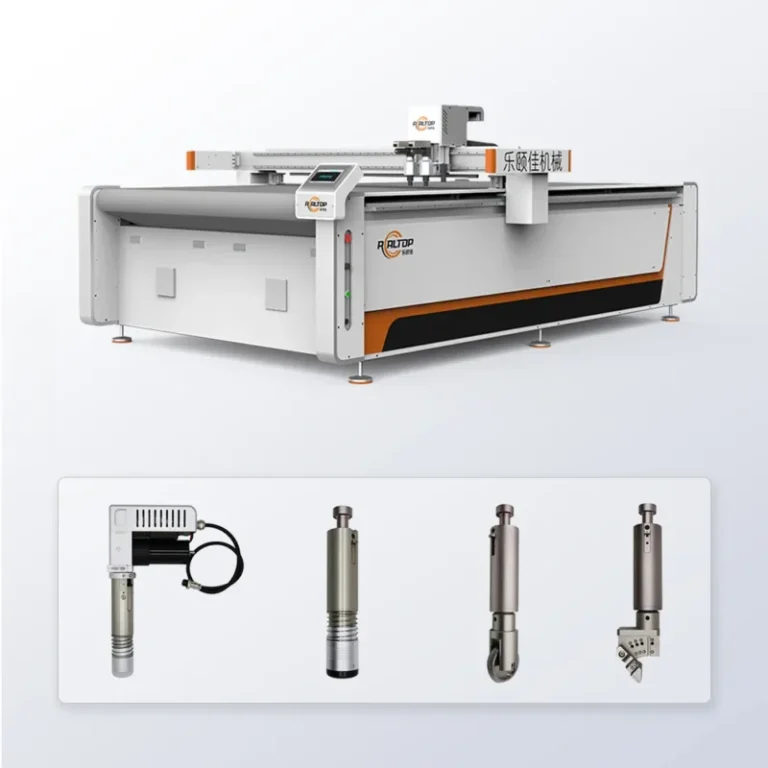
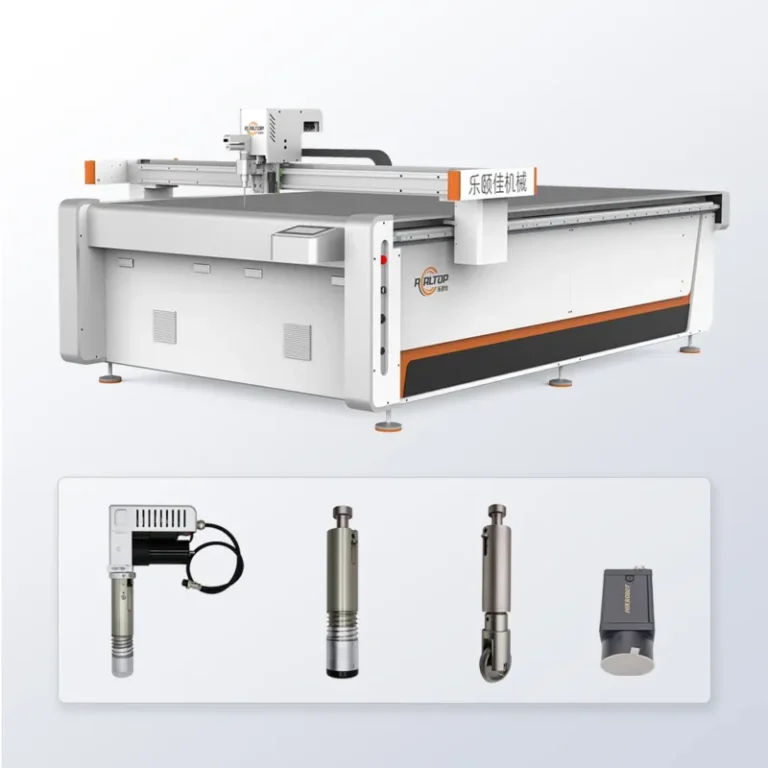
Modern oscillating knife cutters, such as those offered by Realtop Machinery, come equipped with advanced smart nesting software. This software analyzes the geometry of the parts and the dimensions of the material sheet to calculate the most efficient layout. It considers grain direction, cut sequence, and material constraints to maximize yield.
For a carbon fiber preform cutter, the integration of smart nesting software led to a double-digit percentage reduction in material scrap. The software automatically adjusted the placement of irregular shapes, filling gaps that manual nesting would have left empty. This optimization directly improved the bottom line, offsetting the initial investment in the cutting machine.

The precision of the oscillating knife further enhances material savings. With a cutting tolerance of ±0.1mm, the system allows for tighter nesting margins. Operators can place parts closer together without risking collision or incomplete cuts. This combination of intelligent software and mechanical precision makes the oscillating knife a powerful tool for reducing waste in high-value composite production.
Conclusion
Oscillating knife technology provides superior edge quality, durability, and material efficiency for composite manufacturing.
While ultrasonic cutters have their place in specific plastic applications, they fall short in processing layered composites like carbon fiber and fiberglass. The risk of delamination, high tool wear, and limited nesting capabilities make them less suitable for demanding OEM environments. Oscillating knives, with their mechanical shearing action and integrated smart software, offer a robust solution that protects material integrity and reduces operational costs. For manufacturers prioritizing quality and efficiency, the oscillating knife is the clear choice in the Ultrasonic Cutter vs Oscillating Knife for Composite Materials debate.