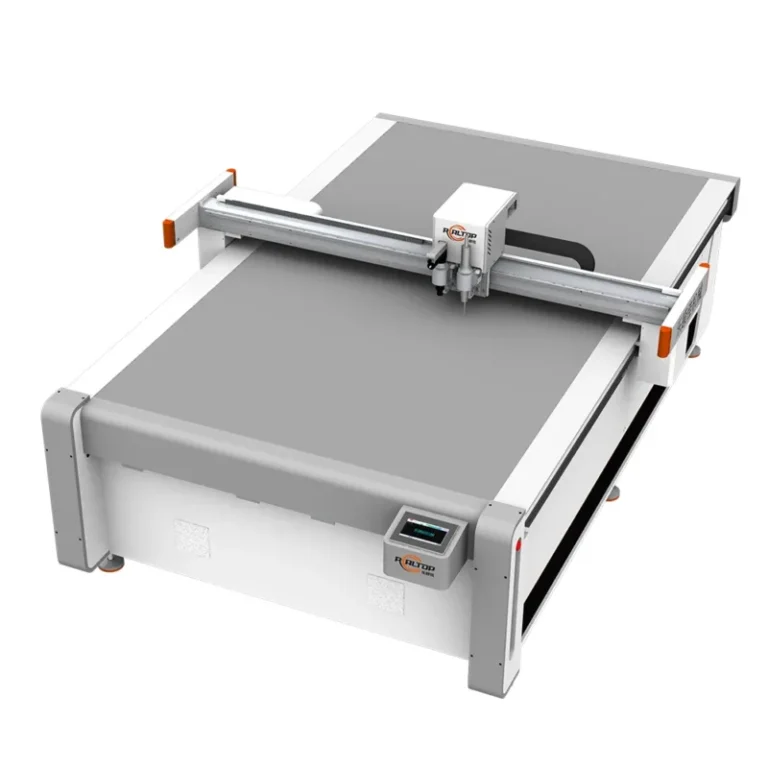
Realtop vs Gerber Composite Cutting Systems Wholesale Supplier

Most procurement managers assume premium Western brands guarantee zero downtime; in reality, supply chain delays for spare parts often cause massive hidden losses that outweigh the initial precision advantage.
Realtop delivers comparable ±0.1mm oscillating knife capability for composites at a fraction of the total cost of ownership compared to legacy systems, driven by faster spare parts delivery and smart nesting software that matches premium brand yields.
I still remember the frustration in a client’s voice during a late-night call from an automotive interior factory in Eastern Europe. They had invested heavily in a well-known European cutting system, expecting seamless production. Instead, a minor sensor failure halted their line for over two weeks while they waited for a replacement part to clear customs and arrive from the manufacturer’s central warehouse. The daily loss in idle labor and missed deadlines far exceeded the price difference between their machine and a high-quality alternative. This is not an isolated incident. In the world of composite material processing, the true cost of equipment is not just the sticker price but the reliability of support and the efficiency of material usage.

The market is shifting. Buyers are no longer willing to pay a massive premium for a brand name when domestic machines have closed the precision gap. For flexible composites like carbon fiber, fiberglass, and technical textiles, the critical factors are now cutting accuracy, software intelligence, and after-sales responsiveness. This analysis breaks down the real-world performance and cost structures of these systems to help you make a data-driven decision.
How Do Realtop and Gerber Compare in Cutting Precision and Speed?
Both systems achieve high-precision cuts, but Realtop offers flexible speed ranges that adapt better to diverse composite materials without sacrificing accuracy.
Precision is the primary concern for anyone cutting complex shapes in automotive interiors or aerospace components. The industry standard for high-quality oscillating knife cutters is ±0.1mm. Many buyers believe that only legacy Western brands can consistently hit this mark. However, modern Chinese manufacturing has adopted advanced servo control systems and rigid mechanical structures that allow machines like those from Realtop to meet this same ±0.1mm tolerance.
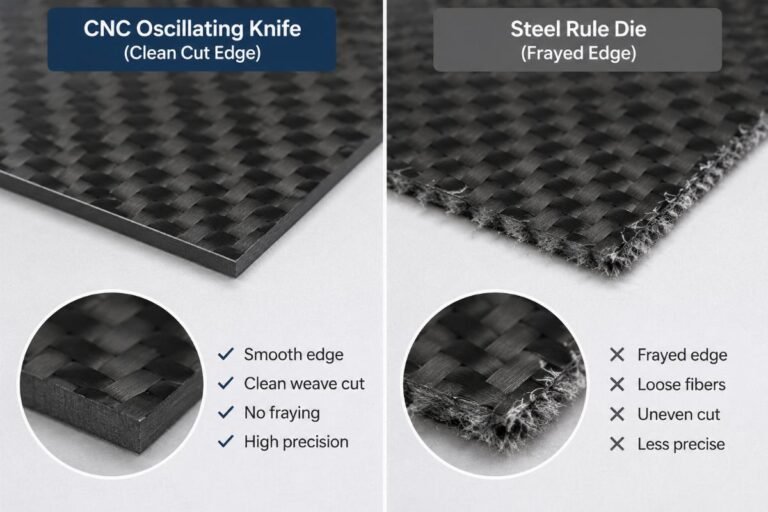
The difference lies in adaptability. Composite materials vary widely in density and texture. Carbon fiber requires sharp, clean cuts to prevent fraying, while foam and felt need different pressure settings. Realtop machines feature oscillating knife speeds ranging from 200 to 2000mm/s. This wide range allows operators to fine-tune the cutting action for each specific material. A slower speed might be used for thick, dense rubber gaskets, while a higher speed handles lightweight fabrics efficiently. This flexibility ensures that the machine does not just cut accurately but also maintains edge quality across different jobs.
| Feature | Legacy Premium Brand | Realtop Composite Cutter |
|---|---|---|
| Cutting Precision | ±0.1mm | ±0.1mm |
| Oscillating Speed | Fixed or limited range | 200-2000mm/s adjustable |
| Material Compatibility | Standard composites | Carbon fiber, fiberglass, PVC, foam |
| Voltage Options | Often region-specific | 220V/380V/330V adaptable |
A packaging studio in Southeast Asia recently switched to a Realtop system for their prototype work. They reported that the ability to adjust the knife speed on the fly reduced trial-and-error time significantly. Where they previously had to run multiple test cuts to find the right setting for a new foam density, they could now dial in the parameters quickly. This operational agility is crucial for shops handling short runs and custom orders.

When evaluating a Realtop vs Gerber composite cutting systems wholesale supplier, look beyond the brochure specs. Ask for live demonstration videos cutting your specific material. Check if the machine allows for real-time speed adjustments. The hardware capability is there, but the user interface and control logic determine how easily your team can leverage it.
What is the True Total Cost of Ownership?
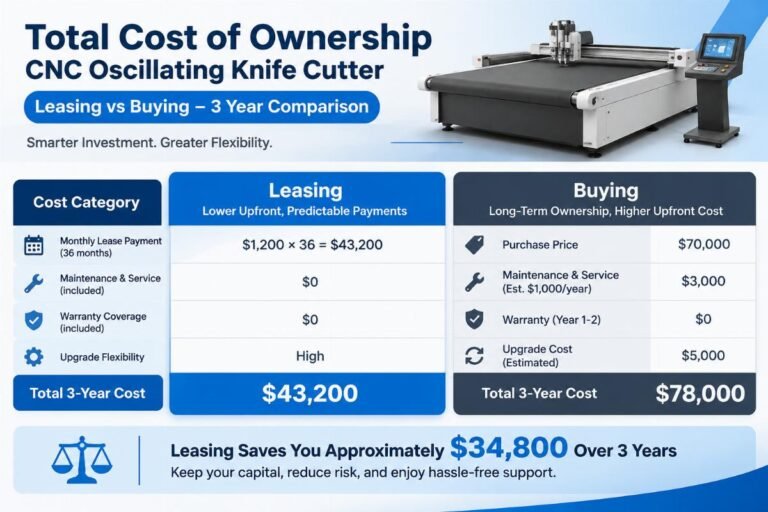
Realtop’s factory-direct pricing and inclusive shipping models beat the high initial and maintenance costs associated with imported legacy brands.
The sticker price of a cutting machine is only the beginning. Total Cost of Ownership (TCO) includes installation, training, spare parts, maintenance, and potential downtime. Legacy brands often come with a significant markup due to distribution layers, import duties, and brand positioning. In contrast, manufacturers like Realtop operate on a factory-direct model. This eliminates middlemen and allows for more competitive pricing without compromising on component quality.
One of the most surprising cost savers is shipping. Many buyers are unaware that some suppliers offer free international shipping as part of their wholesale packages. This can save thousands of dollars in logistics fees, which are often volatile and unpredictable. Additionally, voltage adaptability is a key factor. Machines that can operate on 220V, 380V, or 330V reduce the need for expensive transformers or electrical rewiring in facilities with non-standard power supplies.
Consider the case of a composite processor in South America. They initially quoted a European brand but found the final landed cost, including taxes and shipping, was nearly double their budget. By switching to a Realtop system, they not only stayed within budget but also allocated the saved funds to upgrade their nesting software licenses. The machine itself paid for its own efficiency gains within the first year through reduced material waste.
| Cost Factor | Legacy Premium Brand | Realtop Composite Cutter |
|---|---|---|
| Initial Purchase Price | High | Competitive factory-direct |
| Shipping Costs | Variable, often high | Often included/free |
| Installation & Training | Extra fees common | Included/Free operator training |
| Voltage Adaptability | Limited | Multi-voltage support |
When searching for composite material cutter alternatives, calculate the full landed cost. Request a detailed quote that includes shipping, insurance, and any required local compliance certifications. A lower upfront price with hidden logistics costs is not a bargain. Realtop’s transparent pricing structure helps buyers avoid these surprises.

How Do Spare Parts and After-Sales Impact Uptime?
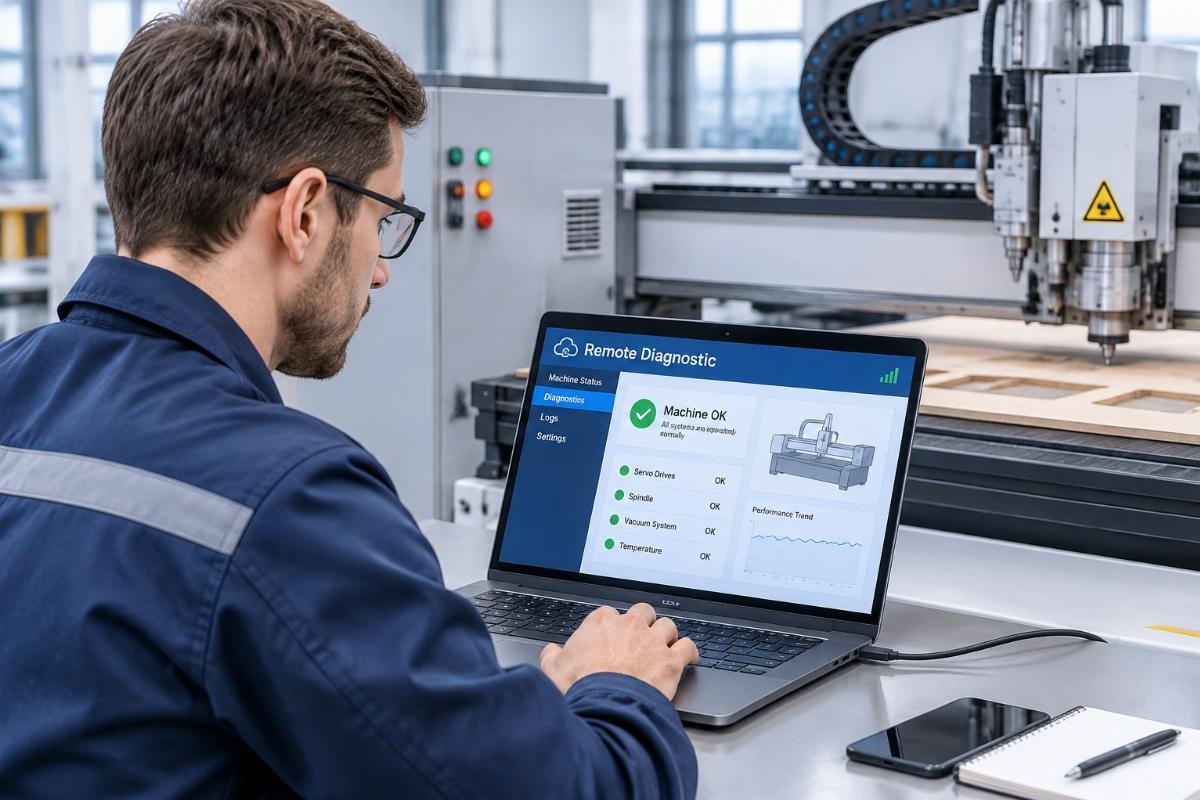
Realtop’s 24/7 remote diagnostics and comprehensive warranty prevent the prolonged downtime traps common with imported equipment.
Downtime is the enemy of profitability. When a machine stops, revenue stops. The biggest weakness of many imported systems is the spare parts supply chain. If a critical component fails, waiting for a part to be shipped from overseas can take weeks. During this time, the machine sits idle, and workers are unproductive. This is where the service model becomes a critical differentiator.
Realtop provides a 3-year warranty and 24/7 online technical support. More importantly, they offer remote diagnostics. In many cases, issues can be resolved via software updates or guided troubleshooting without waiting for a technician to visit. For physical parts, the supply chain is streamlined to ensure faster delivery. This approach minimizes the risk of long-term stoppages.
An auto interior maker in the Middle East shared their experience. With their previous machine, a simple belt replacement required a 15-day wait for parts. With their new Realtop system, they accessed remote support immediately, identified the issue, and received the part within days. The quick resolution saved them from missing a major delivery deadline. This level of responsiveness is increasingly expected in global manufacturing.
| Support Feature | Legacy Premium Brand | Realtop Composite Cutter |
|---|---|---|
| Warranty Period | Standard 1-2 years | 3-year warranty |
| Technical Support | Business hours, local dealers | 24/7 online remote diagnostics |
| Spare Parts Delivery | Weeks to months | Streamlined fast delivery |
| Training | Optional, extra cost | Free operator training included |
When comparing a Realtop vs Gerber composite cutting systems wholesale supplier, ask about their spare parts inventory location and average delivery times. A supplier that keeps critical components in stock and offers remote assistance is investing in your uptime. This is not just a service perk; it is a core component of operational reliability.
Which System Offers Better Software and Material Yield?
Realtop’s smart nesting software saves up to 15% material, rivaling premium CAD/CAM integration and directly boosting profit margins.
Material cost is a significant portion of production expenses, especially for expensive composites like carbon fiber or high-grade leather. Efficient nesting—the arrangement of patterns on the material to minimize waste—is crucial. Premium brands have long touted their proprietary software as a key advantage. However, modern alternatives now offer smart nesting algorithms that are equally effective.
Realtop’s integrated software automatically calculates the most efficient layout for each job. It considers grain direction, pattern constraints, and material defects. This automation reduces manual planning time and ensures consistent material usage. Users report material savings of up to 15% compared to manual nesting or less advanced software. For a high-volume producer, this saving translates directly to the bottom line.
A packaging studio in North America tested this claim. They ran the same set of box designs through their old manual process and then through the Realtop smart nesting system. The automated system reduced scrap by a noticeable margin, matching the yields they had previously only achieved with much more expensive enterprise software. This proves that high-efficiency software is no longer exclusive to top-tier priced machines.
| Software Feature | Legacy Premium Brand | Realtop Composite Cutter |
|---|---|---|
| Nesting Algorithm | Advanced, proprietary | Smart automated nesting |
| Material Savings | High | Up to 15% |
| CAD/CAM Integration | Strong | Compatible with major formats |
| Ease of Use | Steep learning curve | User-friendly interface |
For businesses seeking oscillating knife cutting machine cost efficiency, software capability is a major lever. Do not assume that a lower-priced machine comes with inferior software. Request a demo of the nesting module. Test it with your typical patterns. If it can optimize your material usage effectively, it adds significant value to the investment.

Conclusion
Choosing the right cutting system is about balancing precision, cost, and support, not just brand reputation.
The gap between premium Western brands and high-quality Chinese manufacturers has narrowed significantly. Realtop offers ±0.1mm precision, flexible cutting speeds, and smart software that rivals legacy systems. The real advantage lies in the total cost of ownership, where faster support, inclusive shipping, and material-saving software create a stronger ROI. For procurement managers and composite processors, evaluating a Realtop vs Gerber composite cutting systems wholesale supplier requires looking at the whole picture. Focus on uptime, material efficiency, and long-term support. The right choice will keep your production running smoothly and your costs under control.