
Realtop Filter Cloth Cutting Machine Mfr for Filter Press & Bag Filters
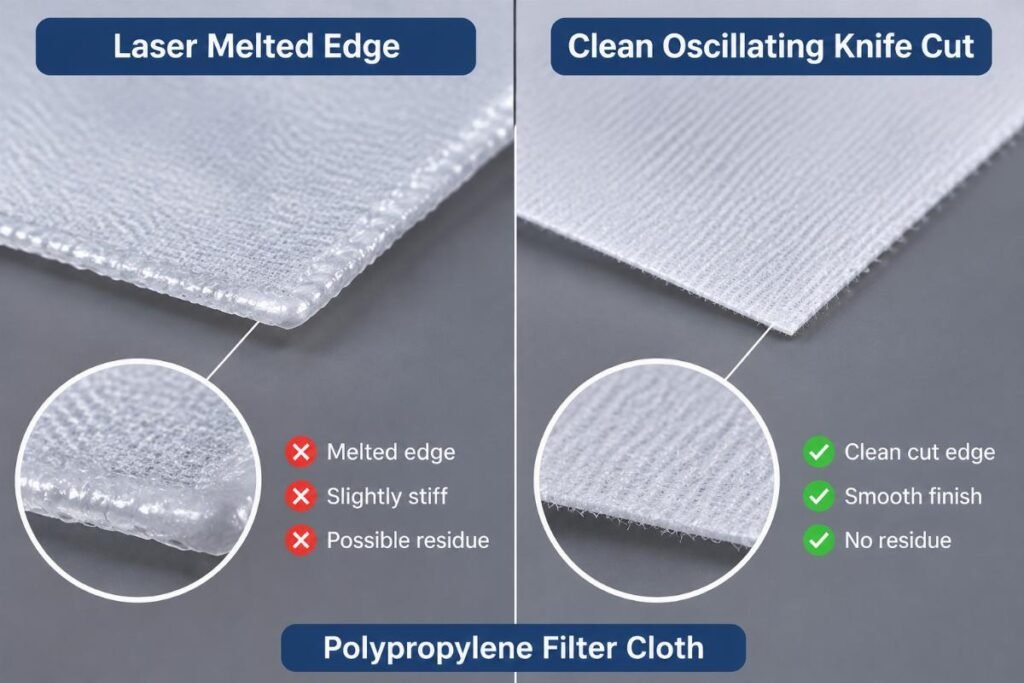
Laser cutting weakens synthetic filter media; cold oscillating knife technology preserves fiber integrity.
A CNC oscillating knife filter cloth cutting machine delivers ±0.1mm precision for filter press and bag filters, ensuring zero-error logistics and perfect flange sealing without thermal damage to the fabric structure.
I have watched thousands of containers pass through Ningbo Port. Early in my career, I worked in documentation for customs clearance before shifting focus to the export of filtration equipment. The most dreaded phrase in this trade is hearing that a shipment has been held. A few years ago, a vibratory knife cutting bed destined for Mexico was detained because the packing list stated a net weight of 1200kg, while the actual weighed mass was 1250kg. That mere 50kg discrepancy triggered a full customs inspection at the destination port, resulting in daily demurrage fees and a two-week production halt for the client’s facility. Since then, every packing list is verified three times before issuance, down to the gram weight of spare vibrating blades. If the equipment achieves ±0.1mm cutting precision, the documentation data must reflect zero error.
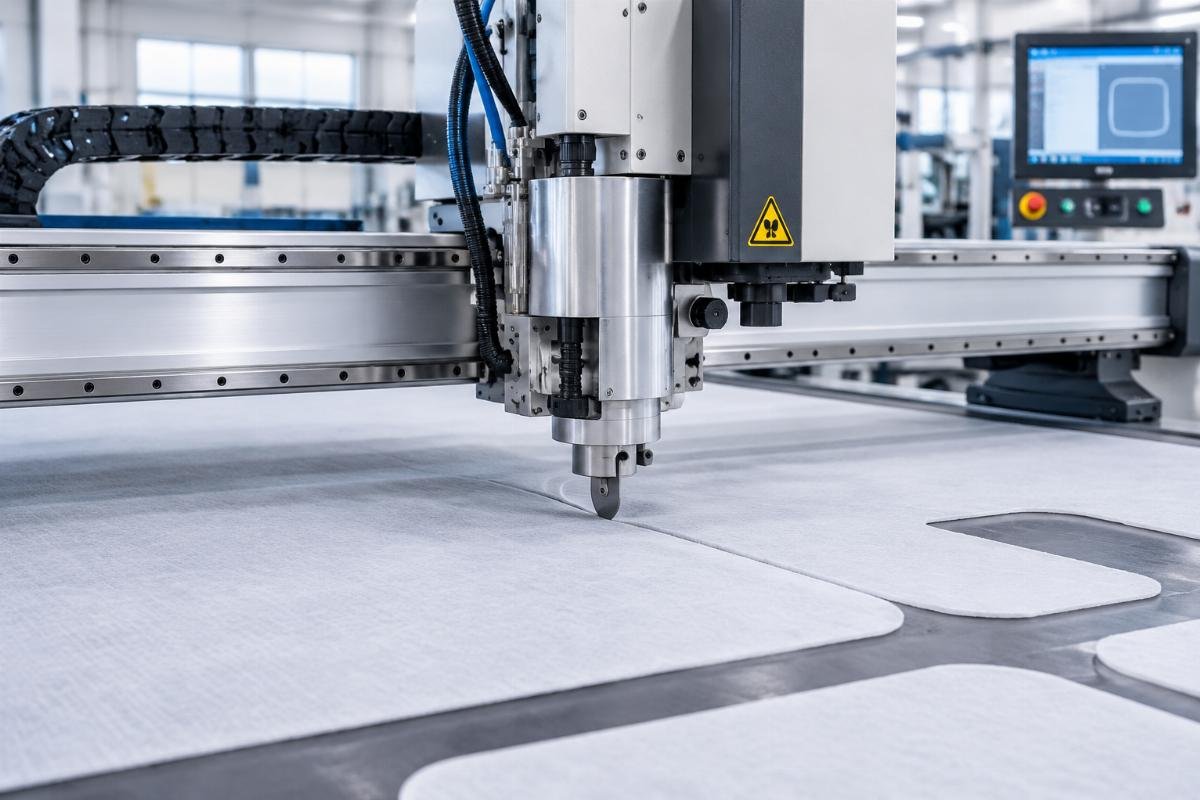
This attention to detail extends beyond paperwork to the physical performance of the machinery. Procurement managers often overlook how cutting method affects the final filtration efficiency. The following insights address the critical technical and logistical factors that define successful deployment of a Filter Cloth Cutting Machine.
Why Oscillating Knife Beats Laser for Filter Cloths?
Thermal cutting methods compromise the tensile strength of synthetic filter fabrics, leading to premature failure.
Many buyers assume laser cutting offers a cleaner edge for synthetic materials like polypropylene or polyester. However, the heat generated by lasers melts the fibers at the cut edge, creating a hardened seal that lacks flexibility. This thermal alteration reduces the cloth’s ability to conform to filter press plates, creating micro-channels for slurry bypass. In contrast, an oscillating knife performs a cold cut, mechanically separating fibers without altering their chemical or physical structure.
| Cutting Method | Edge Integrity | Fiber Structure | Thermal Impact | Suitability for Multi-layer |
|---|---|---|---|---|
| Laser Cutter | Sealed/Melted | Compromised | High | Poor |
| Oscillating Knife | Clean/Flexible | Preserved | None | Excellent |
| Rotary Blade | Frayed | Stretched | Low | Moderate |
The oscillating action of the blade allows it to penetrate dense, multi-layered filter media without dragging or distorting the material. This is crucial for heavy-duty filter press cloths where layer alignment determines sealing performance. A European filtration plant reported noticeable reduction in bag blowouts after switching from laser to oscillating knife technology, attributing the improvement to preserved fiber elasticity at the seam allowances.

Deploying a Filter Cloth Cutting Machine based on oscillating knife technology ensures that the material retains its original specification properties right up to the edge. This preservation of integrity is non-negotiable for applications involving high-pressure filtration where even minor structural weaknesses can lead to catastrophic leaks.
How Does ±0.1mm Precision Impact Filter Press Sealing?
Exact dimensional tolerance eliminates slurry bypass and extends the operational life of filter press cycles.
Filter presses rely on the precise alignment of cloth edges with plate flanges. A deviation of even a millimeter can cause the cloth to wrinkle or shift during the clamping process, creating gaps for fine particles to escape. This not only contaminates the filtrate but also damages the sealing surfaces of the press plates over time. The ±0.1mm precision offered by modern CNC systems ensures that every cut piece matches the CAD design exactly, guaranteeing a perfect fit every time.
Consider the assembly process. When operators manually mark and cut fabric, human error introduces variability. One side of a plate might have a tight seal while the opposite side leaks due to a slightly oversized cut. With automated cutting, this variability is removed. A mining operation in South America experienced frequent leakage issues with their copper ore filtration line. After implementing a CNC solution with smart nesting software, they eliminated uneven fabric edges entirely. The result was a significant extension in press cycle life and a drop in maintenance downtime.
The stability of the machine plays a role here as well. Heavier machines are often perceived as more stable, but excessive weight can complicate shipping and installation. Modular CNC designs provide the necessary rigidity for high-speed cutting without the bulk that triggers higher freight costs and customs scrutiny. This balance ensures that the precision achieved in the factory is maintained during global transit and setup.

For procurement managers, specifying a Filter Cloth Cutting Machine with verified ±0.1mm accuracy is a direct investment in process reliability. It removes the guesswork from assembly and ensures that the filtration system performs as engineered from day one.
What Logistics Pitfalls Ruin Filter Machine Deliveries?
Zero-tolerance packing list accuracy prevents customs holds and costly port demurrage.
The physical machine is only half the battle; getting it through international borders requires meticulous documentation. As noted in my experience at Ningbo Port, weight discrepancies are a primary trigger for inspections. Customs authorities use automated risk assessment systems that flag shipments where declared weights deviate from standard deviations for similar HS codes. A flagged shipment does not just mean a delay; it means potential fines, storage fees, and missed production deadlines.
Beyond weight, the classification of components matters. Spare parts, such as additional vibrating blades or control modules, must be listed separately if required by the destination country’s regulations. Bundling them incorrectly under the main machine code can lead to valuation disputes. A buyer in Southeast Asia once faced a mid-six-figure loss in delayed production because their control panel was not documented as a separate line item, causing confusion over duty applicability.
To mitigate these risks, manufacturers must implement strict single-document verification processes. This involves cross-checking the commercial invoice, packing list, and bill of lading against the actual loaded cargo. Every item, no matter how small, must be accounted for. This level of diligence ensures that the Filter Cloth Cutting Machine arrives ready for installation, not stuck in a customs bond warehouse.
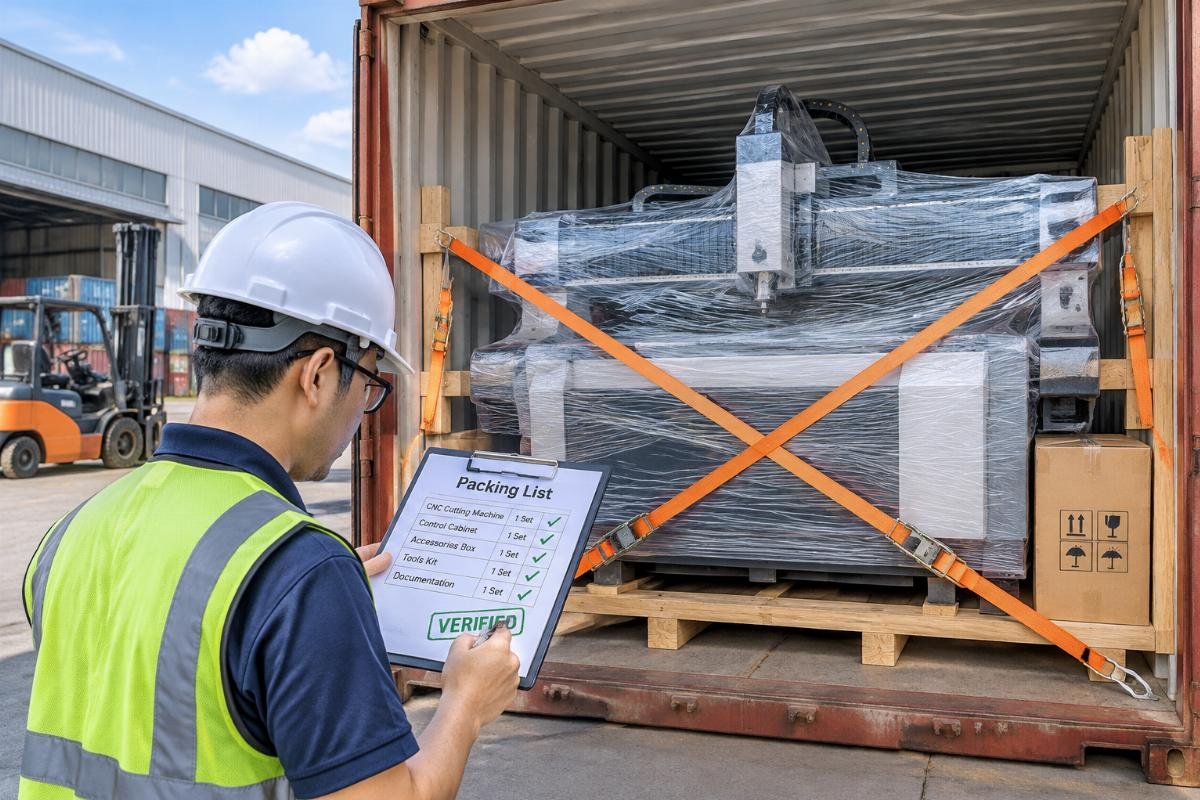
Logistics is not just about transport; it is about compliance. Ensuring that every document aligns perfectly with the physical cargo is as critical as the machine’s cutting speed. This proactive approach safeguards the supply chain and protects the buyer’s operational timeline.
How to Maximize Fabric Yield in Bag Filter Production?
AI-driven smart nesting significantly reduces raw material waste compared to manual marking.
Filter media is a significant cost component in bag filter production. Traditional manual marking often results in substantial off-cut waste due to inefficient layout planning. Smart nesting software uses algorithms to arrange patterns on the fabric roll in the most material-efficient way possible. This can lead to noticeable reductions in raw material consumption, directly improving profit margins.
The software considers the grain direction of the fabric, which is critical for maintaining tensile strength in specific orientations. It also accounts for the kerf width of the oscillating knife, ensuring that cuts do not encroach on adjacent patterns. For complex shapes used in round bag filters or specialized cartridge elements, this optimization is even more pronounced. A textile supplier in India reported that switching to automated nesting reduced their fabric scrap rate substantially, allowing them to take on larger orders without increasing raw material inventory.
Furthermore, the integration of CAD files directly into the cutting system eliminates transcription errors. Operators no longer need to manually input dimensions, reducing the risk of cutting incorrect sizes. This seamless flow from design to cut ensures consistency across large production runs.
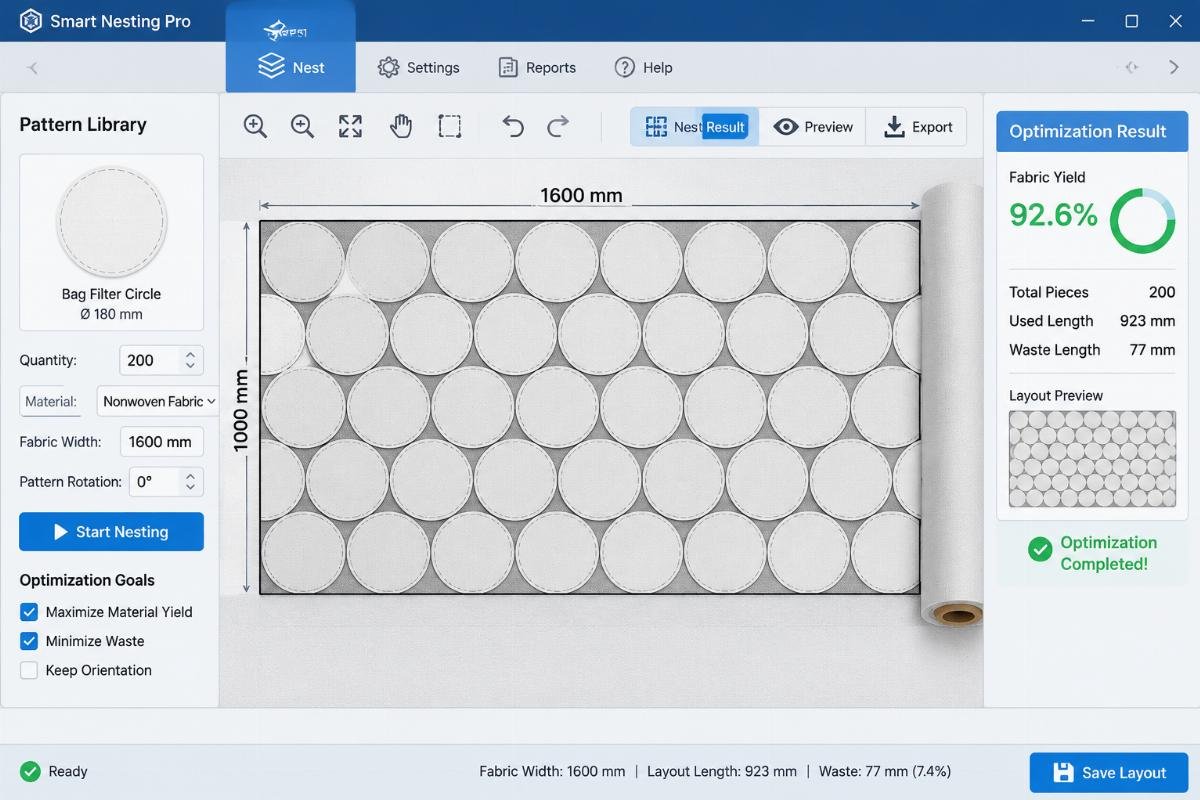
Maximizing yield is not just about saving money; it is about sustainability. Reducing waste aligns with broader environmental goals and improves the overall efficiency of the manufacturing process. A Filter Cloth Cutting Machine equipped with advanced nesting capabilities provides a competitive edge by lowering unit costs and enhancing production agility.
Conclusion
Precision cutting and accurate documentation are the twin pillars of successful filtration equipment deployment.
Investing in a CNC oscillating knife system ensures fiber integrity and perfect sealing, while rigorous logistics management prevents costly delays. Together, these factors define the reliability of the entire filtration operation. Buyers who prioritize both technical precision and administrative accuracy secure a smoother path from order to operation.


