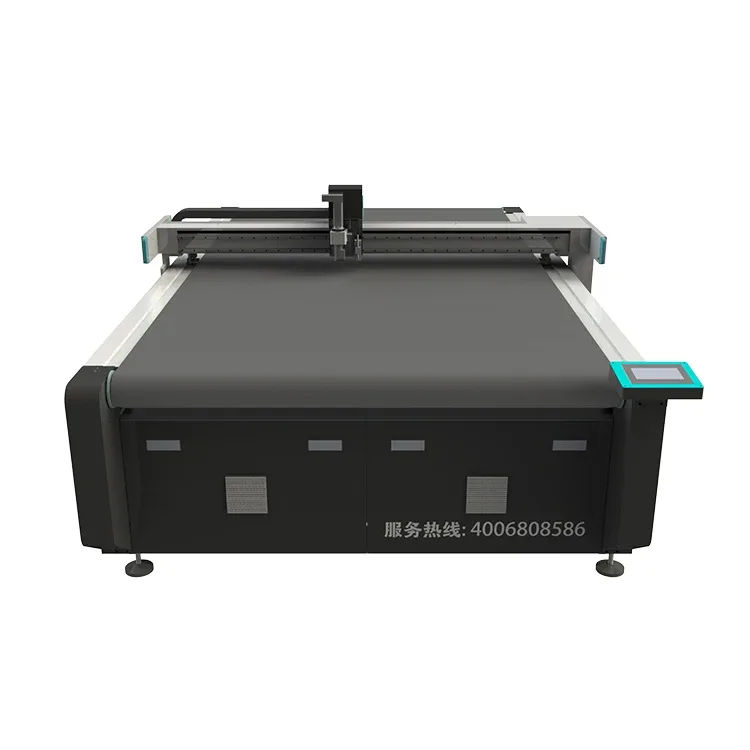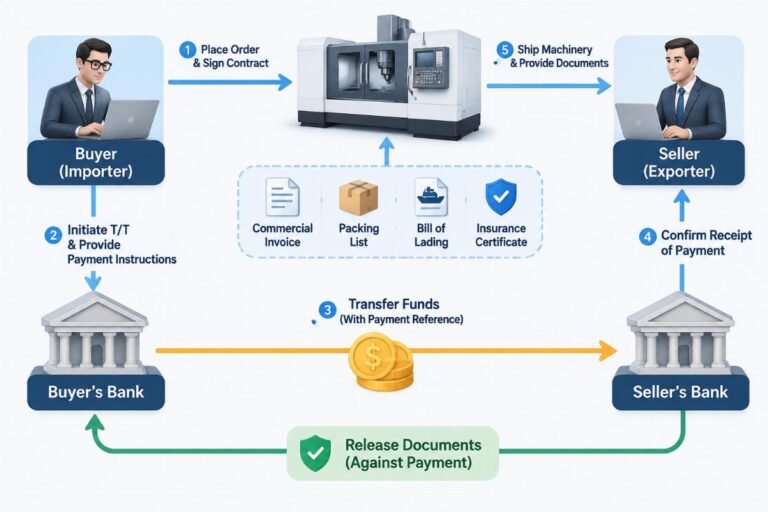
Realtop 3-Year Warranty: What It Covers on Composite Cutters
A three-year warranty does not mean every part is free for three years.
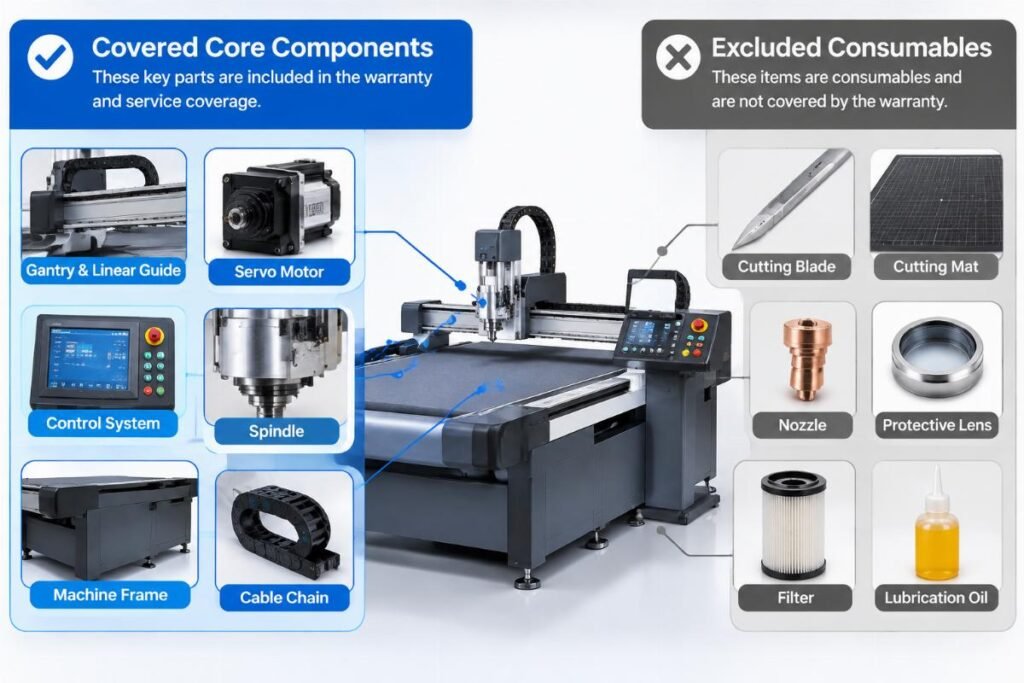
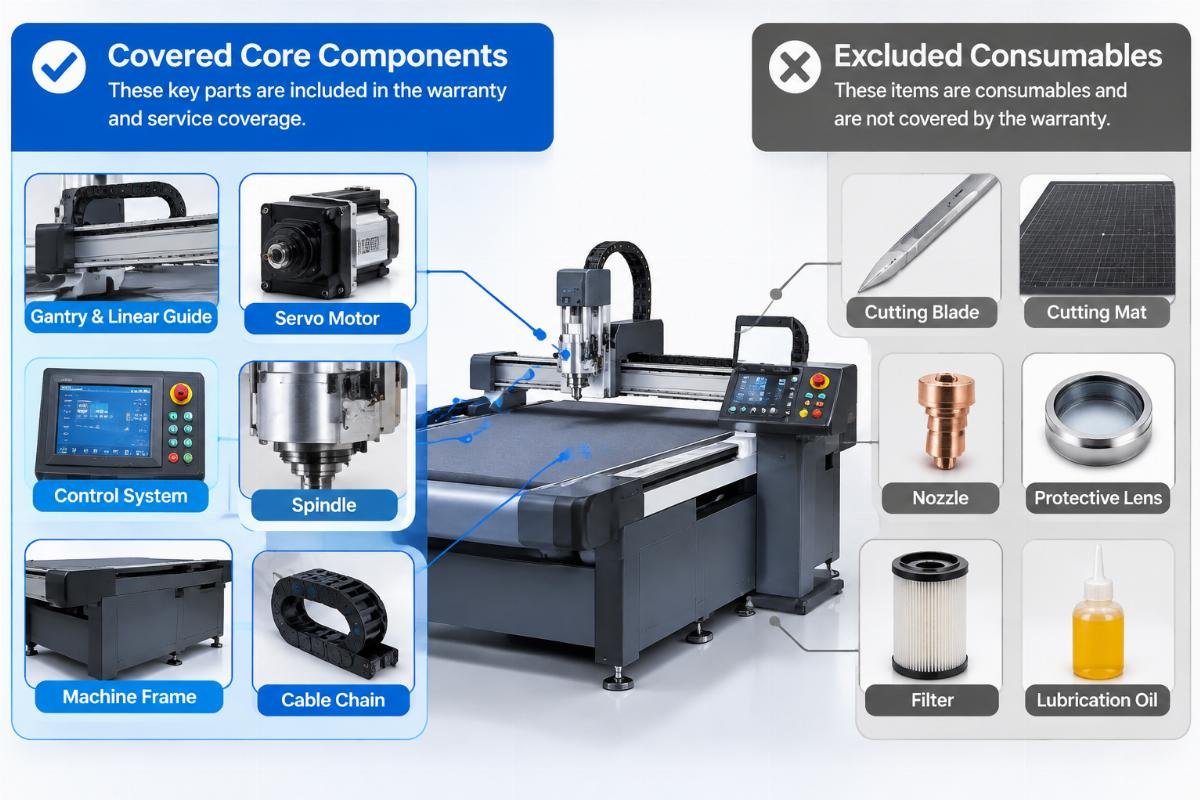
The Realtop 3-year warranty covers core mechanical structures, drive motors, and electronic control boards, but explicitly excludes daily consumables such as oscillating blades, blade holders, and cutting strips. Validity depends on strict adherence to tooling selection guides for specific composite hardness levels.
I still remember the humidity in Dubai when I walked into that workshop two years ago. The air smelled of burnt resin and frustration. A client had stopped payment on a large order, claiming our machine’s spindle failed due to poor manufacturing quality. He pointed at the vibrating head, insisting it was a defect covered under the standard guarantee. But when I looked closer, the issue wasn’t the motor or the electronics. It was the blade. He was cutting high-density fiberglass panels with a standard universal knife meant for soft foam. The vibration from the mismatched tooling had cracked the blade holder, sending shockwaves up into the spindle assembly. This wasn’t a manufacturing flaw; it was an operational error. That trip taught me that clarity in warranty terms is just as critical as the precision of the cut itself.
Understanding these boundaries helps buyers avoid hidden costs and operational disputes. Let’s break down exactly what is protected and what requires proactive management.
What Exactly Does the 3-Year Warranty Cover?
Coverage is limited to structural integrity and electronic functionality, not wear and tear.
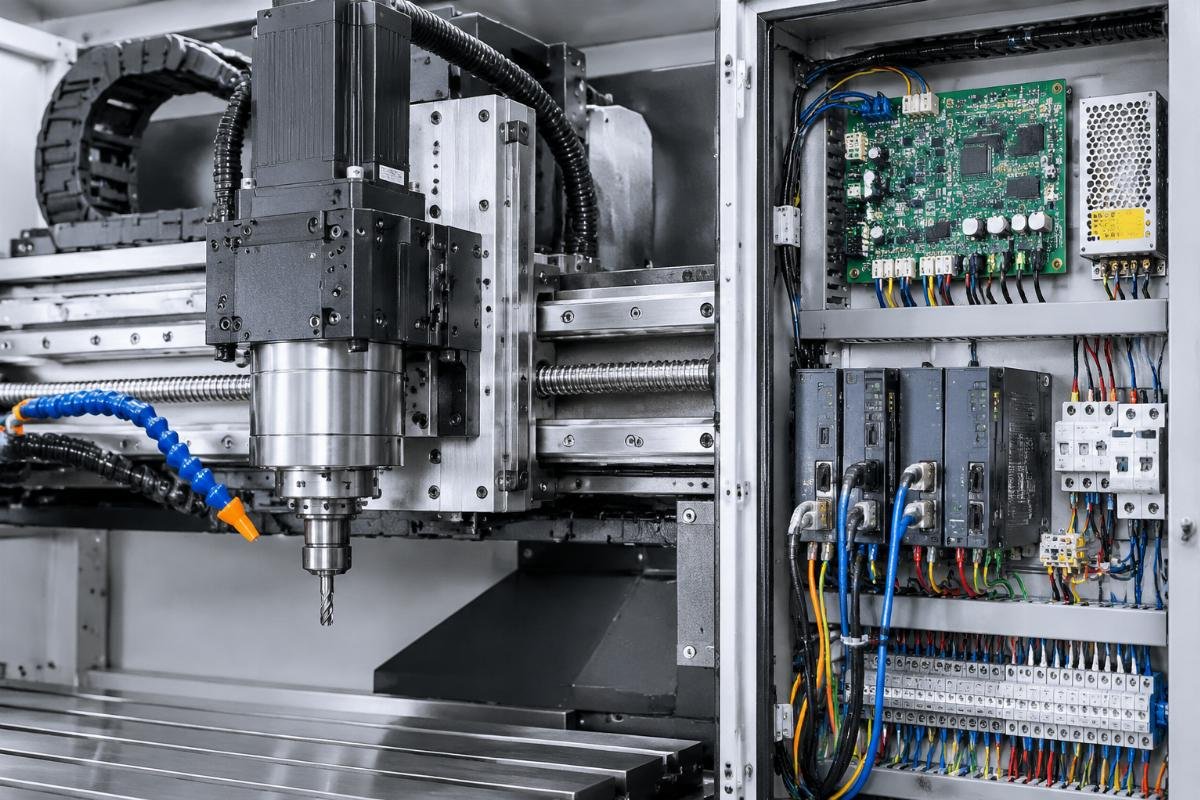
When procurement teams evaluate a composite cutter warranty, they often assume "three years" implies comprehensive protection. In reality, the warranty is designed to protect the capital investment in the machine’s backbone. This includes the gantry structure, linear guides, servo motors, and the main control PCB. These are components that should not degrade under normal operating conditions. If a servo motor fails due to an internal electrical fault within this period, it is replaced. If the gantry shows signs of warping or structural weakness, it is addressed.
However, the warranty does not cover damage resulting from external factors or improper use. For instance, if a power surge damages the electronics because the facility lacked proper voltage stabilization, that falls outside the scope. Similarly, physical damage from collisions or dropping heavy materials on the table is not covered. The distinction lies between inherent quality issues and operational abuse.
For composite processors, this means the machine’s ability to maintain ±0.1mm precision over time is supported, provided the core mechanics remain intact. The warranty ensures that the platform delivering the cut remains stable, but it does not insure the tools doing the actual cutting.
Which Parts Are Classified as Consumables?
Blades, holders, and strips are excluded due to natural abrasion during cutting.
In the world of composite material processing, friction is inevitable. Whether you are slicing through carbon fiber prepreg, thick PVC tarpaulin, or dense fiberglass, the cutting tool undergoes significant stress. This is why items like oscillating knives, pneumatic blade holders, and anti-friction strips are classified as consumables. They are expected to wear out. Their lifespan is determined by the material hardness, cutting speed, and total volume processed, not by a calendar date.
A common misconception is that a premium machine should come with long-lasting blades. While high-quality tooling lasts longer, it still degrades. A blade cutting abrasive carbon fiber will dull much faster than one cutting soft felt. Including these in a long-term warranty would be economically unviable and would likely inflate the initial machine price significantly. Instead, manufacturers provide guidelines on expected tool life based on material types.
| Component Type | Warranty Status | Reason for Exclusion/Inclusion |
|---|---|---|
| Servo Motors | Covered | Core drive component, not subject to normal wear |
| Control Board | Covered | Electronic integrity, protected against defects |
| Oscillating Blades | Excluded | Consumable, wears down via friction |
| Blade Holders | Excluded | Subject to fatigue and vibration stress |
| Cutting Strips | Excluded | Sacrificial layer, damaged during every cut |
| Linear Guides | Covered | Structural precision component |
This classification matrix helps buyers budget for ongoing operational costs separately from the capital expenditure. Ignoring this distinction often leads to surprise expenses when routine replacements are needed.

How Can Improper Tooling Void Your Warranty?
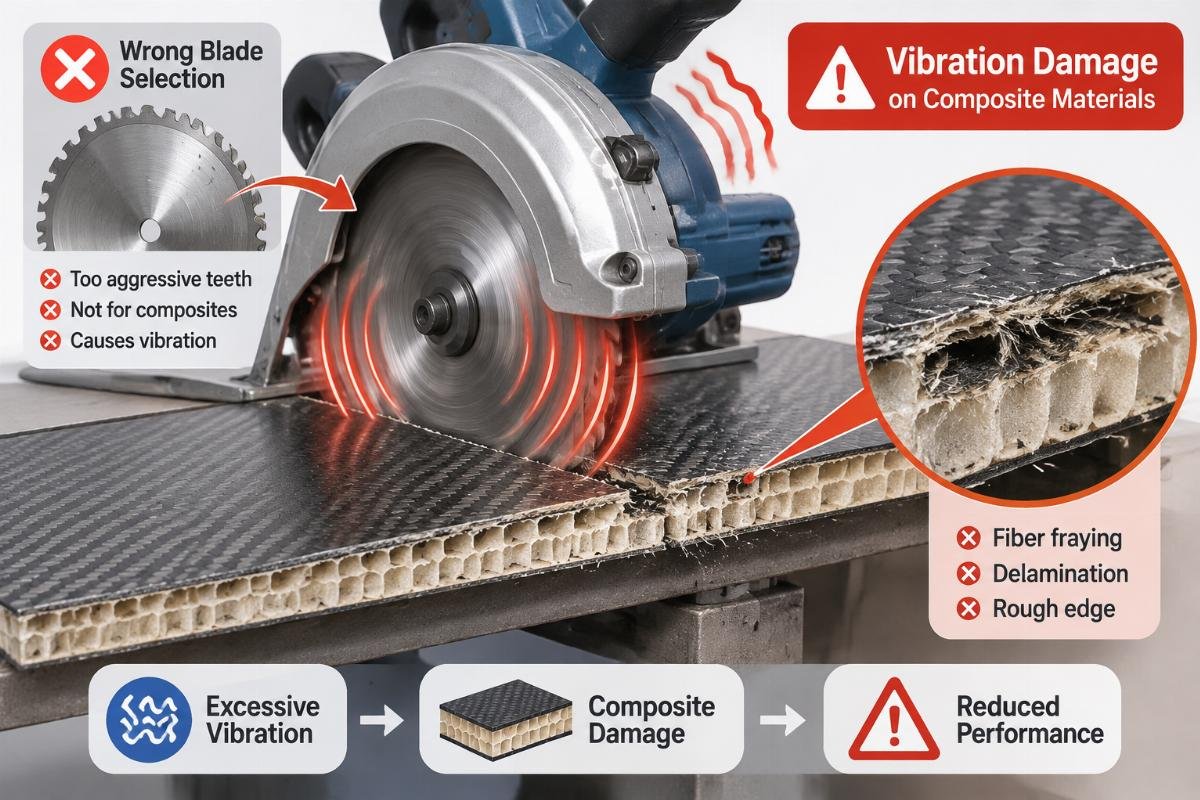
Using the wrong blade for hard composites causes vibration damage that voids coverage.
This is the most frequent cause of warranty disputes. As seen in the Dubai case, using a standard blade for high-hardness materials like carbon fiber or thick fiberglass creates excessive vibration. This vibration doesn’t just dull the blade; it transfers energy back into the blade holder and the spindle head. Over time, this can crack the ceramic or metal components of the holder, or even damage the spindle bearings.
When such damage occurs, technical support teams will inspect the failed parts. If they find evidence of inappropriate tooling—such as a blunt or incorrect type of blade used for abrasive materials—the claim is denied. The logic is straightforward: the machine was operated outside its specified parameters. The composite material cutter warranty terms are clear that the operator must follow the tooling selection guide provided by the manufacturer.
For example, cutting aramid fibers requires specialized serrated blades to prevent fraying and reduce heat buildup. Using a plain straight knife here would cause rapid degradation and potential thermal damage to the surrounding components. Similarly, thick PVC requires robust blades to handle the density without bending. Failure to match the tool to the material is considered user error.
To avoid this, always consult the technical documentation before starting a new job. Many modern machines, including those from Realtop, offer remote diagnostics that can sometimes detect abnormal vibration patterns, alerting operators before catastrophic failure occurs. This proactive approach helps maintain warranty validity by ensuring the machine operates within safe limits.
What Maintenance Is Required to Keep the Warranty Valid?
Regular cleaning and adherence to replacement schedules are mandatory.
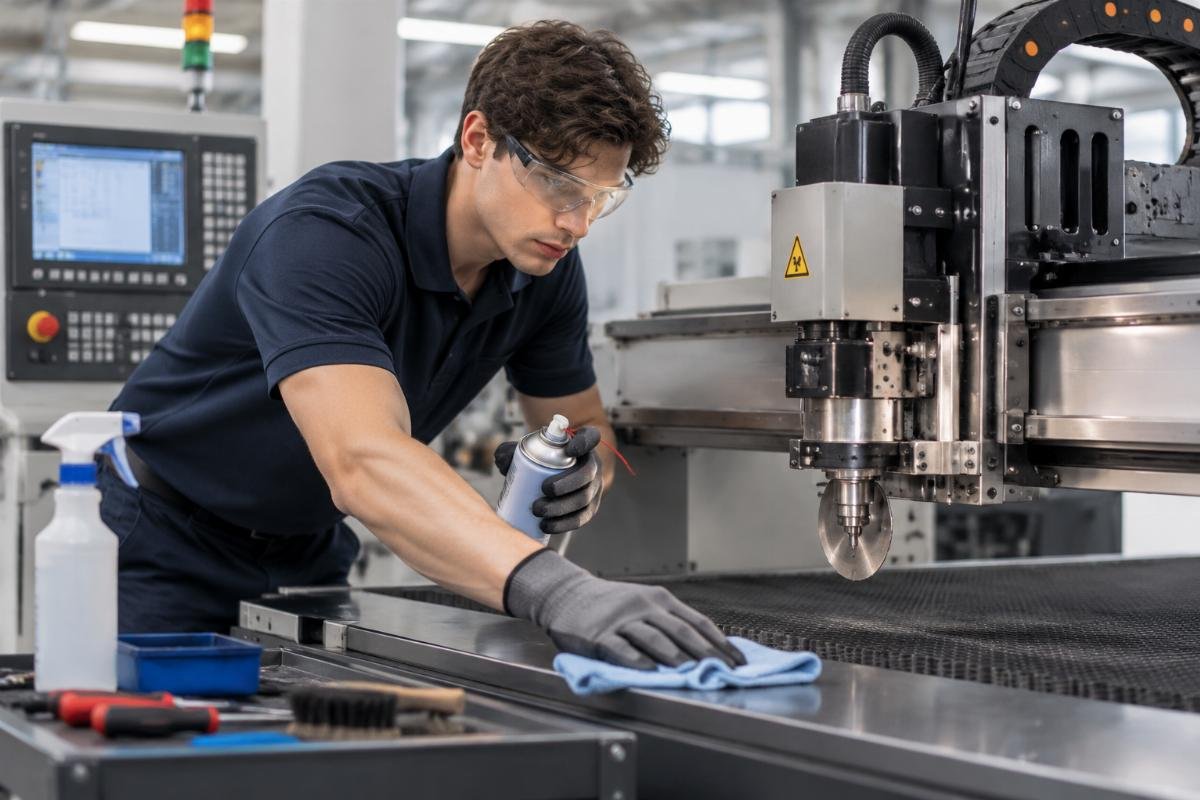
Warranty validity is not just about avoiding mistakes; it is about active care. Composite cutting, especially with carbon fiber, generates fine, conductive dust. If this dust infiltrates the spindle motor or electronic cabinets, it can cause short circuits or bearing wear. Most warranties require proof of regular maintenance to cover such failures. If a spindle fails due to dust ingress and there is no record of cleaning or filter replacement, the claim may be rejected.
Maintenance tasks typically include:
- Daily cleaning of the cutting bed and removal of debris.
- Weekly inspection and cleaning of air filters and cooling vents.
- Regular lubrication of linear guides and racks as per the manual.
- Timely replacement of worn blades and strips to prevent excessive load on the motor.
Neglecting these steps accelerates wear and increases the risk of failure. For high-volume operations, establishing a strict maintenance log is essential. This documentation serves as evidence that the machine was cared for properly, strengthening any future warranty claims.
Furthermore, using the machine’s built-in diagnostic tools can help track usage hours and schedule maintenance proactively. This data can be invaluable when discussing service needs with the manufacturer. It shifts the conversation from blame to collaborative problem-solving, ensuring minimal downtime and maximum productivity.
Conclusion
Clarity in warranty terms prevents costly misunderstandings.
The Realtop 3-year warranty provides robust protection for the core components of your cutting machine, ensuring long-term reliability and precision. However, it requires operators to take responsibility for consumable management and proper tooling selection. By understanding what is covered, respecting the limits of consumables, and adhering to maintenance protocols, buyers can maximize their investment and avoid unnecessary disputes. Clear communication and disciplined operation are the keys to a successful partnership between manufacturer and user.