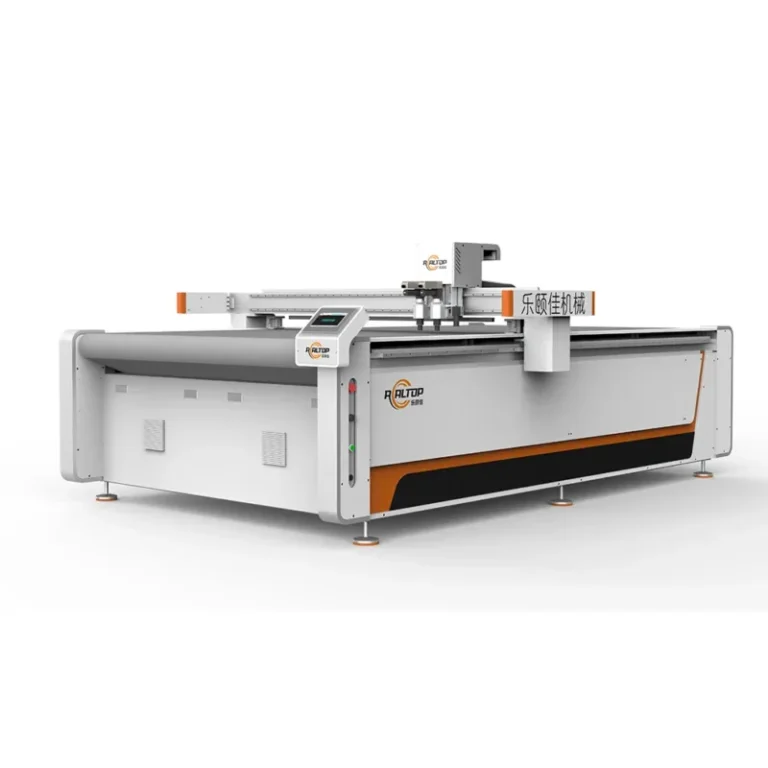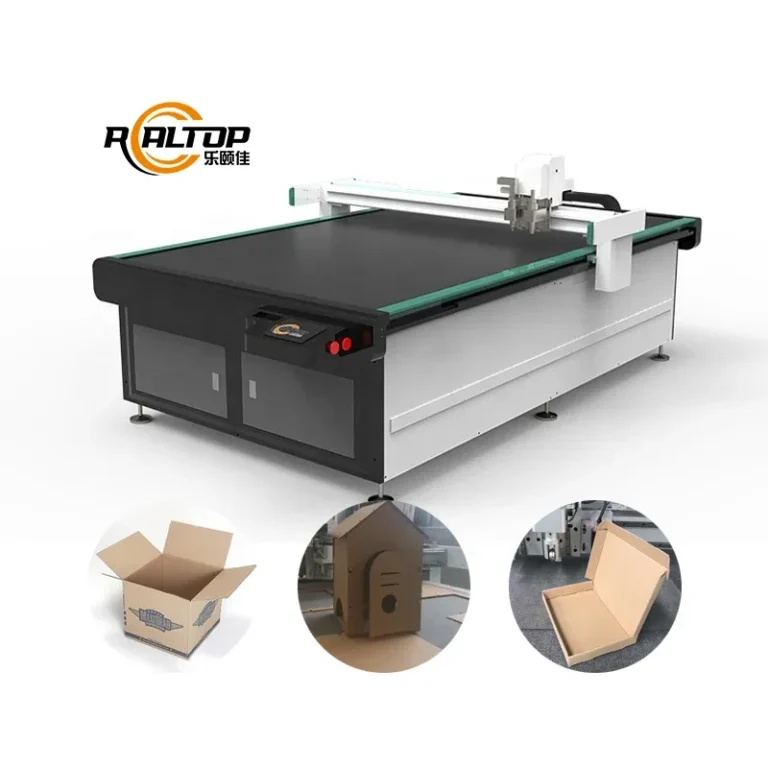
Large-Format CNC Table for Cutting Pool Covers & Hay Tarps Manufacturer
Most large-format tables fail with lightweight tarps not because they lack power, but because they suck too hard in the wrong places.
Cutting flexible, wind-sensitive materials like pool covers and hay tarps requires a large format cutting machine for pool covers and tarps equipped with independent zone vacuum adsorption and oscillating knife technology. This combination prevents material shifting, eliminates edge wrinkling, and ensures clean cuts without thermal damage. Standard suction systems often lift lightweight fabrics or fail to hold them flat against air currents, leading to wasted material and inconsistent quality. Independent zoning allows targeted suction only where the material is placed, while high-frequency oscillating knives provide the vertical precision needed for complex curves and thick PVC layers.

The difference between a ruined batch and a perfect cut often comes down to how the table interacts with the material surface. In my early days handling machinery in Jinan, I saw countless operators struggle with lightweight agricultural covers that seemed to have a mind of their own. The solution was never more power, but smarter control. Understanding the physics of flexible material handling is critical for anyone investing in a large format cutting machine for pool covers and tarps. Without localized suction, even the sharpest blade cannot compensate for a moving target.
Why Do Pool Covers and Tarps Shift During Cutting?
Lightweight materials lift and wrinkle when global vacuum suction creates uneven pressure across the table surface.
When cutting large-area materials such as pool covers or hay tarps, the primary challenge is not the cutting tool itself, but the stability of the substrate. Traditional vacuum tables often apply uniform suction across the entire bed. For heavy materials like steel or thick rubber, this works fine. However, for lightweight, flexible fabrics, this approach is flawed. If the material does not cover the entire table, air leaks through the uncovered holes, reducing suction power where it is needed most. Worse, if the material is lighter than the air pressure differential, it can bulge or shift during high-speed movements.
I recall a specific case involving an Australian farm tarp manufacturer. They were producing large hay covers using a standard wide-format cutter. The local environment was windy, and the facility had high ceilings with significant air circulation. Every time the cutting head accelerated, the lightweight polyethylene tarp would lift slightly at the edges. This caused the blade to drag rather than slice, resulting in jagged edges and frequent material jams. The operator assumed the vacuum pump was weak and upgraded to a larger motor. The problem persisted because the issue was not total suction volume, but distribution.
Without independent zone control, the vacuum system cannot adapt to the specific footprint of each job. A small batch of pool cover samples placed on a large table will experience poor hold-down force because the suction is diluted across empty zones. This leads to material shifting, which ruins dimensional accuracy. For a large format cutting machine for pool covers and tarps, the ability to isolate suction areas is not a luxury; it is a fundamental requirement for processing flexible composites.

How Does Independent Zone Vacuum Adsorption Solve This?
Dividing the table into specific zones ensures targeted suction only where the material is placed, preventing lift and distortion.
Independent zone vacuum adsorption solves the shifting problem by segmenting the table surface into multiple controllable areas. Instead of one large vacuum chamber, the table is divided into a grid of zones, each with its own valve control. When a sheet of material is loaded, the system detects which zones are covered and activates suction only in those areas. This maximizes holding power exactly where it is needed, regardless of the material’s size or shape.
In the case of the Australian farmer, we retrofitted the table with a six-zone independent vacuum system. Each zone could be turned on or off individually. When cutting smaller hay tarp sections, only the relevant zones were activated. This created a strong, localized seal that held the material flat against the table surface, even in drafty conditions. The result was immediate: the material stopped flying, and the cutting quality improved dramatically. The six-zone configuration allowed for 100% material retention, eliminating the need for manual weights or tape that could damage the fabric.
For pool cover manufacturers, this technology is equally critical. Pool covers often feature complex shapes and curves. If the material shifts even a millimeter during a curved cut, the final product will not fit the pool frame. Independent zoning ensures that every part of the material remains stationary during intricate maneuvers. This is why a modern large format cutting machine for pool covers and tarps must prioritize zone partitioning logic over raw motor power. It is the baseline for handling lightweight, wind-sensitive materials without deformation.

What Knife Technology Ensures Clean Edges on PVC Tarps?
Oscillating knives provide high-frequency vertical cuts, preventing fraying and burnt edges common with thermal methods.
While vacuum adsorption holds the material steady, the cutting tool determines the edge quality. For PVC tarpaulins and heavy-duty pool covers, traditional laser cutters are often unsuitable. Lasers melt synthetic materials, leaving burnt, hardened edges that can crack over time and emit harmful fumes. Mechanical blades offer a cleaner alternative, but standard rotary blades can drag or pull flexible materials, causing distortion.
Oscillating knife technology addresses this by moving the blade up and down at high frequency while it moves along the cutting path. This vertical motion pierces the material cleanly, reducing lateral force and preventing the fabric from bunching up. The result is a smooth, sealed edge without thermal damage. This is particularly important for thick, multi-layer PVC tarps used in agriculture and industrial applications.
A heavy-duty PVC tarp processor I worked with faced issues with thick layers slipping during cutting. They switched to a high-speed oscillating knife system capable of speeds up to 2000mm/s. The high-frequency action allowed the blade to slice through multiple layers cleanly without dragging. The edges were sharp and free of fraying, meeting strict quality standards for outdoor durability. This demonstrates that thicker materials do not necessarily require slower speeds; instead, they benefit from the precise, rapid action of an oscillating blade.
For a large format cutting machine for pool covers and tarps, the integration of oscillating knife technology ensures consistent edge quality across various material thicknesses. Whether cutting thin pool liners or thick agricultural tarps, the oscillating action provides the versatility needed for diverse production runs. This technology eliminates the need for post-processing edge sealing, saving time and reducing labor costs.

How to Maximize Material Yield for Large-Scale Tarp Production?
Smart nesting software optimizes layout, significantly reducing material waste and lowering production costs.
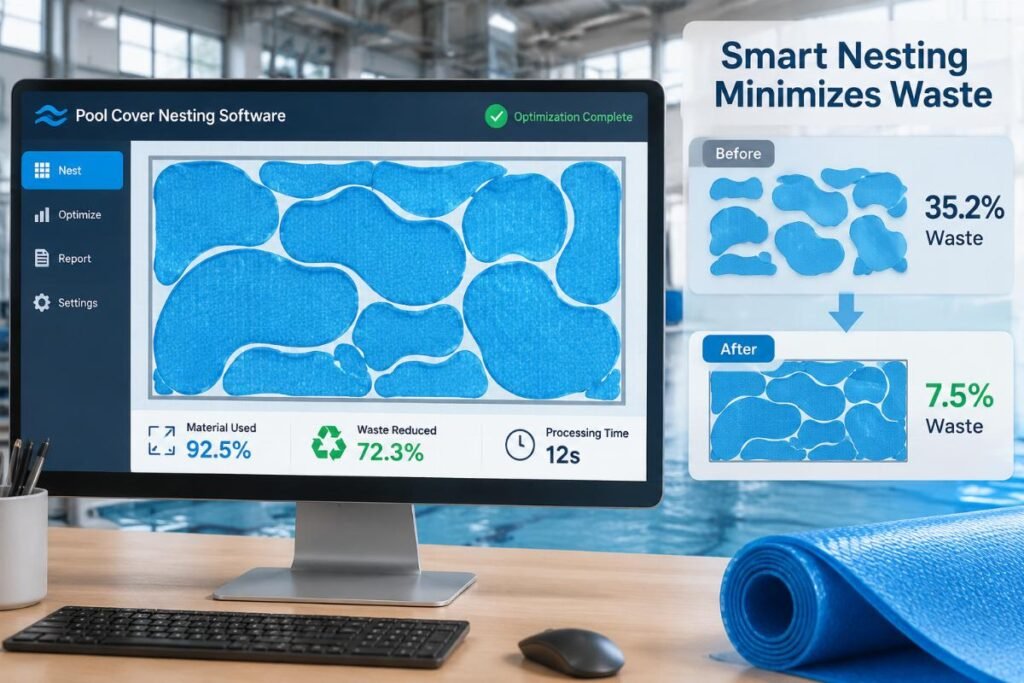
Material cost represents a significant portion of tarp production expenses. Efficient use of raw material is essential for maintaining profitability. Manual nesting, where operators arrange patterns by eye, often leaves large gaps between pieces, leading to substantial waste. Smart nesting algorithms automate this process, calculating the most efficient arrangement of parts on the material sheet.
A pool cover manufacturer recently implemented smart nesting software on their large format cutting machine for pool covers and tarps. The software analyzed the shapes of various pool covers and arranged them to minimize unused space. The result was a 15% reduction in material waste compared to their previous manual method. Additionally, the software accounted for the grain direction of the fabric, ensuring that all pieces were cut in the optimal orientation for strength and appearance.
The precision of the cutting system also contributes to material savings. With ±0.1mm accuracy, parts can be nested closer together without risking overlap or cutting errors. This tight tolerance allows for more efficient use of the material width. For large-scale production, even a small percentage increase in yield translates to significant cost savings over time. The combination of smart nesting and high-precision cutting ensures that every square meter of fabric is used effectively.

Conclusion
Precision cutting of flexible materials demands more than just a large table; it requires intelligent suction and dynamic tooling.
Cutting pool covers and hay tarps successfully hinges on controlling the material’s behavior during the process. Independent zone vacuum adsorption prevents shifting and wrinkling, while oscillating knife technology ensures clean, durable edges. Together, these technologies form the core of an effective large format cutting machine for pool covers and tarps. By prioritizing these features, manufacturers can achieve higher quality, reduce waste, and improve production efficiency.