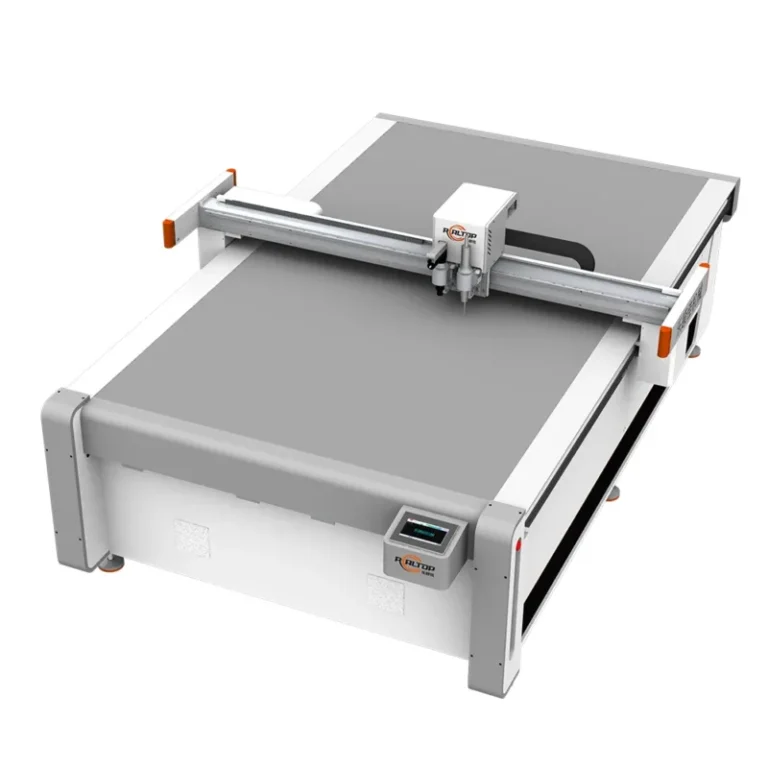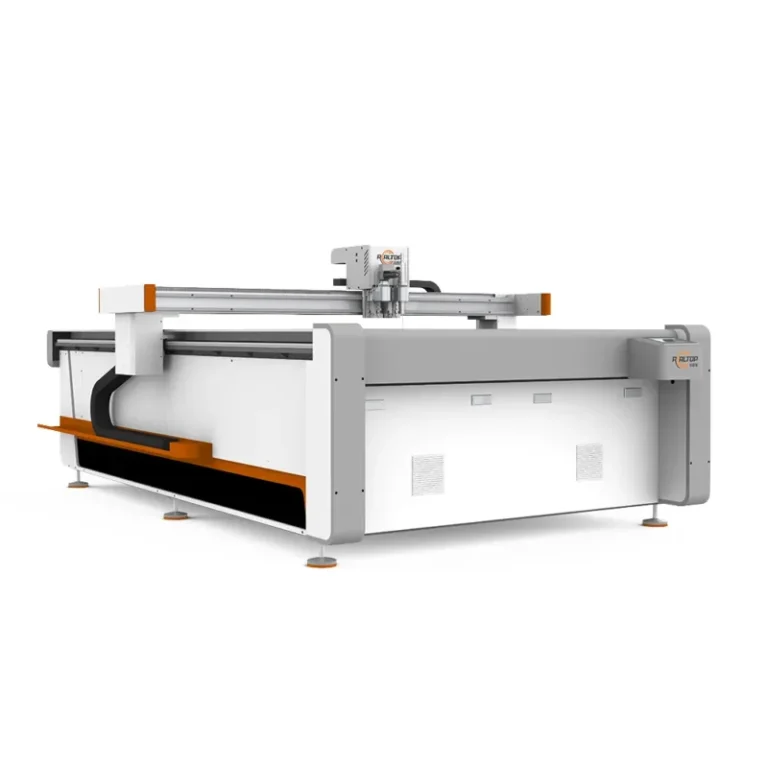
Inflatable SUP Board Cutting Machine for Drop-Stitch Fabric for Sale

Higher cutting speeds do not guarantee better edges on drop-stitch fabric; in fact, mismatched knife frequency is the primary cause of severe edge fraying.
The core requirement for processing inflatable SUP boards is an Inflatable SUP Board Cutting Machine that precisely synchronizes oscillating knife frequency with yarn density and employs high-vacuum adsorption to prevent material shifting, ensuring zero fraying and dimensional accuracy.
I still remember the humidity in the Dubai workshop where I once managed procurement for a water sports manufacturer. We had just installed a new digital cutter, expecting it to revolutionize our production line for inflatable stand-up paddleboards. The machine was fast, impressive, and expensive. Yet, when we ran the first batch of drop-stitch fabric, the edges came out looking like they had been torn rather than cut. Every single board leaked air during inflation tests. The issue was not the blade sharpness or the software path; it was the vibration frequency. The knife was oscillating at a rate that clashed with the dense weave of the drop-stitch material, causing the yarns to pull and fray instead of slicing cleanly. That loss forced me to look beyond speed ratings and focus on the physics of composite cutting.
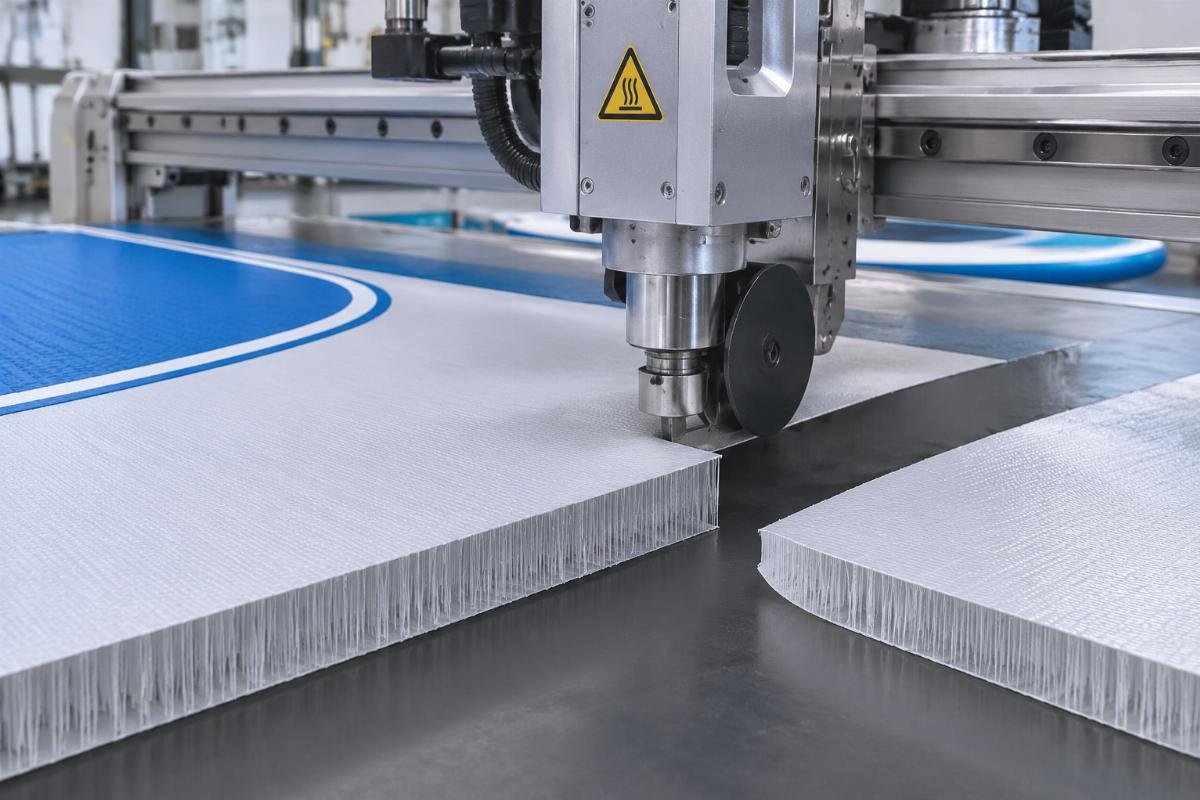
This experience shifted my focus from buying machines to understanding how they interact with complex materials. Today, when I evaluate solutions for composite processors, I look for specific mechanical adjustments that address the unique challenges of drop-stitch textiles.
Why Standard Suction Fails on Drop-Stitch Materials
Drop-stitch fabric requires significantly higher vacuum adsorption strength than standard textiles due to its thickness and internal air channel structure.
Most general-purpose fabric cutters rely on moderate suction to hold material in place. This works well for thin cotton or single-layer leather. However, drop-stitch fabric used in inflatable SUP boards is thick, rigid, and contains thousands of vertical threads connecting two outer layers. When a cutting head moves across this material at high speed, the lateral forces can easily shift the fabric if it is not held down firmly.
In my early days, we assumed that standard suction tables would suffice. We were wrong. The material would lift slightly near the cutting zone, causing the knife to drag rather than slice. This resulted in inconsistent dimensions and jagged edges. The solution was not to slow down the machine but to increase the holding power. Modern systems designed for this application use segmented vacuum zones that can be adjusted based on the fabric’s permeability and thickness.
| Feature | Standard Fabric Cutter | Specialized Inflatable SUP Board Cutting Machine |
|---|---|---|
| Vacuum Strength | Moderate | High-intensity, adjustable zones |
| Material Stability | Suitable for thin textiles | Prevents shifting in thick composites |
| Edge Quality | Acceptable for soft fabrics | Clean, sealed edges for inflation |
| Adsorption Control | Fixed or manual | Automated based on material profile |
A European manufacturer I consulted with recently faced similar issues. They were trying to cut PVC-coated drop-stitch material using a machine designed for apparel. The result was a high rejection rate due to dimensional errors. After switching to a system with customizable vacuum adsorption, their material utilization improved noticeably, and the edge quality met the strict standards required for inflatable products.

The key takeaway is that suction is not a one-size-fits-all parameter. For an Inflatable SUP Board Cutting Machine to perform effectively, it must offer granular control over vacuum pressure, ensuring that the material remains perfectly stationary throughout the cutting cycle.
Adjusting Knife Frequency to Match Yarn Density
Matching the oscillating frequency of the knife to the specific yarn density of the drop-stitch fabric is critical to preventing edge fraying.
Drop-stitch fabric is essentially a sandwich of two layers connected by thousands of vertical threads. This structure creates a dense, resilient material that resists cutting. If the knife oscillates too slowly, it pushes the fibers aside rather than cutting them. If it oscillates too quickly without proper synchronization, it can generate excessive heat or cause the fibers to vibrate out of alignment, leading to fraying.
In the Dubai incident, our machine was set to a default frequency suitable for lighter materials. The dense weave of the SUP board fabric required a higher, more precise frequency to ensure each stroke of the knife severed the yarns cleanly. Once we adjusted the frequency to match the material’s specifications, the fraying disappeared. The edges were smooth, ready for welding without additional trimming.
This adjustment is not a set-and-forget task. Different suppliers of drop-stitch fabric may have varying yarn densities and coating thicknesses. A versatile Inflatable SUP Board Cutting Machine allows operators to save and recall specific frequency settings for different material batches. This flexibility reduces setup time and ensures consistent quality across production runs.
| Parameter | Low Density Fabric | High Density Drop-Stitch |
|---|---|---|
| Knife Frequency | Lower range | Higher, precise range |
| Cutting Speed | Fast | Moderate to Fast |
| Edge Outcome | Clean with standard settings | Requires tuned frequency |
| Risk of Fraying | Low | High if mismatched |
A case from a Middle East factory illustrates this point. They were producing multiple models of inflatable boards, each using a different grade of drop-stitch material. By utilizing a machine with adjustable frequency controls, they were able to switch between materials quickly, maintaining high edge quality for all product lines. This adaptability is essential for manufacturers who deal with diverse material sources.
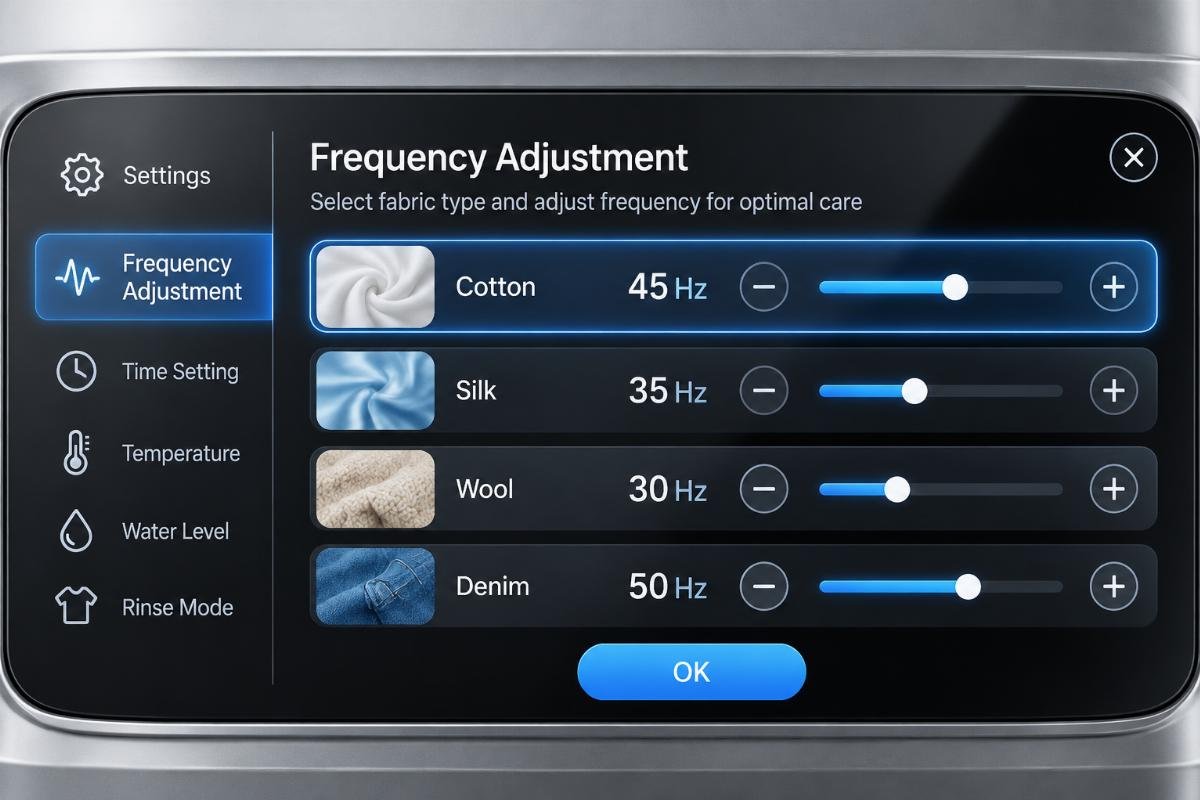
The lesson here is clear: speed is secondary to synchronization. An Inflatable SUP Board Cutting Machine must provide precise control over knife oscillation to handle the intricate structure of drop-stitch fabrics effectively.
Reducing Changeover Time for Multiple Board Sizes
Efficient switching between different SUP board sizes and shapes is crucial for maintaining high productivity in custom manufacturing environments.
Inflatable SUP boards come in various shapes and sizes, from all-around boards to touring and racing models. Each design requires a unique cutting pattern. In traditional setups, changing from one board size to another involved manual adjustments, recalibrating the material position, and loading new files. This process was time-consuming and prone to human error.
Modern digital cutting solutions address this challenge through smart nesting software and automated material handling. The software can arrange multiple board patterns on a single sheet of drop-stitch fabric to maximize material usage. Once the layout is optimized, the machine can cut the entire sheet without manual intervention.
I observed a facility in Asia that implemented such a system. They were able to reduce their changeover time significantly. Instead of spending hours adjusting the machine for each new order, operators simply selected the desired board model from the software interface. The machine automatically adjusted the cutting parameters, including knife frequency and vacuum strength, based on pre-set profiles. This automation allowed them to handle small batch orders profitably, which was previously impossible due to high setup costs.
| Process Step | Traditional Method | Automated Digital Cutting |
|---|---|---|
| Pattern Layout | Manual placement | Smart nesting software |
| Parameter Setup | Manual adjustment | Auto-load from profile |
| Material Utilization | Variable, often low | Optimized, minimal waste |
| Changeover Time | Hours | Minutes |
The ability to switch quickly between jobs is a competitive advantage. It allows manufacturers to respond to market demands for customized boards without sacrificing efficiency. An Inflatable SUP Board Cutting Machine equipped with intelligent software transforms the production process from a rigid, batch-oriented operation to a flexible, on-demand workflow.
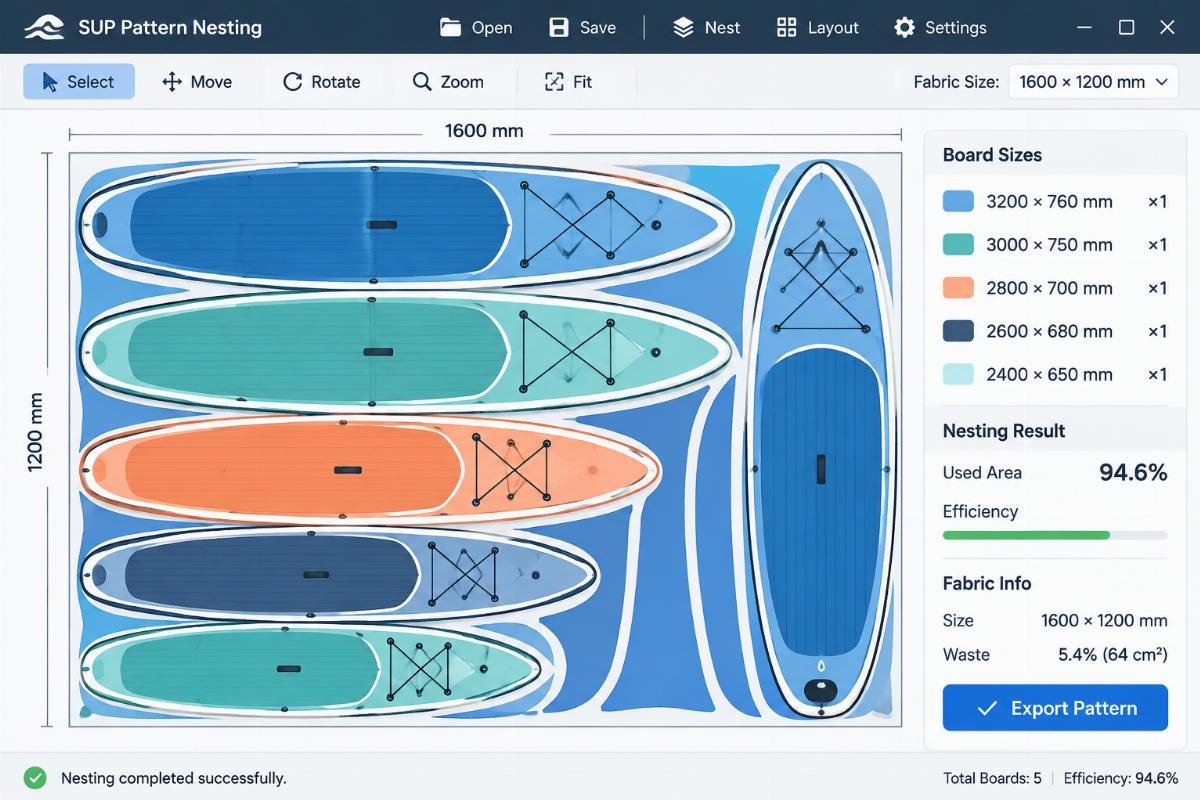
For manufacturers aiming to scale their operations, minimizing non-cutting time is as important as maximizing cutting speed. The right machine integrates hardware precision with software intelligence to achieve this balance.
Ensuring Precision for Welding and Assembly
Cutting precision directly impacts the quality of subsequent welding and assembly processes for inflatable SUP boards.
The edges of the cut drop-stitch fabric are not just aesthetic; they are functional. These edges will be welded together to form the air-tight chambers of the board. If the edges are frayed, uneven, or dimensionally inaccurate, the welding process becomes difficult and unreliable. Poor welds lead to leaks, which are the most common failure mode in inflatable water sports equipment.
Precision cutting ensures that the mating surfaces fit together perfectly. This reduces the need for manual trimming or sanding before welding, saving labor time and improving the consistency of the final product. In my experience, factories that invested in high-precision cutting saw a noticeable reduction in warranty claims related to air leaks.
The Realtop CNC oscillating knife cutters, for instance, are engineered to deliver ±0.1mm precision. This level of accuracy is achieved through rigorous calibration of the oscillating mechanism and stable motion control systems. For drop-stitch fabrics, this precision means that every cut piece is identical, allowing for seamless assembly.
Moreover, the clean cuts produced by a properly tuned Inflatable SUP Board Cutting Machine help maintain the integrity of the fabric’s coating. Damaged coatings can compromise the bond strength during welding. By avoiding fraying and heat buildup, the cutting process preserves the material’s properties, ensuring strong, durable welds.
| Quality Metric | Low Precision Cutting | High Precision Cutting |
|---|---|---|
| Edge Smoothness | Rough, frayed | Smooth, clean |
| Dimensional Accuracy | Variable | Consistent within tight tolerances |
| Welding Ease | Difficult, requires prep | Easy, direct welding |
| Leak Rate Risk | Higher | Lower |
A manufacturer in North America reported that after upgrading their cutting system, their welding defect rate dropped noticeably. The operators found that the pieces fit together so well that the welding process became faster and more reliable. This improvement in downstream processes justified the investment in better cutting technology.

Ultimately, the value of an Inflatable SUP Board Cutting Machine is measured not just by how fast it cuts, but by how well it prepares the material for the next stages of production. Precision at the cutting stage translates to quality in the final product.
Conclusion
Precision in cutting drop-stitch fabric is non-negotiable for producing high-quality inflatable SUP boards.
Success in this niche depends on synchronizing knife frequency with yarn density and using sufficient vacuum adsorption to prevent material shifting. These technical adjustments eliminate edge fraying and ensure dimensional accuracy, which are critical for effective welding and air retention. Manufacturers who prioritize these mechanical specifics over raw speed will see significant improvements in yield and product reliability. An Inflatable SUP Board Cutting Machine that offers these capabilities is not just a tool but a foundational element of a efficient production line.