Fiberglass Cutting Machine Manufacturer with Factory Price
The lowest base price is often the most expensive mistake you will make.
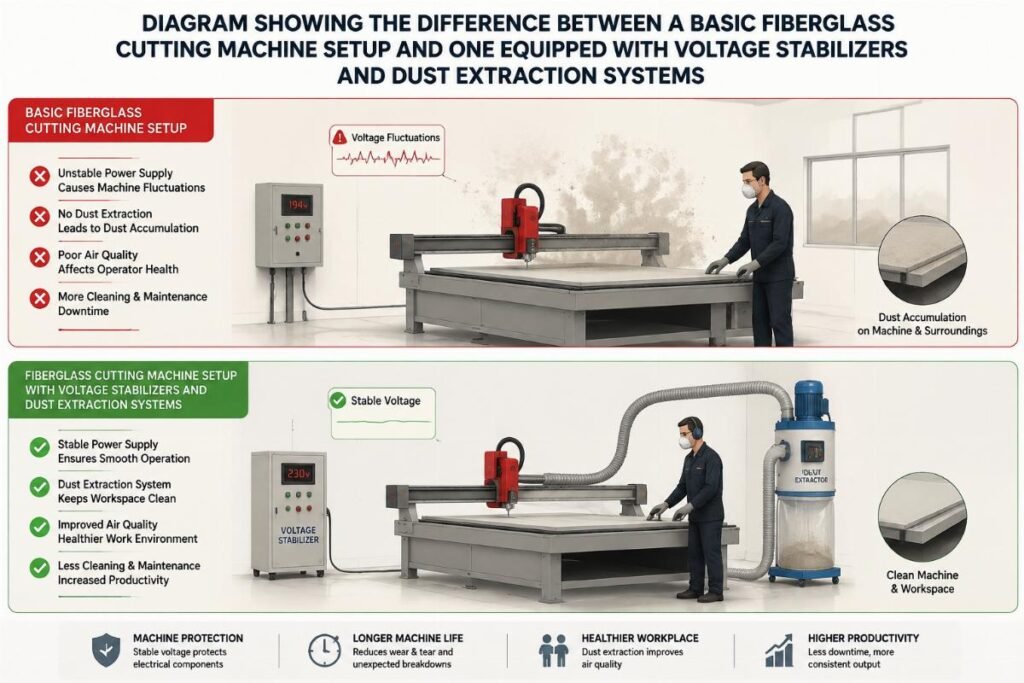
The final Fiberglass cutting machine price is not determined by the sticker value of the chassis, but by the integration of voltage stabilization for unstable grids, industrial-grade dust extraction for abrasive composites, and precision nesting software that reduces material waste. Ignoring these site-specific configurations leads to hidden operational costs that far exceed the initial savings.
I still remember the smell of burnt electronics in a small workshop in Guadalajara. A client had insisted on the absolute bottom dollar for a fiberglass cutter, rejecting every add-on as unnecessary upselling. He wanted the raw machine, nothing more. Two months later, the local power grid fluctuated during a storm. Without a stabilized power supply, the main control board fried instantly. Worse, the lack of proper dust extraction meant fine glass fibers clogged the linear guides, causing premature wear and jagged cuts. The cost to air-freight replacement parts and repair the damage wiped out his entire profit margin for the year. That failure was not due to the machine’s quality, but to a mismatch between the equipment configuration and the real-world working environment.
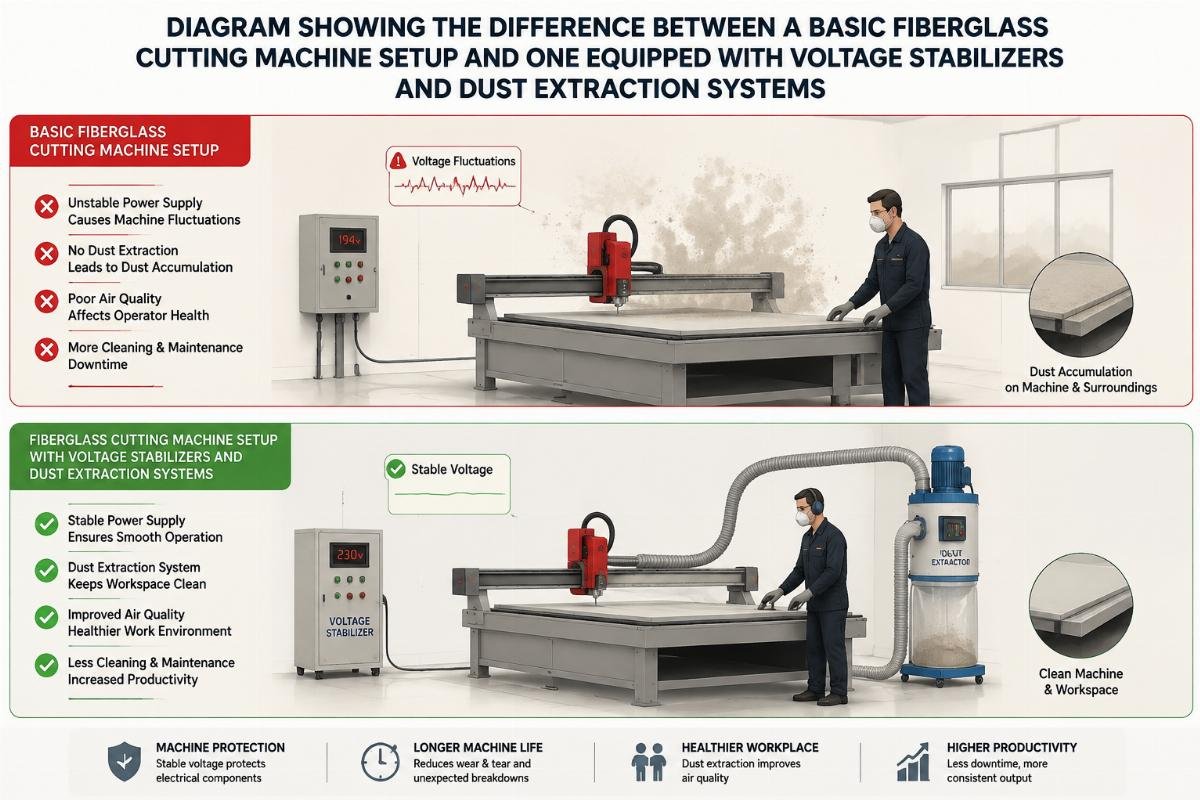
Understanding this distinction is critical for any procurement manager or distributor. When you search for Fiberglass cutting machine price, you are not just buying a metal frame and a knife head. You are buying a production system that must survive your specific factory conditions.
What is included in the base price of a fiberglass cutter?
The base price typically covers only the standard mechanical chassis and the fundamental oscillating knife module, excluding critical environmental adaptations.
Many buyers assume that a "complete" machine arrives ready to cut complex composite patterns immediately. However, the standard quotation usually includes the gantry, the vacuum table, and the basic cutting tool. It rarely accounts for the auxiliary systems required for consistent, high-volume fiberglass processing.
Consider the difference between a generic setup and a purpose-built solution. A base model might feature a standard servo motor and a basic blade holder. But fiberglass is abrasive. It eats through standard components if not managed correctly. The base price does not include the reinforced guide rails necessary to resist glass dust infiltration, nor does it include the smart nesting software that optimizes material usage. Without these, the machine may function, but it will not perform efficiently.
| Component | Base Model Inclusion | Recommended for Fiberglass |
|---|---|---|
| Cutting Head | Standard Oscillating Knife | Reinforced High-Frequency Head |
| Control System | Basic PLC | Advanced Motion Controller with Vibration Damping |
| Software | Basic CAD Import | Smart Nesting with Material Optimization |
| Dust Management | None or Basic Port | Industrial Cyclone Extraction System |
| Power Supply | Standard Input | Voltage Stabilizer Integrated |
A buyer from Southeast Asia once compared two quotes for a Fiberglass cutting machine price. One was significantly lower. He chose the cheaper option, only to realize later that the "savings" came from omitting the vibration-damping algorithm in the software. The result was visible chatter marks on every cut edge, requiring manual sanding that doubled labor time. The higher-priced quote included the advanced motion controller that ensured smooth cuts at high speeds.
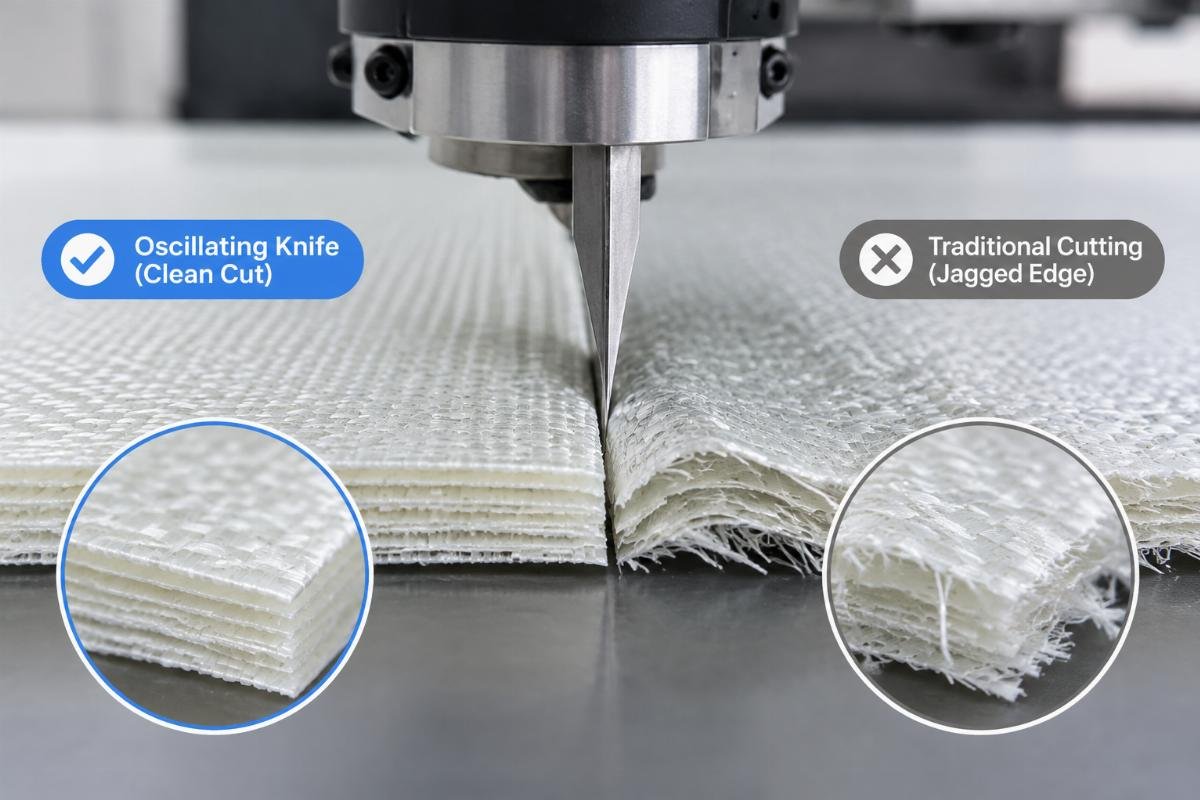
The base price is merely the entry ticket. The real value lies in the components that ensure longevity and precision under load.
How do local site conditions alter the final quotation?
Unstable electrical grids and high-dust environments necessitate additional hardware like voltage stabilizers and industrial exhaust systems, which directly increase the final quote.
Factory conditions vary wildly across different regions. In areas with reliable infrastructure, a standard machine might suffice. But in many manufacturing hubs, power fluctuations are common. A sudden spike can destroy sensitive CNC drivers. To prevent this, a heavy-duty voltage stabilizer is not an optional extra; it is an insurance policy. Adding this component increases the upfront Fiberglass cutting machine price, but it prevents catastrophic downtime.
Dust is another silent killer. Fiberglass particles are microscopic and abrasive. If they escape into the machine’s internal mechanics, they act like sandpaper on linear bearings and rack gears. A basic dust port is insufficient. An industrial-grade extraction system with high static pressure is required to capture particles at the source. This system adds to the cost, but it extends the machine’s service life meaningfully.
I recall a project in a region with frequent power dips. The client initially resisted the cost of a stabilizer. We insisted on including it in the package. Six months later, a neighboring factory suffered a major outage that damaged several unprotected machines. Our client’s unit continued running without interruption. The added cost of the stabilizer was negligible compared to the potential loss of production.
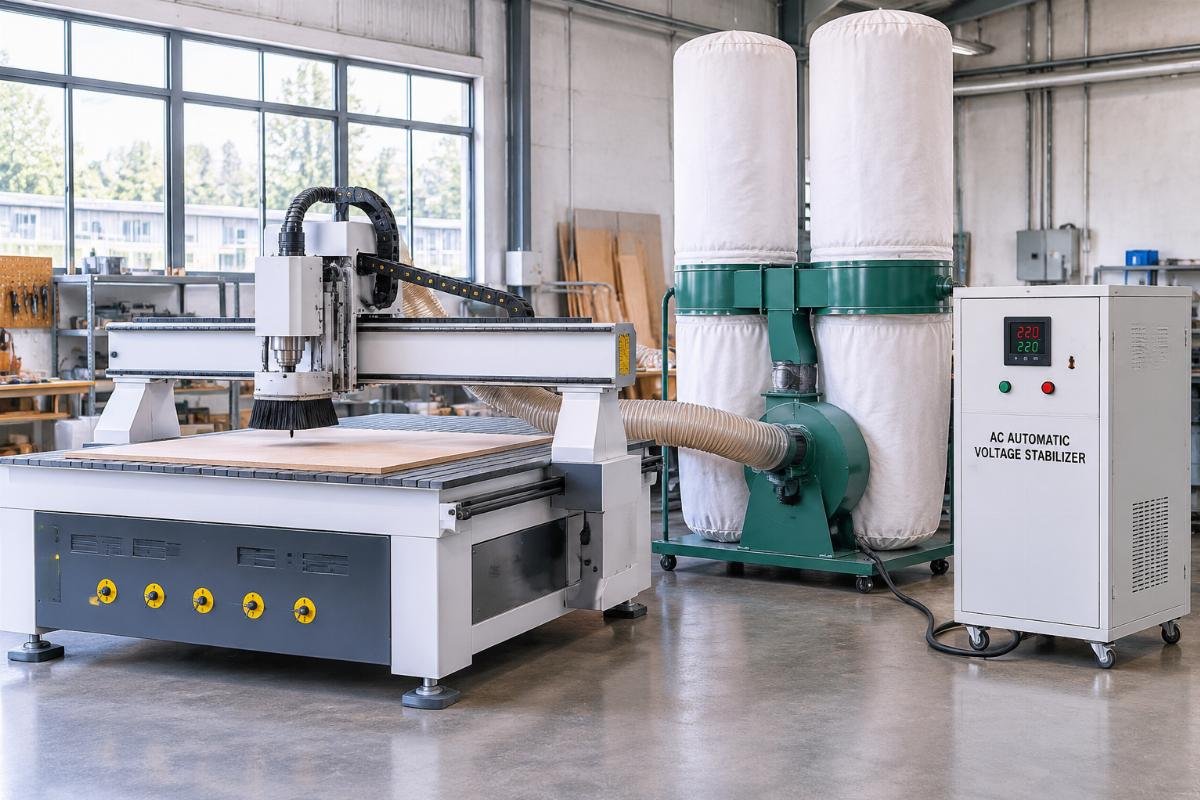
When evaluating Fiberglass cutting machine price, always ask what site-specific protections are included. A quote that ignores your local reality is a quote that invites future expense.
Why does cutting precision affect the total investment?
Upgrading to high-precision motion systems and smart nesting software increases the initial cost but reduces material waste by optimizing layout efficiency.
Precision is not just about tight tolerances; it is about material savings. Fiberglass and other composite materials are expensive. A machine with standard precision might have a tolerance that leads to slight misalignments in complex patterns. Over thousands of cuts, this results in significant material waste. Upgrading to a system capable of micron-level precision ensures that every piece fits perfectly, reducing scrap rates.
Smart nesting software plays a crucial role here. It automatically arranges patterns to maximize material usage. This software license is often an add-on, increasing the Fiberglass cutting machine price. However, the return on investment is rapid. Saving even a small percentage of material per sheet adds up to substantial annual savings.
A European automotive supplier once upgraded their cutting line to include advanced nesting algorithms. The initial investment was higher, but they reported a noticeable drop in material consumption within the first quarter. The precision of the cuts also eliminated the need for secondary trimming operations, streamlining their production flow.
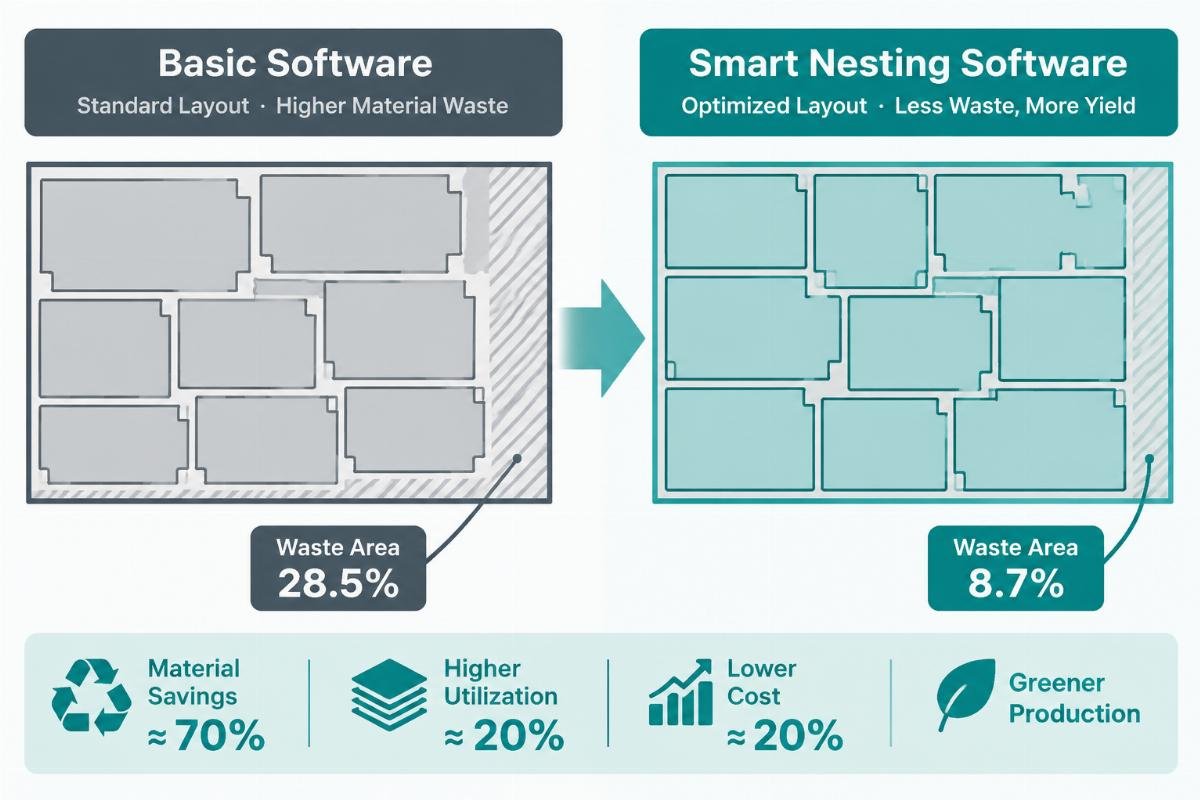
Do not view precision upgrades as mere luxury features. They are direct contributors to your bottom line. When comparing Fiberglass cutting machine price, calculate the potential material savings against the higher upfront cost.
How to calculate the Total Cost of Ownership (TCO)?
Total Cost of Ownership must include maintenance intervals, tooling wear rates, and potential downtime costs, not just the initial invoice amount.
The sticker price is only one part of the equation. TCO provides a holistic view of the investment. For fiberglass cutting, tooling wear is a significant factor. Oscillating knives and blades degrade faster when cutting abrasive materials. A machine designed for easy tool changes and using durable, coated blades will have lower ongoing costs.
Maintenance is another key component. Machines with sealed linear guides and protected electronics require less frequent servicing. Downtime is the most expensive cost of all. A machine that breaks down frequently halts production, delays orders, and damages customer relationships. Investing in a robust machine with a comprehensive warranty mitigates this risk.
Consider the support structure. Remote diagnostics and technical support can resolve issues quickly, minimizing downtime. A manufacturer that offers 24/7 online support adds value that is not reflected in the base Fiberglass cutting machine price but is crucial for continuous operation.
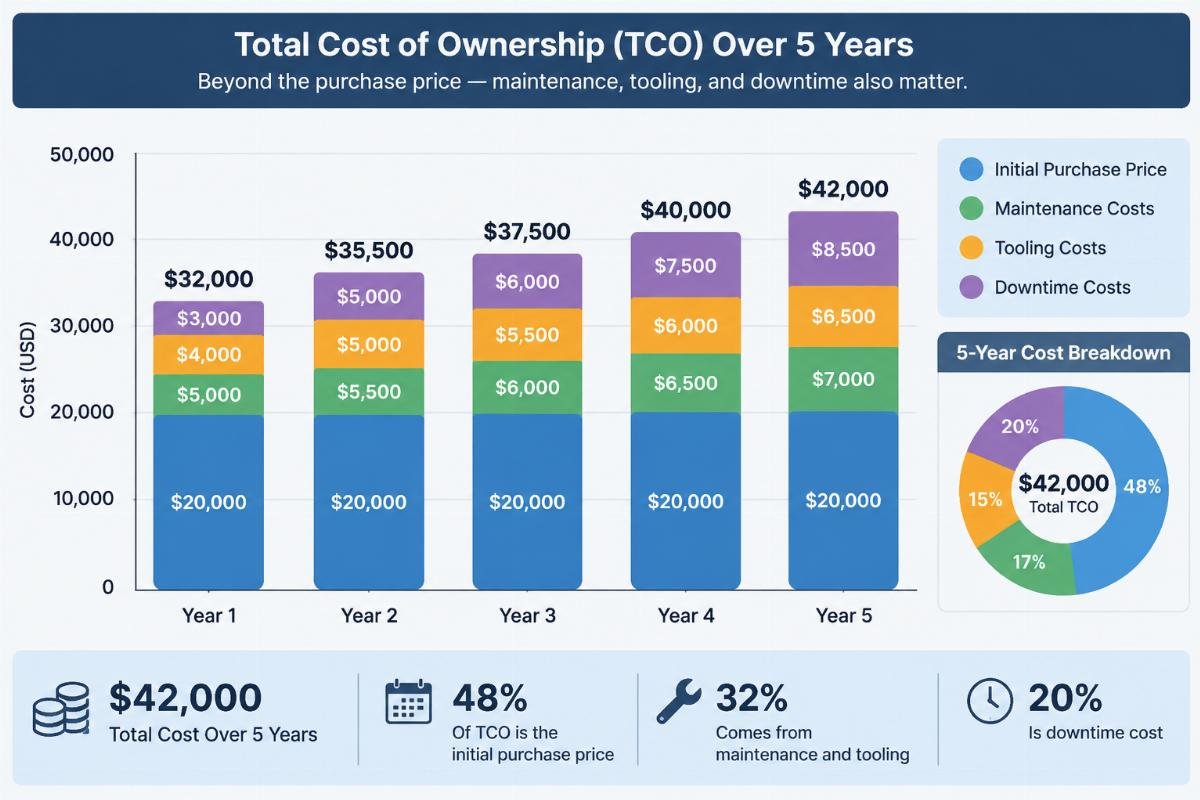
When you request a Fiberglass cutting machine price, ask for a TCO analysis. Understand what you will pay not just today, but over the next three to five years. This perspective shifts the focus from cheap acquisition to sustainable profitability.
Conclusion
True savings come from matching machine configuration to operational reality, not from chasing the lowest base price.
The Fiberglass cutting machine price is a reflection of the system’s ability to handle your specific challenges. Voltage stability, dust control, and precision nesting are not optional extras; they are essential elements of a productive workflow. By focusing on Total Cost of Ownership and site-specific requirements, you avoid hidden costs and ensure long-term efficiency. Choose a solution that protects your investment and optimizes your production, rather than one that simply looks cheap on paper.