Awning Fabric Cutting Machine Supplier for Spanish Workshops

Higher cutting speed often ruins awning fabric edges.
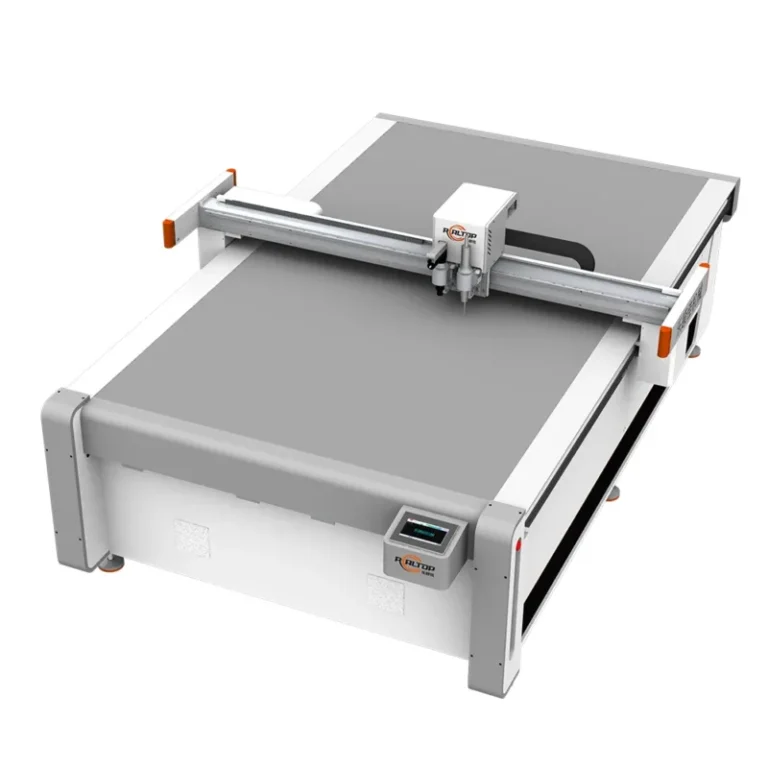
Spanish workshops must prioritize CE compliance and exact voltage adaptation over flashy specs when buying an awning fabric cutting machine to avoid customs delays and electrical failures. The core requirement is not just a CNC oscillating knife cutter, but a system that matches the local three-phase power grid and carries verifiable EU machinery directive documentation. Without these, even the most advanced smart nesting software cannot prevent a machine from being stuck at the port or burning out its motherboard upon first use.
I still remember the smell of burnt electronics in a small workshop near Valencia. A client had imported a high-speed cutter that looked impressive on paper. The sales brochure promised rapid throughput, but no one checked the local transformer output. When they flipped the switch, the mainboard failed instantly. The machine sat idle for weeks while we sourced replacement parts and reconfigured the voltage protection. That delay cost them more than the initial savings from choosing a cheaper, non-compliant supplier. This experience shaped how I approach every inquiry from Spain. It is not about selling the fastest machine; it is about selling the one that actually works in your specific electrical environment.

For manufacturers seeking a reliable awning fabric cutting machine, the focus must shift from raw speed to operational stability and regulatory adherence. The right equipment integrates seamlessly with local power standards and passes customs inspection without additional testing fees.
Why Voltage and CE Matter More Than Speed for Spanish Workshops?
Many buyers assume that standard industrial voltage is universal. It is not. In Spain, workshop grids can vary, and many older facilities require specific adaptations for three-phase power. A mismatch here does not just cause a tripped breaker; it can destroy sensitive control boards.
The CE mark is not just a sticker. It is a declaration that the machine meets EU safety, health, and environmental protection requirements. Customs officers in Barcelona and Valencia check this documentation rigorously. Missing or incomplete CE files lead to inspections that halt production schedules for days or weeks. A verified awning fabric cutting machine comes with a full technical file, including risk assessments and conformity declarations, ready for immediate review.
Consider the case of a composite material manufacturer in Alicante. They initially chose a supplier based on low price and high advertised speed. Upon arrival, the machine lacked proper CE documentation for the oscillating knife assembly. The customs hold-up lasted nearly a month. By the time it was cleared, the peak season for outdoor shading solutions had passed. Later, they switched to a supplier who provided pre-verified CE docs and customizable voltage options. The transition was smooth, and the machine was running within days of arrival.
Voltage adaptation goes beyond simple transformers. It involves protecting the motherboard from fluctuations. Modern CNC oscillating knife cutters should offer options for 220V, 380V, or even 330V inputs, depending on the local grid configuration. This flexibility ensures that the machine operates stably, regardless of minor fluctuations in the workshop’s power supply.

When evaluating an awning fabric cutting machine, ask for proof of CE certification and details on voltage customization. These factors are far more critical to your bottom line than a marginal increase in cutting speed.
Oscillating Knife vs Laser: Which Suits Awning Fabrics?
Lasers are popular for many materials, but they are often unsuitable for awning fabrics. Technical textiles like PVC-coated polyester and acrylic canvas react poorly to heat. Laser cutting melts the edges, creating hard, brittle seams that can crack under tension or weather exposure. This compromises the durability of the final product.
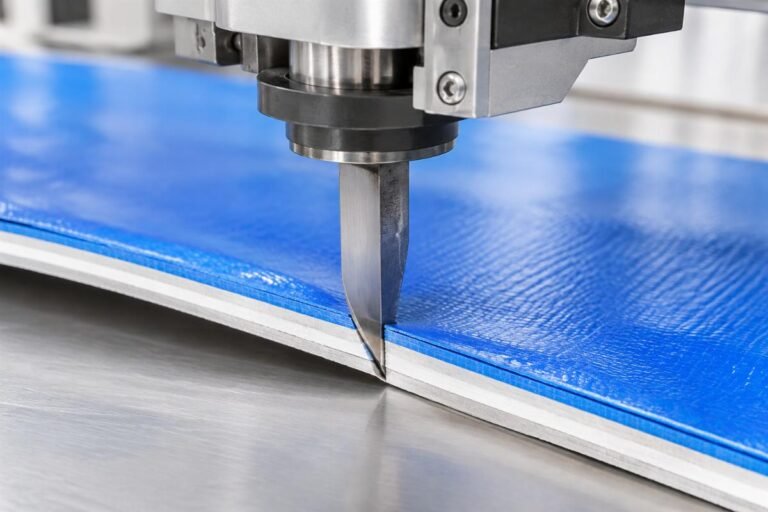
Oscillating knife technology, by contrast, uses a rapidly vibrating blade to cut through layers of fabric without generating significant heat. This results in clean, soft edges that maintain the material’s integrity. For awning manufacturers, this means fewer rejected pieces and higher customer satisfaction.
A furniture upholstery workshop in Madrid once tried using a laser cutter for heavy-duty outdoor fabrics. They reported consistent issues with edge discoloration and stiffness. After switching to an oscillating knife system, the quality of their finished covers improved noticeably. The edges remained flexible, and the fabric retained its original texture.
The choice of tool head is crucial. An effective awning fabric cutting machine should support various oscillating knife frequencies to handle different material thicknesses. Thicker PVC tarps require lower frequencies for cleaner cuts, while thinner acrylics benefit from higher speeds. This adaptability ensures precision across a diverse product range.
Moreover, oscillating knives do not produce toxic fumes. Laser cutting PVC releases chlorine gas, which is hazardous to operators and requires expensive ventilation systems. Mechanical cutting eliminates this risk, creating a safer working environment.

For Spanish workshops producing high-quality shading solutions, the oscillating knife is the superior choice. It preserves material properties, ensures operator safety, and delivers the clean finish required for premium products. When selecting an awning fabric cutting machine, prioritize models with adjustable knife frequency and robust blade holders.
Specification Matrix: Choosing the Right Table Size and Power
Selecting the correct table size and power configuration is essential for efficiency. A table that is too small forces operators to process rolls in multiple stages, increasing handling time and error risk. A table that is too large wastes valuable floor space. The goal is to match the table dimensions to the standard width of awning rolls used in your region.
Power requirements must align with the machine’s size and the density of materials being cut. Larger tables with heavy-duty frames need more powerful motors to maintain precision at higher speeds. However, excessive power without proper control systems can lead to vibration and reduced accuracy.
| Feature | Basic Model | Professional Model | Industrial Grade |
|---|---|---|---|
| CE Documentation | Self-reported | Full Batch-Level Verified | Full Batch-Level Verified |
| Voltage Adaptation | Fixed Standard | Customizable Options | Customizable Options |
| Nesting Software | Basic | Smart Algorithm | Smart Algorithm with AI |
| Edge Quality | Noticeably Reduced Fraying | Clean Soft Edges | Clean Soft Edges |
| Support Level | Email Only | Remote Diagnostics | On-Site Training Available |
This matrix highlights the differences in key areas that impact long-term usability. Note that "Smart Algorithm" refers to software that optimizes material layout to reduce waste.
A workshop in Seville upgraded from a basic model to an industrial-grade awning fabric cutting machine. The new system featured a larger table that accommodated full-width rolls, eliminating the need for manual repositioning. The smart nesting software reduced fabric waste significantly, paying for the upgrade within a year. The customizable voltage option ensured stable operation despite occasional grid fluctuations in their area.
Table size also affects the type of positioning systems used. Larger tables often benefit from projection positioning, which helps operators align patterns accurately. This feature is particularly useful for complex awning designs with printed graphics.

When reviewing specifications, look beyond the maximum cutting speed. Consider the table dimensions, motor power, and software capabilities. A well-matched awning fabric cutting machine balances these elements to deliver consistent performance and minimal waste.
How to Verify Supplier Claims Before Shipping?
Trust but verify. Many suppliers claim CE compliance and voltage compatibility, but few provide immediate proof. Before committing to a purchase, request live documentation and remote testing. This step can save you from costly surprises upon delivery.
Start by asking for the CE certificate and the corresponding technical file. Verify the issuing body and check if the machine model listed matches the one you are buying. Do not accept generic certificates that cover a broad range of products. Specificity is key.
Next, request a remote factory test. Ask the supplier to connect the machine to a power source that mimics your local voltage. Have them run a cutting job while on a video call. Watch for any error messages or instability. This live demonstration provides confidence that the machine is configured correctly for your environment.
A distributor in Bilbao shared a story about a supplier who refused to provide a live test. They claimed the machine was "standard" and would work anywhere. Upon arrival, the machine required extensive rewiring to function safely. The extra labor costs and downtime exceeded the initial discount they had received.
Another critical check is the smart nesting software. Ask for a demo of the software processing a typical awning pattern. Evaluate how efficiently it arranges the pieces and how much material it saves. Good software can reduce waste by a noticeable margin, directly impacting profitability.

Verification is not about distrust; it is about due diligence. A reputable awning fabric cutting machine supplier will welcome these requests and provide transparent evidence of their claims. If a supplier hesitates, consider it a red flag.
Conclusion
Compliance and compatibility define success.
Buying an awning fabric cutting machine for a Spanish workshop requires a focus on CE documentation and voltage adaptation. These factors prevent customs delays and electrical failures, ensuring smooth operations from day one. Oscillating knife technology offers superior edge quality for technical textiles compared to laser cutting. Matching table size and power to your specific needs maximizes efficiency and minimizes waste. Always verify supplier claims through live tests and detailed documentation before shipping. This approach ensures you invest in a solution that delivers reliable, high-quality results.