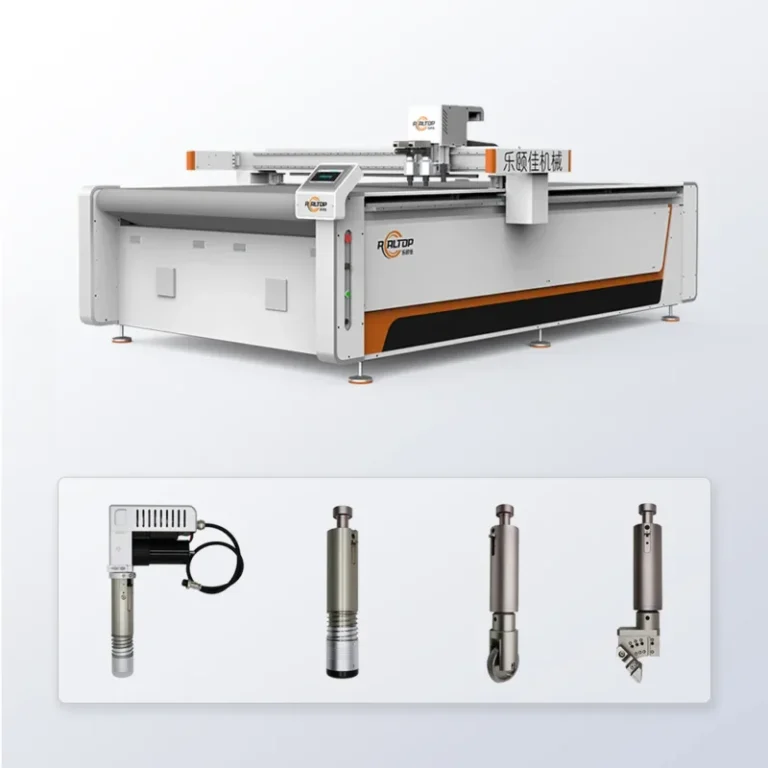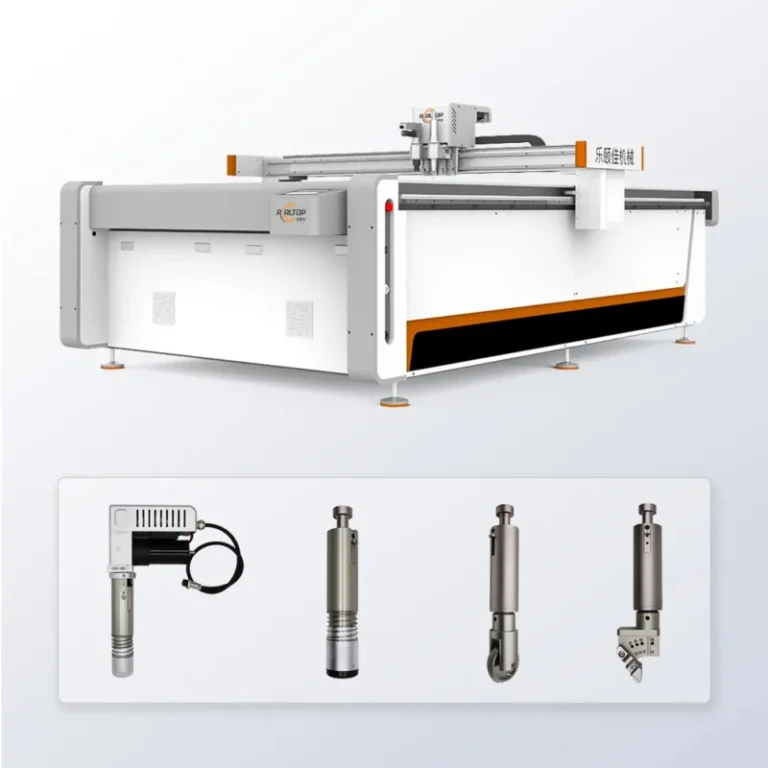
Aramid and Kevlar Fabric Cutting Machine Manufacturer for Panel Makers
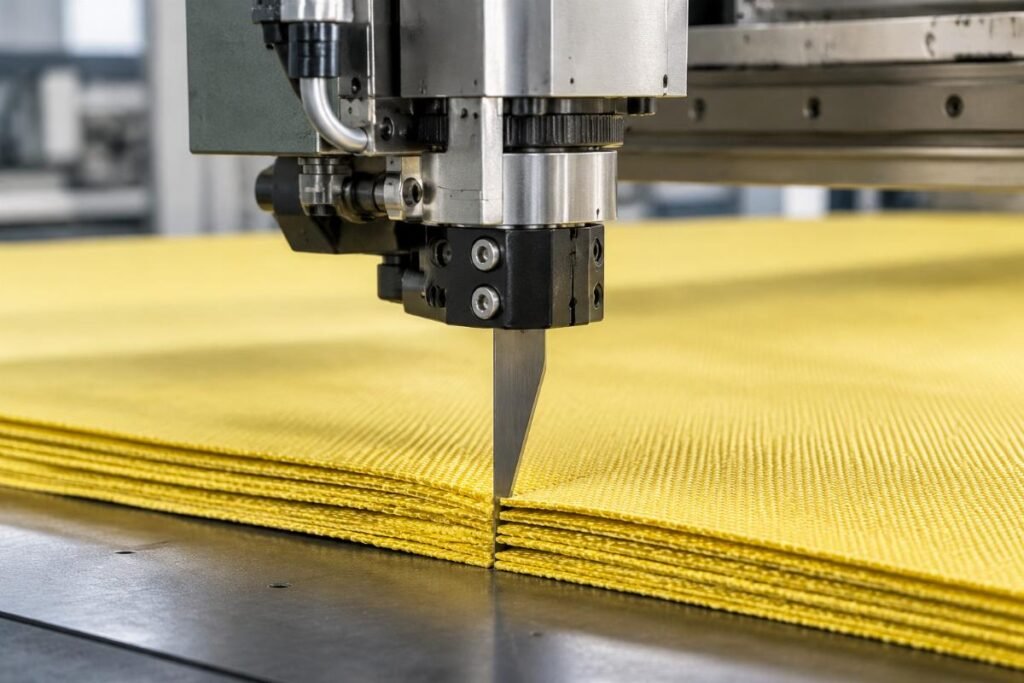
Slowing down the cutting speed often yields cleaner edges on high-tensile fabrics than pushing for maximum velocity.
Cutting aramid and Kevlar fabric requires specialized CNC oscillating knife techniques to prevent fraying and maintain strict tolerances for protective panels. Standard rotary blades or laser systems frequently fail with these materials because they either drag the fibers causing delamination or burn the synthetic matrix, compromising the structural integrity of the final product. The solution lies in high-frequency vertical oscillation combined with precise servo control that separates fibers cleanly without generating excessive heat or lateral tension.

Having spent years adjusting vibration parameters in workshops in Jinan, I have seen how easily a batch of expensive aerospace-grade material can be ruined by incorrect machine settings. The fibers in aramid are incredibly strong but lack the rigidity of carbon fiber, making them prone to shifting under lateral pressure. When I first encountered a European client’s issue with frayed edges on protective panels, the initial assumption was that the blade was dull. However, the real culprit was the synchronization between the knife’s vertical stroke and the horizontal movement speed. By recalibrating the down-depth and reducing the feed rate, we eliminated the burrs that had been plaguing their production line. This experience underscores that handling technical textiles is less about brute force and more about understanding the material’s reaction to mechanical stress.
Why Do Aramid and Kevlar Fabrics Fray During Cutting?
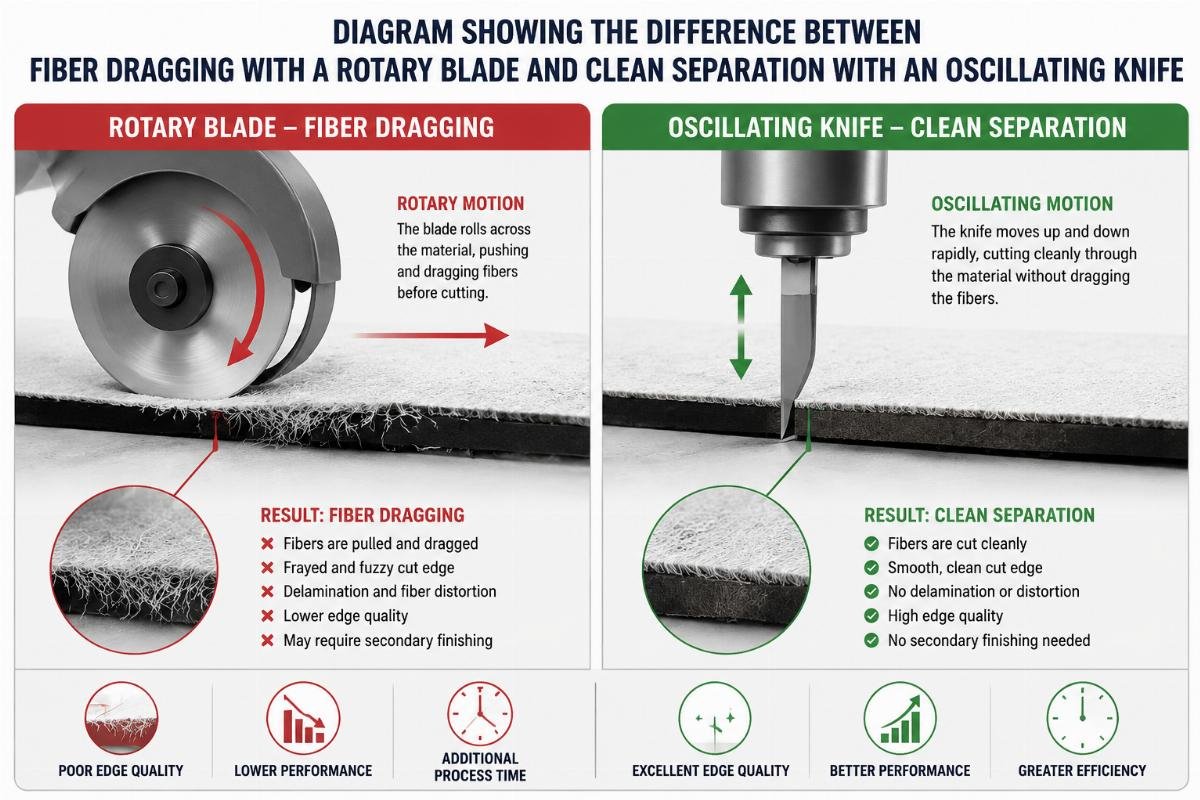
The high tensile strength of aramid fibers causes standard blades to drag rather than slice, leading to edge deformation.
Aramid and Kevlar are engineered for impact resistance, which means their molecular structure is designed to absorb energy rather than break. When a conventional blade moves through these fabrics, it does not cut cleanly; instead, it pushes the fibers aside until they snap irregularly. This process creates micro-frays along the edge, which can compromise the seal in protective panels or lead to premature wear in automotive applications. The friction generated by this dragging action also produces heat, which can melt the binding resins in composite laminates.
To address this, the cutting mechanism must isolate individual fiber bundles without applying lateral force. An oscillating knife moves vertically at a high frequency, creating a sawing action that severs fibers with minimal horizontal displacement. This method is critical for maintaining the dimensional stability of the material. In my work with composite processors, I have observed that even a slight misalignment in the knife’s vertical axis can result in uneven edges across large sheets. The key is ensuring that the blade enters and exits the material at the exact same point in its oscillation cycle, which requires robust mechanical construction and precise calibration.
How to Optimize CNC Oscillating Knife Parameters for Kevlar?
Balancing cutting speed with servo response ensures clean edges without sacrificing efficiency.
Many operators assume that higher speeds equate to better productivity, but with Kevlar, rushing the process often leads to tolerance drift and edge quality issues. The servo motors driving the cutting head must respond instantly to changes in direction, especially when cutting complex shapes for protective gear. If the servo lag is too high, the knife will overshoot corners, resulting in rounded edges where sharp angles are required. Optimizing these parameters involves a careful trade-off between speed and precision.
In one instance, an automotive armor producer faced consistent tolerance deviations when cutting multi-layer Kevlar sheets. The machine was running at maximum speed, but the inertia of the cutting head caused slight overshooting at every turn. By lowering the cutting speed and adjusting the acceleration curves, we brought the precision back within strict limits. The goal is to find the sweet spot where the machine moves as fast as possible without compromising the accuracy of the cut. This requires testing different speed settings on sample pieces and measuring the deviation from the digital pattern. Modern CNC systems allow for fine-tuning of these parameters, enabling operators to customize the cutting profile for specific material thicknesses and densities.
| Parameter | Low Setting Impact | High Setting Impact | Optimal Approach |
|---|---|---|---|
| Cutting Speed | High precision, longer cycle time | Risk of edge fraying and tolerance drift | Balanced for material thickness |
| Vibration Frequency | Incomplete cuts, fiber pulling | Excessive heat, rapid tool wear | Adjusted to fiber density |
| Down Depth | Shallow cuts, material shift | Blade damage, bed wear | Precise calculation based on layers |
| Servo Acceleration | Smooth motion, slower turns | Overshooting corners, shape distortion | Tuned for complex geometries |

What Tooling is Required for Protective Panel Composites?
Specialized blades and reinforced cutting beds are essential to handle abrasive aramid fibers.
Not all knives are created equal when it comes to cutting aramid. Standard fabric blades wear out rapidly due to the abrasive nature of the fibers, leading to frequent replacements and inconsistent cut quality. Specialized tooling made from hardened steel or coated with wear-resistant materials is necessary to extend tool life and maintain edge sharpness. Additionally, the geometry of the blade plays a crucial role. A blade with a finer tooth pitch may provide a smoother finish but might struggle with thicker stacks, while a coarser pitch cuts faster but leaves rougher edges.
Beyond the blade, the cutting bed must support the material without allowing it to sink or shift. Honeycomb beds are commonly used for their ability to hold fabrics in place while allowing air suction to remove debris. However, for heavy-duty Kevlar cutting, a more robust bed structure may be required to withstand the downward force of the knife. In my experience, using the wrong bed type can lead to material movement during cutting, which ruins the alignment of nested patterns. It is also important to consider the angle of the blade. Some applications benefit from a beveled edge to reduce resistance, while others require a straight vertical cut for maximum precision. Selecting the right combination of blade and bed is a critical step in setting up a reliable cutting process.

How to Ensure Precision in Multi-layer Kevlar Cutting?
Digital nesting and strict tolerance controls prevent material shift and reduce costly waste.
Cutting single layers of Kevlar is challenging enough, but stacking multiple layers introduces new variables. The friction between layers can cause them to slide relative to each other, leading to misaligned cuts at the bottom of the stack. To mitigate this, vacuum suction systems are employed to hold the layers together firmly against the cutting bed. The strength of the vacuum must be sufficient to prevent movement but not so strong that it deforms the material. Digital nesting software also plays a vital role by optimizing the layout of parts to minimize waste and ensure that the cutting path is efficient.
When working with protective panel makers, I have seen how poor nesting can lead to significant material loss, especially given the high cost of aramid fabrics. Smart nesting algorithms can arrange parts in a way that reduces the total cutting length and avoids complex shapes that are prone to error. Furthermore, real-time monitoring of the cutting process allows operators to detect any deviations early. If the machine senses increased resistance or unexpected movement, it can pause the operation to prevent further errors. This level of control is essential for maintaining consistency in high-volume production environments. The integration of these technologies ensures that each layer is cut with the same precision as the top layer, resulting in uniform panels ready for assembly.
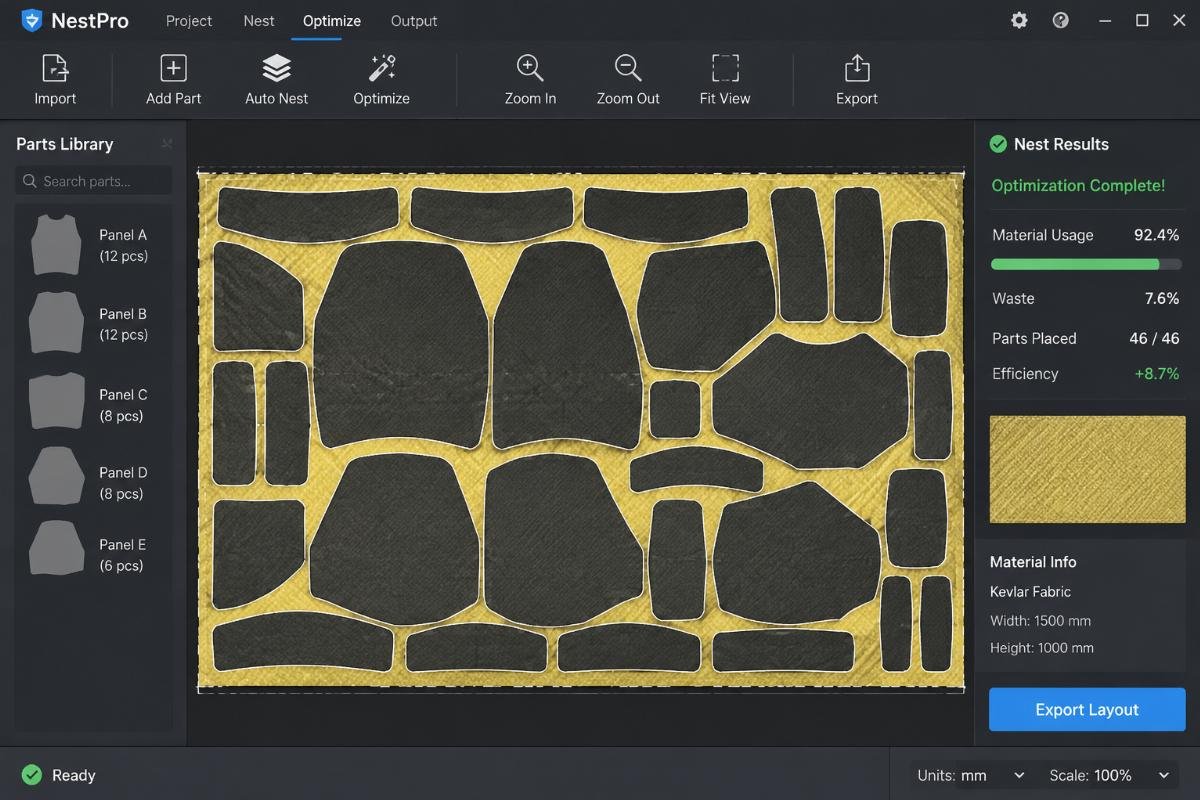
For manufacturers seeking reliable equipment, Realtop’s CNC oscillating knife machines offer the precision and flexibility needed for these demanding applications. With capabilities tailored for composite material cutting solutions, these machines provide the stability and control required to handle aramid and Kevlar effectively. The focus on ±0.1mm precision ensures that even intricate designs are executed accurately, while smart nesting features help maximize material utilization. By addressing the specific challenges of cutting high-strength technical fabrics, such equipment becomes an indispensable asset for any facility involved in the production of protective panels.
Conclusion
Precision in cutting aramid and Kevlar is achieved through controlled oscillation and optimized parameters, not just speed.
Successfully processing these high-performance materials requires a deep understanding of their mechanical properties and the limitations of standard cutting tools. By focusing on vibration frequency, down-depth, and servo response, manufacturers can achieve clean, fray-free edges that meet strict industry standards. Investing in specialized tooling and advanced CNC technology ensures consistent quality and reduces waste, making the production of protective panels both efficient and reliable.