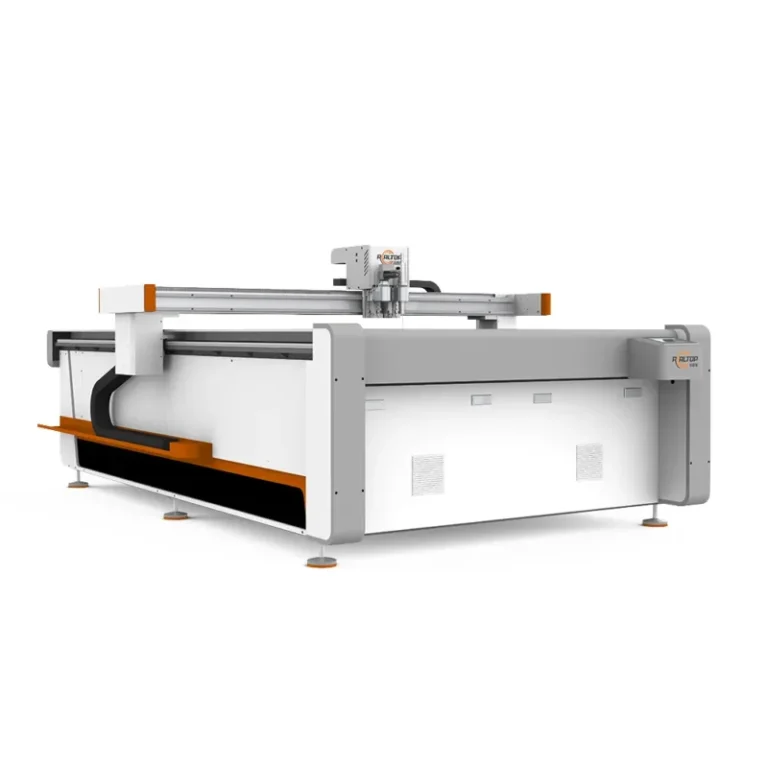
50mm Max Cutting Thickness CNC Oscillating Knife Machine for Sale

"50mm max cutting thickness" does not mean your machine will slice through a solid 50mm block of high-density foam like butter.
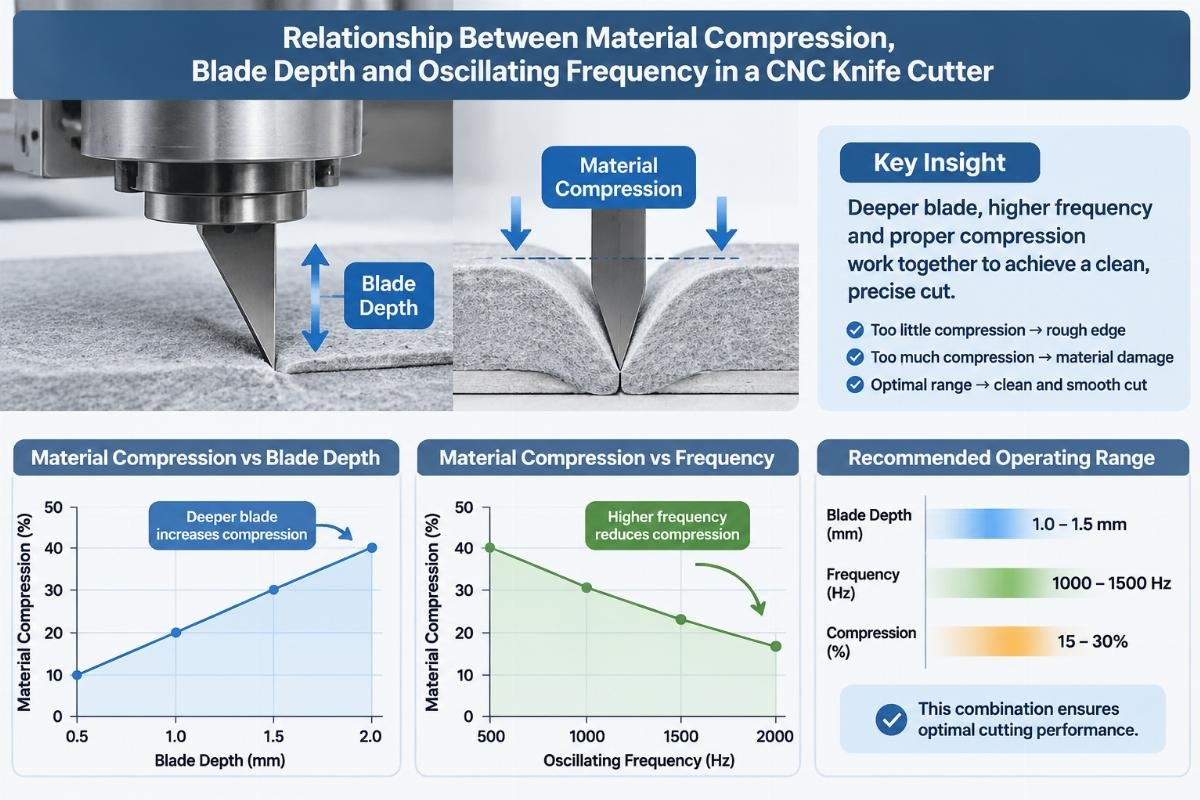
The specification refers to the maximum compressible height of low-to-medium density materials under ideal voltage and frequency conditions. Actual cutting performance is dictated by material density, spindle pressure stability, and oscillating frequency matching, not just the physical gap of the tool head.
When I first arrived at an automotive mat factory in Lagos, the production manager was frustrated. His new cutter claimed a 50mm capacity, yet it consistently failed to penetrate thick EVA sheets completely. The blades were sharp, the software was correct, but the cut stopped halfway. After checking the local power grid, I found significant voltage fluctuations that caused the spindle motor to lose torque precisely when it needed maximum downward pressure. This was not a mechanical failure but a mismatch between the machine’s electrical requirements and the site’s infrastructure. Understanding this distinction is critical for anyone evaluating a max cutting thickness 50mm CNC oscillating knife for their production line.
To avoid similar pitfalls, operators must look beyond the brochure number. The following sections break down what this specification truly implies, why cuts fail in thick materials, and how to match machine settings to your specific workflow.
What Does 50mm Max Cutting Thickness Actually Mean?
It defines the limit for compressible materials, not absolute solid density.
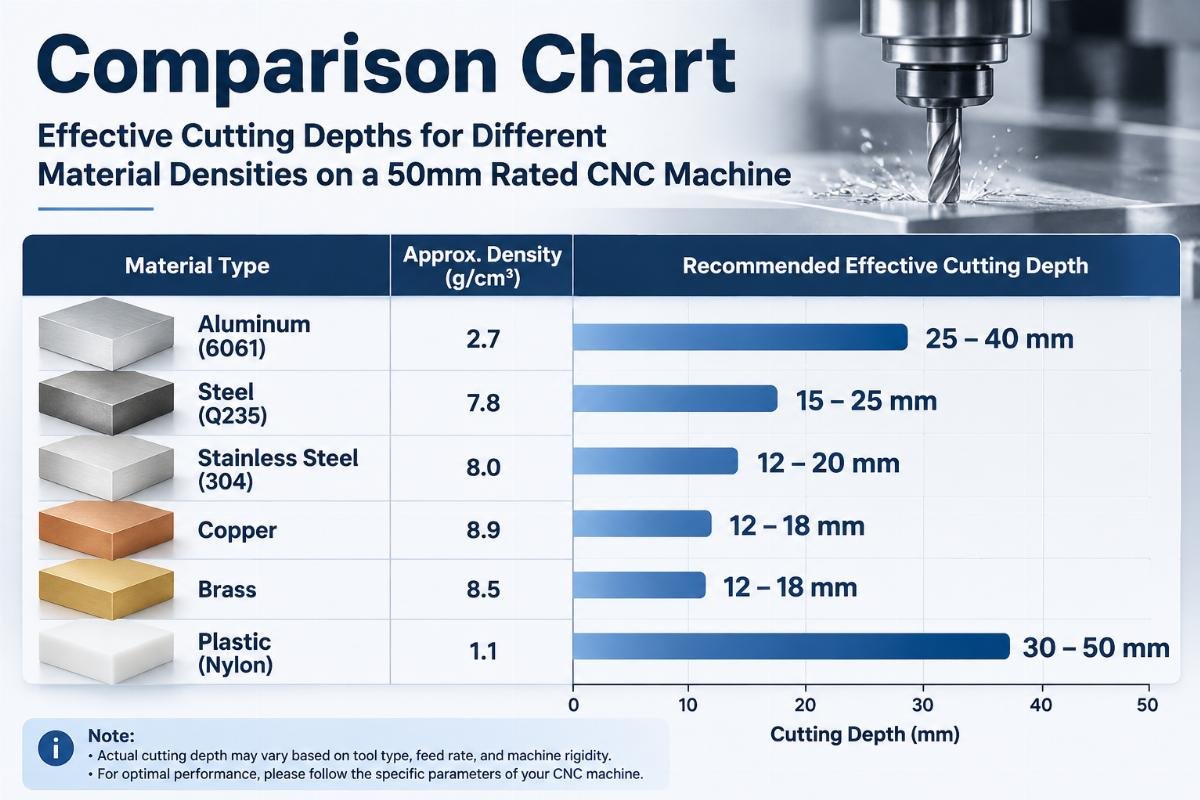
Many buyers interpret "50mm" as a universal capability. In reality, this figure is derived from testing with standard low-density foams that compress easily under the knife’s foot pressure. When the blade descends, the material compresses, allowing the oscillating knife to slice through layers that might otherwise be too thick for the blade length alone. However, as material density increases, its resistance to compression rises exponentially. A 50mm stack of soft polyethylene foam behaves entirely differently from a 50mm stack of high-density rubber or multi-layer corrugated board.
The physics of cutting thick materials involves two forces: the downward pressure from the spindle and the lateral slicing action of the oscillating blade. If the material is too dense to compress, the blade must rely solely on its vertical travel range. Most CNC oscillating knife heads have a limited vertical stroke. If the material does not compress, the blade may not reach the bottom layer, resulting in incomplete cuts or torn edges.
| Material Type | Density Level | Compressibility | Effective Cutting Limit for 50mm Rated Machine |
|---|---|---|---|
| Soft Polyurethane Foam | Low | High | Close to rated 50mm |
| EVA Foam (Medium) | Medium | Moderate | Approximately 30-40mm |
| High-Density Rubber | High | Low | Significantly less than 50mm |
| Corrugated Board (Multi-layer) | Variable | Low | Dependent on flute type and stack height |
This table illustrates why a single number cannot define performance across all substrates. A packaging studio cutting multi-layer corrugated board will face different challenges than a foam insert maker. The "50mm" label is a baseline for optimal conditions, not a guarantee for every material type. Operators must test their specific materials to determine the real-world capacity of their max cutting thickness 50mm CNC oscillating knife.
Why Does My Machine Fail to Cut Through 50mm EVA?
Voltage fluctuations cause spindle pressure decay, leading to incomplete cuts.
A common misconception is that incomplete cuts in thick EVA are always due to dull blades or incorrect speed settings. While blade sharpness matters, the root cause is often electrical. In regions with unstable power grids, voltage drops can occur during high-load operations. The spindle motor, which drives the oscillating motion and provides downward force, requires consistent voltage to maintain torque. When voltage dips, the motor’s output torque decreases, reducing the effective pressure on the blade tip.
In the Lagos case mentioned earlier, the factory experienced frequent voltage sags during peak production hours. The machine’s control system did not compensate for this loss, causing the spindle to struggle against the dense EVA. The result was a clean cut on the top layers but a ragged, unfinished bottom layer. This issue is not unique to Africa; industrial facilities worldwide face similar challenges if their power infrastructure is not aligned with the machine’s requirements.
To mitigate this, manufacturers often offer voltage customization options. For instance, machines can be configured for 220V, 380V, or even 330V inputs depending on local standards. Ensuring your CNC oscillating knife is matched to your facility’s voltage profile is as important as selecting the right blade. Additionally, installing external voltage stabilizers can protect the spindle motor from sudden surges or drops, preserving cutting consistency. Without stable power, even the most advanced max cutting thickness 50mm CNC oscillating knife will underperform in demanding applications.

How to Match Oscillating Frequency with Material Thickness?
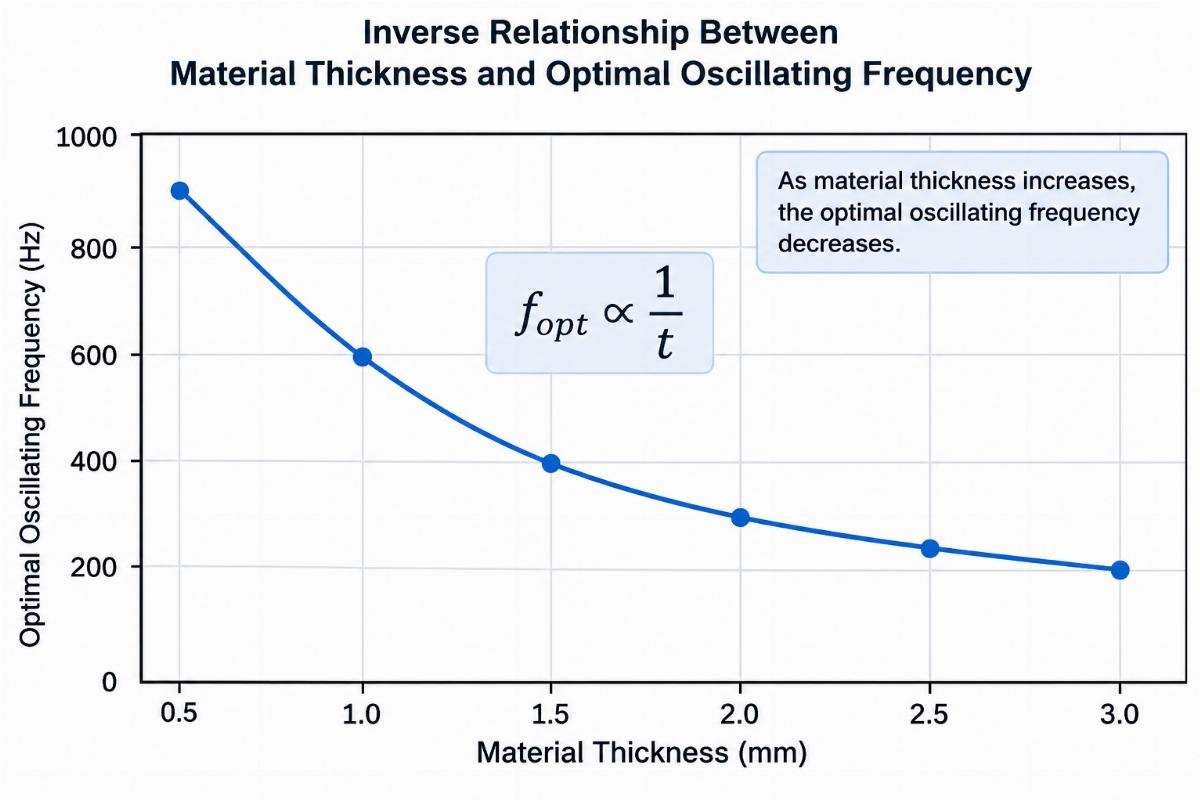
Higher thickness requires lower frequency and slower speed to prevent tearing.
Oscillating frequency refers to how rapidly the knife moves back and forth per minute. For thin materials, a high frequency allows for fast, clean cuts. However, when cutting thick materials, a high frequency can generate excessive heat and friction, leading to material melting or tearing. The blade needs time to clear the kerf (the slot made by the cut) and allow debris to escape. If the frequency is too high, the blade binds in the material, causing deflection and inaccurate cuts.
A packaging studio I visited recently struggled with multi-layer corrugated board. They were using the same high-frequency setting they used for single-layer cardboard. The result was jagged edges and frequent blade breakage. By lowering the oscillating frequency and reducing the cutting speed, we allowed the blade to slice through the thick stack more smoothly. The slower speed gave the material time to separate, reducing stress on the blade and improving edge quality.
The general rule is inverse proportionality: as thickness and density increase, frequency and speed should decrease. This adjustment ensures that the blade maintains its trajectory and does not wander off the programmed path. Operators should consult their machine’s manual for recommended frequency ranges based on material type. For a max cutting thickness 50mm CNC oscillating knife, finding the sweet spot between speed and precision is key to handling thick substrates effectively.
| Material Thickness | Recommended Frequency Setting | Recommended Cutting Speed | Expected Outcome |
|---|---|---|---|
| Thin (<10mm) | High | Fast | High throughput, clean edges |
| Medium (10-30mm) | Medium | Moderate | Balanced speed and quality |
| Thick (>30mm) | Low | Slow | Prevents tearing, ensures complete cut |
Adjusting these parameters requires experimentation. Start with conservative settings and gradually increase speed until you notice a decline in cut quality. This methodical approach helps identify the optimal settings for your specific materials without risking damage to the machine or waste of raw materials.
How to Verify Real Cutting Capacity Before Buying?
Request live tests with your exact material density to confirm performance.
Brochure specifications are theoretical. To know if a machine will work for your application, you must test it with your actual materials. Reputable manufacturers offer free sample cutting services, allowing you to send your specific foam, fabric, or board for a live demonstration. This process reveals how the machine handles your material’s unique properties, such as density, elasticity, and surface texture.
When requesting a test, provide detailed information about your material. Include its density, thickness, and any special characteristics like adhesives or coatings. Ask the manufacturer to record the cutting process, focusing on edge quality, cut completeness, and speed. Pay attention to how the machine handles start and stop points, as these are common areas for errors in thick materials. A CNC oscillating knife that performs well in a controlled test environment is more likely to deliver consistent results in your factory.
Additionally, inquire about the machine’s voltage options and support services. Ensure that the manufacturer can provide the necessary voltage configuration for your region. Ask about remote diagnostic capabilities, which can help troubleshoot issues quickly without waiting for a technician to visit. These factors contribute to the overall reliability and uptime of your production line. By verifying real cutting capacity through live tests, you reduce the risk of purchasing a max cutting thickness 50mm CNC oscillating knife that does not meet your operational needs.

Conclusion
Understanding the true meaning of "50mm max cutting thickness" prevents costly mismatches between machine capabilities and production requirements.
Success with thick materials depends on managing voltage stability, adjusting oscillating frequency, and validating performance with real-world tests. Do not rely solely on catalog numbers; instead, focus on how the machine interacts with your specific materials under your local operating conditions. By prioritizing these practical factors, you ensure that your investment delivers the precision and efficiency your business demands.